Sponsored

Fueling Thoughts

BigAir

Well-Known Member
Joined
Jan 28, 2025
Threads
2
Messages
106
Reaction score
104
Location
Montana
Vehicle(s)
2024 Ranger Raptor
I'm petty about fuel and oil. I like to min/max everything for no reason.

Gas prices are very high right now. I'm seeing $4.89 for 91 octane. Pretty horrendous. So I decided to swap over to ethanol-free 87 octane.

With that ethanol-free 87 octane, I think it would be dumb for me to mix it with AMSOIL Dominator Octane Booster. I received 10 cases for free. What do you all think of this fueling mixture for OEM 2.7L Ecoboost? Sanity check requested.

New Mexico has horrible quality fuel. I've accustripped 14 different gas stations, and all have out-of-spec amounts of water and insolubles (dirt/sand/quartz). I do not have photos.

Being that I only have knowledge of RB engines, and I have typically dealt with 105 RON, I've no experience with U.S. fuel quality.
Do you have a tune or why are you worried about running higher octane? The 2.7 is designed to run on 87 octane.
Sponsored

 
OP
OP
gdc

gdc

Active Member
Joined
Feb 16, 2026
Threads
6
Messages
41
Reaction score
51
Location
United States
Vehicle(s)
2025 Ford Ranger 2.7L Sport 4x4
Do you have a tune or why are you worried about running higher octane? The 2.7 is designed to run on 87 octane.
There is a major difference between design and nominal.

as quoted from the manufacturers manual: “ for best overall vehicle performance, premium fuel with an octane rating of 91 or higher is recommended. The performance gained using premium fuel is most noticeable in HOT WEATHER as well as OTHER CONDITIONS.”

The sunbelt is not a delicate place for these engines.
 

BigAir

Well-Known Member
Joined
Jan 28, 2025
Threads
2
Messages
106
Reaction score
104
Location
Montana
Vehicle(s)
2024 Ranger Raptor
There is a major difference between design and nominal.

as quoted from the manufacturers manual: “ for best overall vehicle performance, premium fuel with an octane rating of 91 or higher is recommended. The performance gained using premium fuel is most noticeable in HOT WEATHER as well as OTHER CONDITIONS.”

The sunbelt is not a delicate place for these engines.
Octane is simply a standard measure of a fuel's ability to withstand compression in an internal combustion engine without causing engine knocking. Nothing more, nothing less. Octane does not give a fuel more energy or power. If you are working it hard enough (towing, racing) to cause it to knock, ping, or detonate, you will benefit from higher octane. If you are just cruising, you are throwing your money away. If you aren't working your engine super hard and your cooling system is functioning correctly, your engine isn't running any hotter in the sunbelt than mine is in Montana. The thermostat and cooling fan will keep your engine at the same temp as mine.


"Is a higher or lower octane rating better for my vehicle?

Octane ratings serve as indicators of fuel stability. Using fuel with a lower octane rating than recommended may result in engine knocking, reduced performance, and potential long-term damage. On the other hand, using a higher-octane fuel than required typically offers no additional benefits and may be an unnecessary expense.

Standard engines in regular vehicles generally require lower octane fuel, while high-performance vehicles or engines with high compression ratios often need premium (higher octane) fuel to prevent knocking and ensure optimal performance. The effect of higher-octane fuel on engine performance depends on the engine’s design. High-compression gasoline engines can produce more power with higher octane fuels due to the increased compression by the engine. However, this increased power results from the engine design, not the gasoline itself."
 

Cosmicjumperalex03

Active Member
First Name
Alex
Joined
Dec 20, 2025
Threads
2
Messages
25
Reaction score
69
Location
Las Vegas, NV
Vehicle(s)
2024 Ford Ranger XLT
Occupation
Shop Foreman @ Ford Dealer
Octane is simply a standard measure of a fuel's ability to withstand compression in an internal combustion engine without causing engine knocking. Nothing more, nothing less. Octane does not give a fuel more energy or power. If you are working it hard enough (towing, racing) to cause it to knock, ping, or detonate, you will benefit from higher octane. If you are just cruising, you are throwing your money away. If you aren't working your engine super hard and your cooling system is functioning correctly, your engine isn't running any hotter in the sunbelt than mine is in Montana. The thermostat and cooling fan will keep your engine at the same temp as mine.


"Is a higher or lower octane rating better for my vehicle?

Octane ratings serve as indicators of fuel stability. Using fuel with a lower octane rating than recommended may result in engine knocking, reduced performance, and potential long-term damage. On the other hand, using a higher-octane fuel than required typically offers no additional benefits and may be an unnecessary expense.

Standard engines in regular vehicles generally require lower octane fuel, while high-performance vehicles or engines with high compression ratios often need premium (higher octane) fuel to prevent knocking and ensure optimal performance. The effect of higher-octane fuel on engine performance depends on the engine’s design. High-compression gasoline engines can produce more power with higher octane fuels due to the increased compression by the engine. However, this increased power results from the engine design, not the gasoline itself."
Don't know if I fully agree with your statement about it not making any difference unless towing heavy racing necessarily.

Despite what I am about to say, we would need dyno testing done with the correct parameters to show any measurable difference between 87 and 91/93 on a stock tune for power and even more delicate testing to determine fuel economy testing.

I think its important that people are made aware that these newer cars are constantly monitoring ping and fuel trims. It monitors these items to always give the best possible power, emissions and fuel economy depending on the torque load requested by the driver, vehicle speed and gear. The PCM is always going to provide the maximum amount of ignition timing and boost pressure to achieve power under WOT and while driving at steady state and light acceleration it will similarly provide the maximum power output with the minimal amount of fuel necessary.

In my experience vehicles that are high compression and naturally aspirated do require premium grade fuel or the PCM will pull ignition and mechanical timing to eliminate ping/pre-ignition of the fuel. So running a higher octane the engine will be able to provide more ignition and mechanical timing to provide better power. Vehicles that are lower compression and naturally aspirated simply will not receive any additional timing when placed on higher octane fuel because the PCM does not detect any ping/pre-ignition on lower fuel so the timing was already maxed out. These engines will also produce more power on lower octane fuel because lower octane fuel has more energy per given unit of measure compared to higher octane fuel (though this difference is likely small).

Now lets think about lower compression turbo charged engines as is present on all 6G ford rangers in the US. Yes the engine is lower compression but when you add in boost pressure the actual cylinder pressures can reach and will exceed those of most consumer grade high compression naturally aspirated engines. So by that logic it would make sense that higher fuel grade will result in better power output under WOT because it will be able to provide more ignition and mechanical timing (also likely close the waste gate sooner in the rev range) to provide that additional power.

In my eyes the question becomes, is the difference in potential additional timing great enough to overcome the loss of energy provided by higher octane fuel? Hard to say without dyno readings that are done correctly. In order to get an accurate reading you would need to clear all keep alive memory for the adaptive tables, perform an profile correction, drive the vehicle for some time and make several pulls so the PCM can make necessary calibration adjustments and then perform dyno runs, and then do that all over again on the other fuel grade. If you just switch fuel grades and immediately test back to back the PCM likely will not have had enough time to adjust the various parameters to maximize each fuel grade.

As for fuel economy, it seems like it wouldn't matter so much to have higher octane but I would say that when I road test vehicles while looking at the timing data, even under light acceleration the PCM will add a lot more timing that I think most people would predict, and that makes me feel that it is highly likely that higher grade fuel would be able to provide better fuel economy, but again without proper testing we are all just guessing here.

There is one additional piece I would like to add, fuel brand/quality. Cheaper fuel is typically cheaper because it has a higher ethenol content and ethenol has much less energy per measured quantity as compared to actual gasoline, though it resists pre-ignition/detonation at a much higher rate than even 91/93. So yet again another factor to consider.


For my own vehicle, honestly I just use cheveron 87 and call it a day. My wife drives a brand new m440i and we did some testing of our own on her vehicle and she absolutely obtained more fuel economy on premium fuel, enough to offset the cost so we run premium on her car but again her car has a much higher performance engine than my 2.3. The butt dyno also came back with positive results for her car on premium fuel.


All in all, I think there are waaay too many factors here for us to determine for sure what is best, we need someone to provide accurate testing with a dyno and proper fuel economy testing in stable parameters to know for sure.
 

Sponsored

ShadowDragon24

Well-Known Member
First Name
Tyler
Joined
Apr 20, 2025
Threads
6
Messages
567
Reaction score
527
Location
Newfoundland and Labrador, Canada
Vehicle(s)
2025 Ranger XLT Fx4
Occupation
Heavy Equipment Operator
91 is actually preferred for all Ranger engines, including the 2.3.
ALL turbo charged gasoline engines aftermarket or factory actually, which is every ford ecoboost. and most aftermarkets are street/track cars, so they are running 110 race gas or e85 tunes. they just have to make something for the dipshitiodits, and they still fuck it up. lol

Octane is simply a standard measure of a fuel's ability to withstand compression in an internal combustion engine without causing engine knocking. Nothing more, nothing less. Octane does not give a fuel more energy or power. If you are working it hard enough (towing, racing) to cause it to knock, ping, or detonate, you will benefit from higher octane. If you are just cruising, you are throwing your money away. If you aren't working your engine super hard and your cooling system is functioning correctly, your engine isn't running any hotter in the sunbelt than mine is in Montana. The thermostat and cooling fan will keep your engine at the same temp as mine.


"Is a higher or lower octane rating better for my vehicle?

Octane ratings serve as indicators of fuel stability. Using fuel with a lower octane rating than recommended may result in engine knocking, reduced performance, and potential long-term damage. On the other hand, using a higher-octane fuel than required typically offers no additional benefits and may be an unnecessary expense.

Standard engines in regular vehicles generally require lower octane fuel, while high-performance vehicles or engines with high compression ratios often need premium (higher octane) fuel to prevent knocking and ensure optimal performance. The effect of higher-octane fuel on engine performance depends on the engine’s design. High-compression gasoline engines can produce more power with higher octane fuels due to the increased compression by the engine. However, this increased power results from the engine design, not the gasoline itself."
Stop Using AI Slop to further your argument

they have to make it run on 87, because the masses would put the wrong fuel in(why diesel nozzles are different sizes from gas nozzles, but brain dead dipshitiodits still find a way to fuck that up lol) and my '25 2.3 runs like a bag of shit on 87. no passing power, the truck hesitates more, turbo takes longer to spool while trying to pass and hauling my pop up camper up hill, I can feel the difference, and the fuel mileage being the biggest difference. Even not towing and just driving around, to and from work, and the grocery store. the truck doesnt struggle as much, has more power, and gets almost 200kms more to a tank, goes from 13-15Ltr/100kms to 10.9-12.4Ltr/100km. Thats a MAJOR improvement in just 6 cents difference in price per liter.(say gas is $1.70 a liter for regular 87, 89 mid is 1.73, and supreme 91 is 1.76.. for the 6 cents liter difference, the range, and performance gained pays for that)
 

BigAir

Well-Known Member
Joined
Jan 28, 2025
Threads
2
Messages
106
Reaction score
104
Location
Montana
Vehicle(s)
2024 Ranger Raptor
Don't know if I fully agree with your statement about it not making any difference unless towing heavy racing necessarily.

Despite what I am about to say, we would need dyno testing done with the correct parameters to show any measurable difference between 87 and 91/93 on a stock tune for power and even more delicate testing to determine fuel economy testing.

I think its important that people are made aware that these newer cars are constantly monitoring ping and fuel trims. It monitors these items to always give the best possible power, emissions and fuel economy depending on the torque load requested by the driver, vehicle speed and gear. The PCM is always going to provide the maximum amount of ignition timing and boost pressure to achieve power under WOT and while driving at steady state and light acceleration it will similarly provide the maximum power output with the minimal amount of fuel necessary.

In my experience vehicles that are high compression and naturally aspirated do require premium grade fuel or the PCM will pull ignition and mechanical timing to eliminate ping/pre-ignition of the fuel. So running a higher octane the engine will be able to provide more ignition and mechanical timing to provide better power. Vehicles that are lower compression and naturally aspirated simply will not receive any additional timing when placed on higher octane fuel because the PCM does not detect any ping/pre-ignition on lower fuel so the timing was already maxed out. These engines will also produce more power on lower octane fuel because lower octane fuel has more energy per given unit of measure compared to higher octane fuel (though this difference is likely small).

Now lets think about lower compression turbo charged engines as is present on all 6G ford rangers in the US. Yes the engine is lower compression but when you add in boost pressure the actual cylinder pressures can reach and will exceed those of most consumer grade high compression naturally aspirated engines. So by that logic it would make sense that higher fuel grade will result in better power output under WOT because it will be able to provide more ignition and mechanical timing (also likely close the waste gate sooner in the rev range) to provide that additional power.

In my eyes the question becomes, is the difference in potential additional timing great enough to overcome the loss of energy provided by higher octane fuel? Hard to say without dyno readings that are done correctly. In order to get an accurate reading you would need to clear all keep alive memory for the adaptive tables, perform an profile correction, drive the vehicle for some time and make several pulls so the PCM can make necessary calibration adjustments and then perform dyno runs, and then do that all over again on the other fuel grade. If you just switch fuel grades and immediately test back to back the PCM likely will not have had enough time to adjust the various parameters to maximize each fuel grade.

As for fuel economy, it seems like it wouldn't matter so much to have higher octane but I would say that when I road test vehicles while looking at the timing data, even under light acceleration the PCM will add a lot more timing that I think most people would predict, and that makes me feel that it is highly likely that higher grade fuel would be able to provide better fuel economy, but again without proper testing we are all just guessing here.

There is one additional piece I would like to add, fuel brand/quality. Cheaper fuel is typically cheaper because it has a higher ethenol content and ethenol has much less energy per measured quantity as compared to actual gasoline, though it resists pre-ignition/detonation at a much higher rate than even 91/93. So yet again another factor to consider.


For my own vehicle, honestly I just use cheveron 87 and call it a day. My wife drives a brand new m440i and we did some testing of our own on her vehicle and she absolutely obtained more fuel economy on premium fuel, enough to offset the cost so we run premium on her car but again her car has a much higher performance engine than my 2.3. The butt dyno also came back with positive results for her car on premium fuel.


All in all, I think there are waaay too many factors here for us to determine for sure what is best, we need someone to provide accurate testing with a dyno and proper fuel economy testing in stable parameters to know for sure.
Great reply and thanks for saying it so much better than I did!

ALL turbo charged gasoline engines aftermarket or factory actually, which is every ford ecoboost. and most aftermarkets are street/track cars, so they are running 110 race gas or e85 tunes. they just have to make something for the dipshitiodits, and they still fuck it up. lol


Stop Using AI Slop to further your argument

they have to make it run on 87, because the masses would put the wrong fuel in(why diesel nozzles are different sizes from gas nozzles, but brain dead dipshitiodits still find a way to fuck that up lol) and my '25 2.3 runs like a bag of shit on 87. no passing power, the truck hesitates more, turbo takes longer to spool while trying to pass and hauling my pop up camper up hill, I can feel the difference, and the fuel mileage being the biggest difference. Even not towing and just driving around, to and from work, and the grocery store. the truck doesnt struggle as much, has more power, and gets almost 200kms more to a tank, goes from 13-15Ltr/100kms to 10.9-12.4Ltr/100km. Thats a MAJOR improvement in just 6 cents difference in price per liter.(say gas is $1.70 a liter for regular 87, 89 mid is 1.73, and supreme 91 is 1.76.. for the 6 cents liter difference, the range, and performance gained pays for that)
All I'm going to say is that nothing I said was from AI. The first paragraph was my own and the second was from a fuel website. Where I live, premium costs $0.70 more per gallon.
 
OP
OP
gdc

gdc

Active Member
Joined
Feb 16, 2026
Threads
6
Messages
41
Reaction score
51
Location
United States
Vehicle(s)
2025 Ford Ranger 2.7L Sport 4x4
If you aren't working your engine super hard and your cooling system is functioning correctly, your engine isn't running any hotter in the sunbelt than mine is in Montana. The thermostat and cooling fan will keep your engine at the same temp as mine.
Not completely accurate. My GTR would knock going up to Niigata, but not coming down, and would knock going up to Hakkoda, but not coming down. My ECU would auto-cal once I hit certain IAT, to automatically reduce timing. Back then I was dumb and would use 95 RON. I eventually changed to 105 RON which made everything much, much better. What I found causing the auto-cal back then was IAT and heat soaking, along with mountain climbing vs mountain coasting.

To refocus our communication, the IAT are going to be different. The engine ingests 3 things: Fuel, Air, and humidity, this is often overlooked. The turbos are trying to pump and cram as much oxygen rich air volume as possible to meet its OEM tuning. But that's gonna increase your temperatures drastically. We gotta pull timing at some point if your fuel is easy to ignite. We also know that modern vehicles will increase fuel consumption to reduce combustion temperatures too!

- It adds fuel
- It pulls timing
- It reduces boost

Beautiful Montana mountains that are cold is not equivalent to dry, hot, desert mountain conditions.

The Aussies know a ton about .... how bad hot air can be on engines. Not just block cooling. Also, their burnout competitions are sickkkk.
 
OP
OP
gdc

gdc

Active Member
Joined
Feb 16, 2026
Threads
6
Messages
41
Reaction score
51
Location
United States
Vehicle(s)
2025 Ford Ranger 2.7L Sport 4x4
ALL turbo charged gasoline engines aftermarket or factory actually, which is every ford ecoboost. and most aftermarkets are street/track cars, so they are running 110 race gas or e85 tunes. they just have to make something for the dipshitiodits, and they still fuck it up. lol


Stop Using AI Slop to further your argument

they have to make it run on 87, because the masses would put the wrong fuel in(why diesel nozzles are different sizes from gas nozzles, but brain dead dipshitiodits still find a way to fuck that up lol) and my '25 2.3 runs like a bag of shit on 87. no passing power, the truck hesitates more, turbo takes longer to spool while trying to pass and hauling my pop up camper up hill, I can feel the difference, and the fuel mileage being the biggest difference. Even not towing and just driving around, to and from work, and the grocery store. the truck doesnt struggle as much, has more power, and gets almost 200kms more to a tank, goes from 13-15Ltr/100kms to 10.9-12.4Ltr/100km. Thats a MAJOR improvement in just 6 cents difference in price per liter.(say gas is $1.70 a liter for regular 87, 89 mid is 1.73, and supreme 91 is 1.76.. for the 6 cents liter difference, the range, and performance gained pays for that)
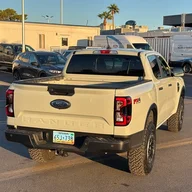
Ford Ranger Fueling Thoughts IMG_5229
 

Sponsored

ShadowDragon24

Well-Known Member
First Name
Tyler
Joined
Apr 20, 2025
Threads
6
Messages
567
Reaction score
527
Location
Newfoundland and Labrador, Canada
Vehicle(s)
2025 Ranger XLT Fx4
Occupation
Heavy Equipment Operator
Great reply and thanks for saying it so much better than I did!


All I'm going to say is that nothing I said was from AI. The first paragraph was my own and the second was from a fuel website. Where I live, premium costs $0.70 more per gallon.
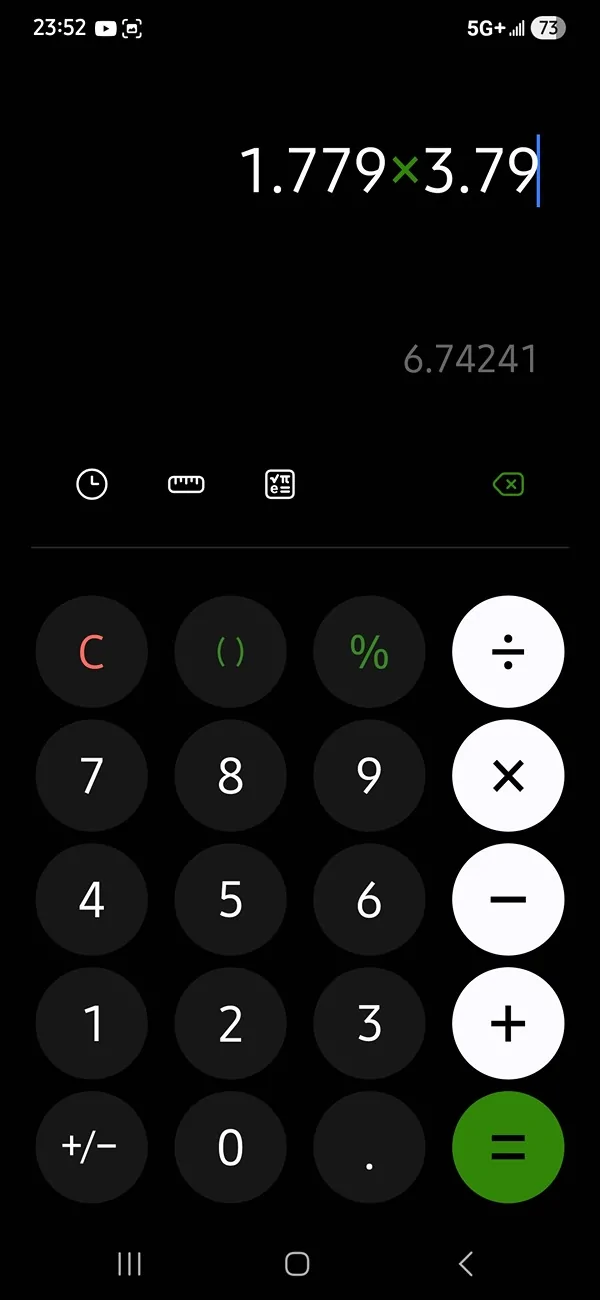
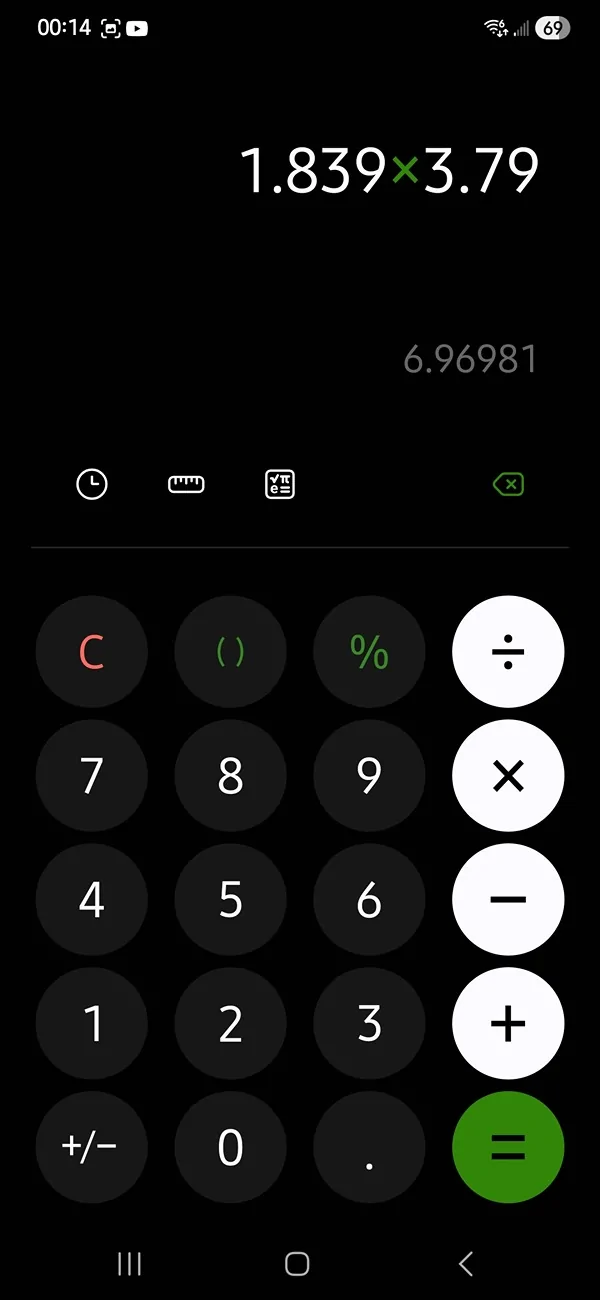
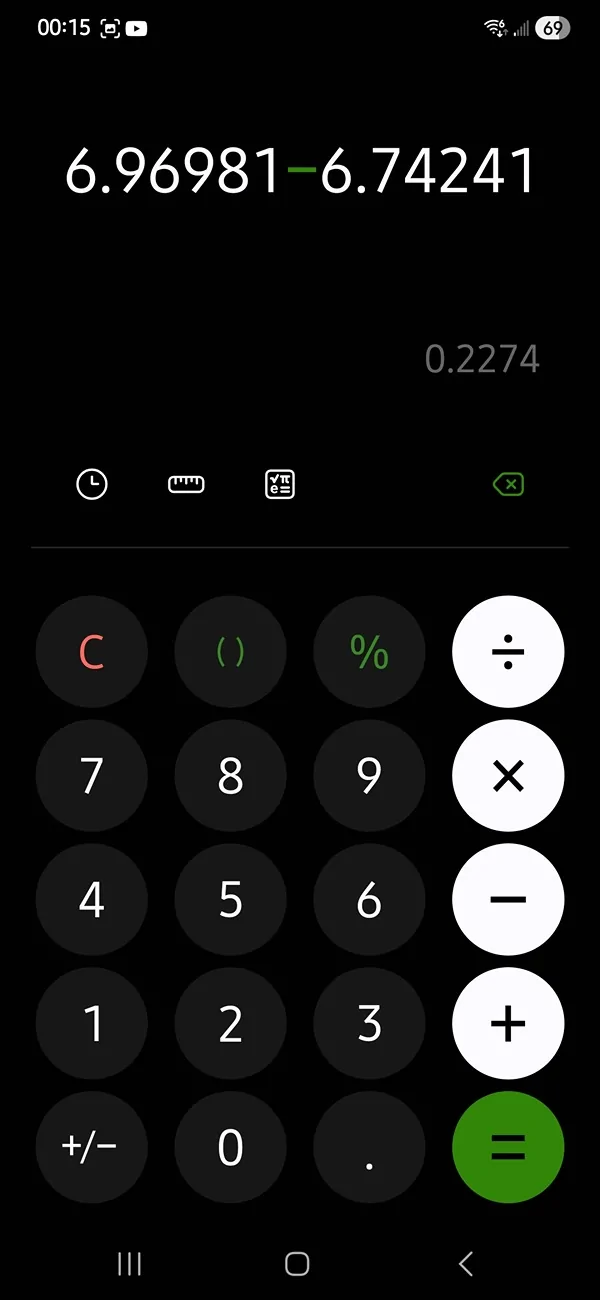
a gallon is 3.79 liters. We only have a 23 cent a gallon difference. wow.
Ford Ranger Fueling Thoughts Screenshot_20260317_235237_Calculator

Above is regular per gallon

Ford Ranger Fueling Thoughts Screenshot_20260318_001459_Calculator

above is supreme per gallon

Ford Ranger Fueling Thoughts Screenshot_20260318_001517_Calculator

and above is the difference per gallon.

and that 100-200Kms extra per tank I get on 91 vs 87, is roughly 62-124 miles extra per tank.

Im lucky to get 410kms(254.7miles) on 87, I can sometimes stretch a tank of 87 to nearly 450kms(279miles). On 91 I regularly get 500-580kms a tank(310.6-341.75 miles) without trying to stretch it, and I can stretch that to about 620kms(385miles) in the summer hypermiling.
 
Last edited:
OP
OP
gdc

gdc

Active Member
Joined
Feb 16, 2026
Threads
6
Messages
41
Reaction score
51
Location
United States
Vehicle(s)
2025 Ford Ranger 2.7L Sport 4x4
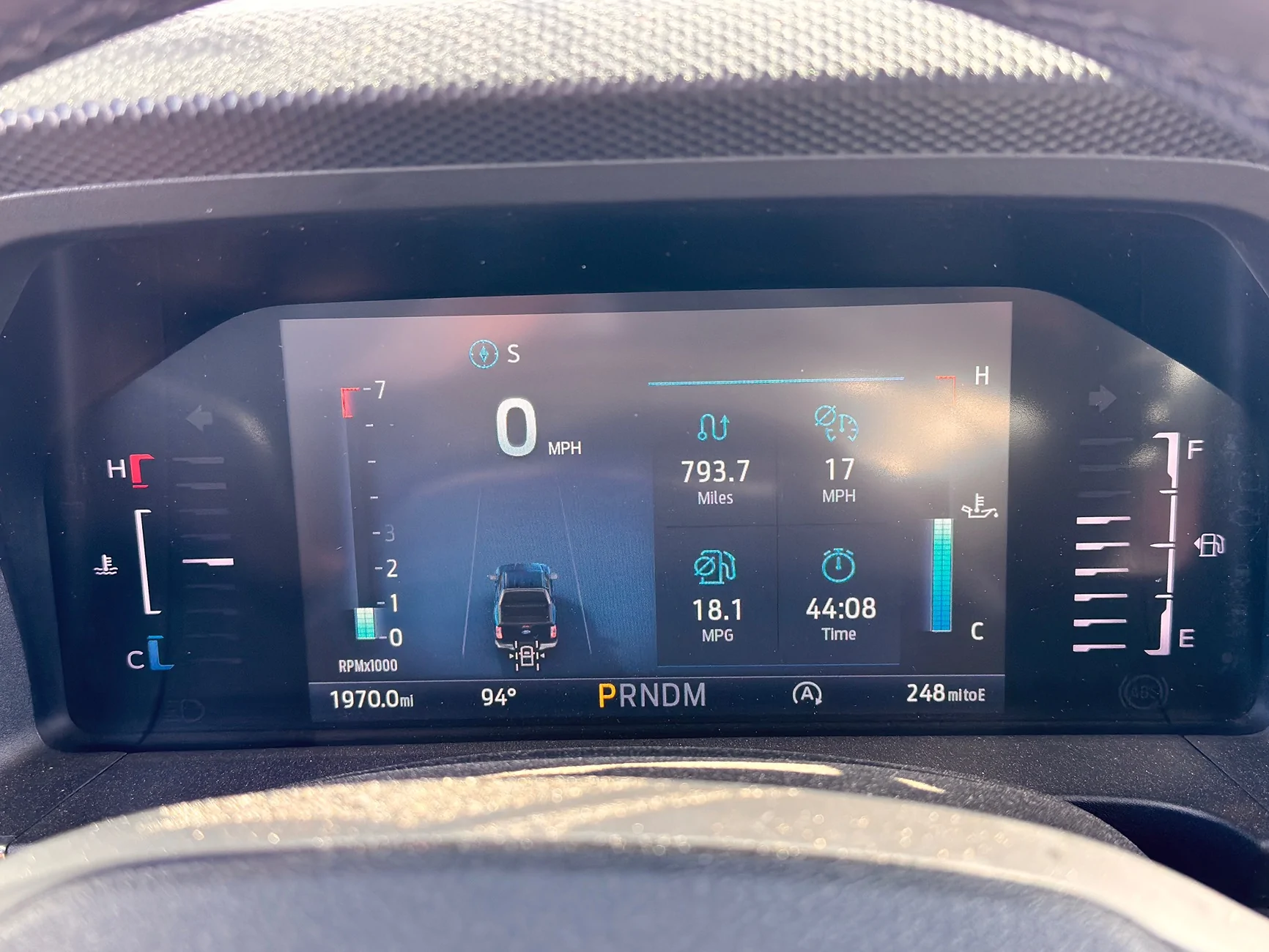
Got the numbers. Here ya go. 87 octane non-ethanol fuel, with non-ethanol booster. City-driving.

Couple weeks from now I will have highway driving.

Ford Ranger Fueling Thoughts IMG_5465
 
OP
OP
gdc

gdc

Active Member
Joined
Feb 16, 2026
Threads
6
Messages
41
Reaction score
51
Location
United States
Vehicle(s)
2025 Ford Ranger 2.7L Sport 4x4
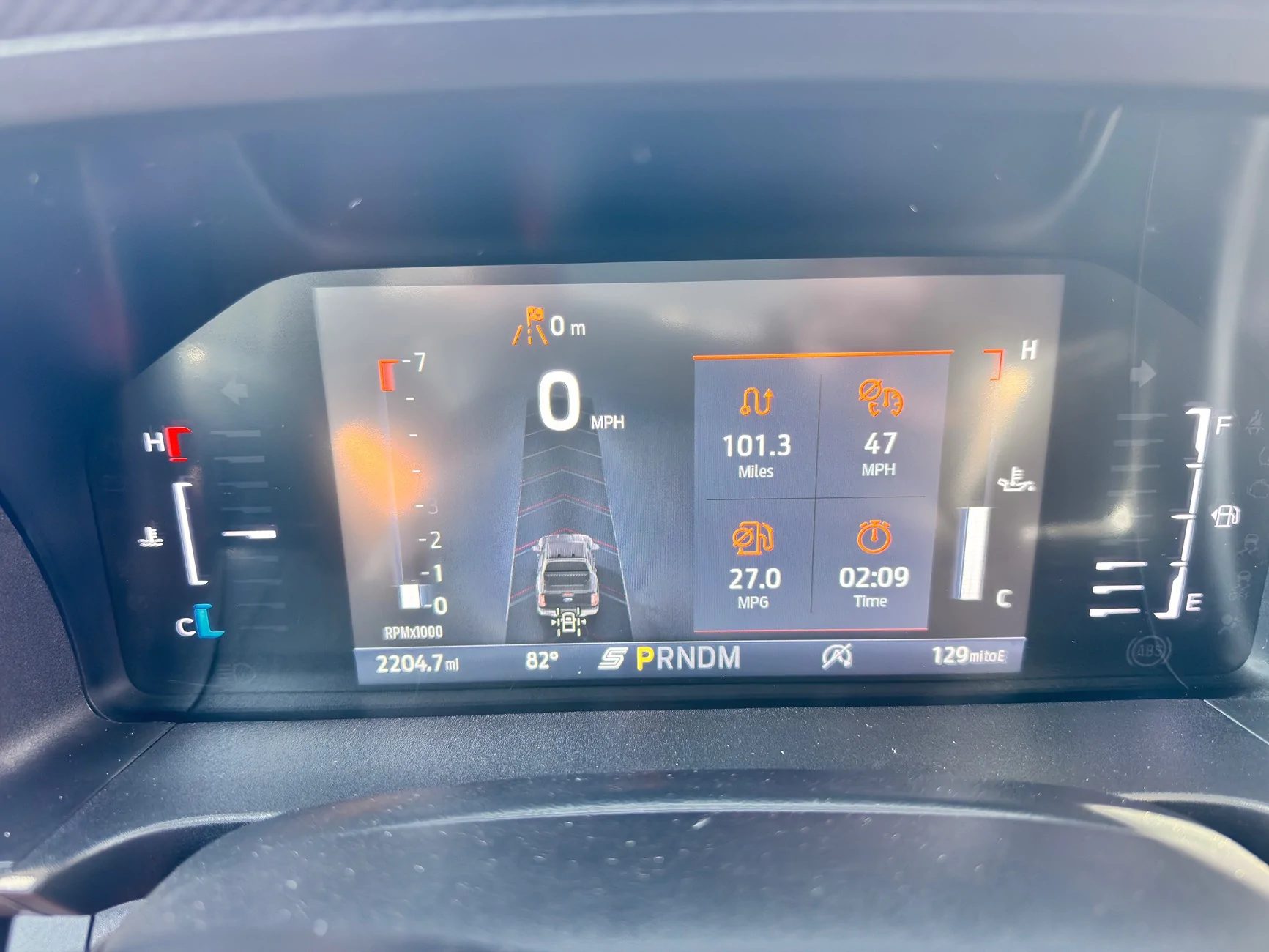
100 mile highway test with 1/4 ton combined load. Altitude started at 4200 ft with a climb to 6350.

87 octane, ethanol free, with free PI booster.

Ford Ranger Fueling Thoughts IMG_5526
 
OP
OP
gdc

gdc

Active Member
Joined
Feb 16, 2026
Threads
6
Messages
41
Reaction score
51
Location
United States
Vehicle(s)
2025 Ford Ranger 2.7L Sport 4x4
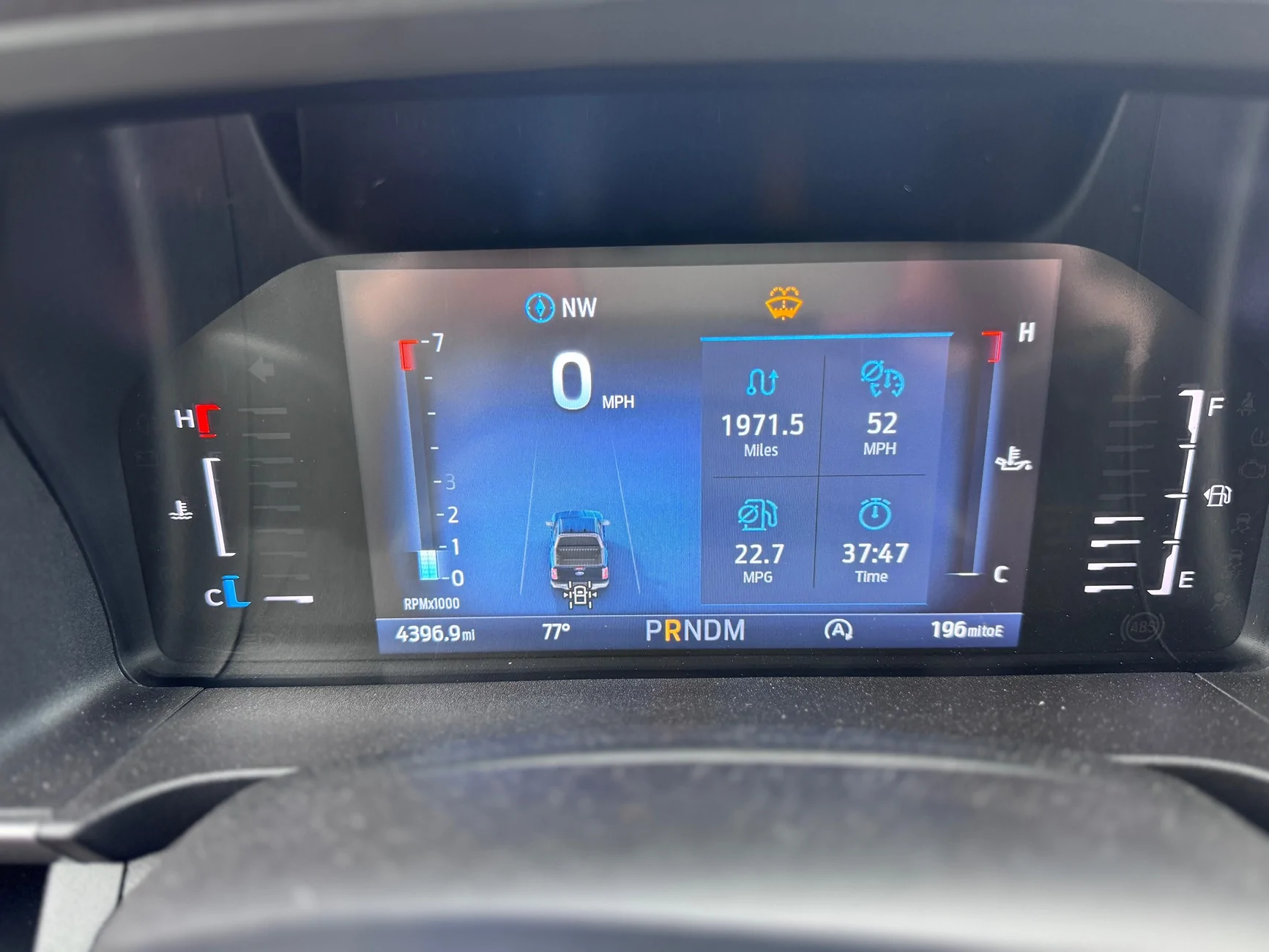
Final post. Drove to Salt Lake City. Here are the numbers and stats.

91 Octane Ethanol-free
Only stopped for food or gas; no city driving!
Sport mode only
4300-5500 altitude.
Took scenic route through Moab, too.

Ford Ranger Fueling Thoughts IMG_5910
Sponsored


Top