
Sponsored
Loading
Putz173
Active Member
- Joined
- Mar 11, 2026
- Threads
- 5
- Messages
- 26
- Reaction score
- 21
- Location
- Ontario Canada
- Vehicle(s)
- 2025 Ranger Raptor
- Thread starter
- #17
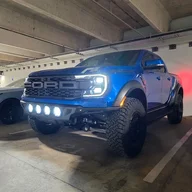
I drive 95% in town so probably not much difference, Id certainly be looking at something lighter and more eco friendly than a beefy AT if i was commuting, im sure they will hurt MPG a bit with the weight, but in my case its a wash, new wheels are lighten the OEM, tires are heavier than OEM lol
Daweism
Well-Known Member
- Joined
- Jan 21, 2025
- Threads
- 11
- Messages
- 458
- Reaction score
- 422
- Location
- Austin, TX
- Vehicle(s)
- 2025 Ranger Raptor - Velocity Blue
- Occupation
- Data Analyst, US Army Infantry Veteran
What load range did you go with? I know the SL is actually a few pounds lighter than the stock KO3.
Putz173
Active Member
- Joined
- Mar 11, 2026
- Threads
- 5
- Messages
- 26
- Reaction score
- 21
- Location
- Ontario Canada
- Vehicle(s)
- 2025 Ranger Raptor
- Thread starter
- #19
went with C rated, I wanted lighter tires but i drive on cut corn fields in the fall and those are hard on sidewalls as ive found out in the past lol

Raptor Family
Well-Known Member
- First Name
- Jeff
- Joined
- Apr 2, 2025
- Threads
- 6
- Messages
- 164
- Reaction score
- 276
- Location
- Dallas, Texas
- Vehicle(s)
- ‘25 Ranger Raptor, ‘97 Jeep Cherokee, ‘24 Lexus NX450h+
- Occupation
- retired
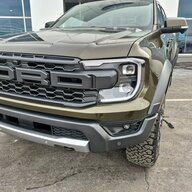
That is a lot of rotational mass you have lowered. It will make your truck accelerate faster. But more importantly, it will also stop faster. If you ever did a massive 4wd burn out at speed—those spinning wheel are like huge flywheels with lots of spinning energy—if you get slightly bent out of shape—you can’t stop them fast enough.53lb tire + my 25.2lb Method 705s is 78lbs vs. stock KO3s on beadlocks that weighed a whopping 92lbs.
Thats a massive 56lbs less in rotating mass, no change in tire diameter so I dont need a lift and I get a much bigger tire look which mostly comes from the added width, not the diameter.
In the Bronco forum, they were dyno testing different wheel and tire weights. Shedding 20lbs per wheel (measuring only 2 wheels on Dyno) gained them 25whp. Now, you can tell everybody it goes faster and, the unsprung weight will make the suspension handle better. In the real world, you have 4 wheels on the road instead of the Dyno—it’s better all around.
PS:: I like the color of those Methods with the color of your truck.
Sponsored
Lion77
Well-Known Member
- Joined
- Feb 27, 2025
- Threads
- 36
- Messages
- 1,069
- Reaction score
- 1,626
- Location
- United States
- Vehicle(s)
- 2024 Ranger Raptor
- Occupation
- Electrical Engineer
Yep, rotational mass sucks power because you waste energy accelerating the rotating mass in it's circular pattern but then also moving that mass along an axis.
So not only is the wheel being moved from point A to point B along the road, but it has to be spun up during that process and the more mass it has, the less available energy from the engine goes to moving the whole vehicle.
Someone on this forum tried to argue endlessly about how wheel / tire mass had no effect on power, he just couldn't grasp the reality that it wasn't power output from the engine that was changing, it was how effectively the power was being used.
Since my build is focused more on how Ford envisioned the Ranger Raptor, for now I'm actually going the opposite of what many do, lighter wheels so they can off-set the weight of bigger tires, which is fine. But I'm actually trying to go lighter than the stock setup to increase overall performance.
The Bronco is the crawler, 37" tires, short wheel based in an SUV format, it's clearly optimized for crawling, but stock to stock it's over 1/2 second slower than the RR. The F-150 Raptor is the big desert Baja truck that serves double duty as a legitimate work truck, 6 foot bed, SCREW in a full-sized chassis, but it's size is enormous and it just isn't as nimble, but can go over bigger obstacles, especially with 37's.
The Ranger is the ONLY truck with a Watts link, it was developed by the Aussie team focused on Rally racing, which is why it handles corners at higher speeds better than both it's big brothers, it's also 600lbs lighter than the F-150 and has the lowest ground clearance at 10.7 in but also the lowest CG. And 10.7in minimum running clerance is not bad, that's standard for off-road mid-sizers across the industry. Taco's, Jeeps, Colorado's are all in the high 10's to low 11 in range stock.
But the RR is clearly set up for higher speed driving and handling dynamics. The team driver at Finke said they ran the pre-runner RR with stock 33's at Finke since there was no issue with ground clearance due to it being a smoother higher speed track than Baja, so they only went with 35's on the RR race truck for ground clearance at Baja due to it being so heavily rutted and just kept that at Finke instead of changing tires and messing with suspension tuning, but 33's are faster for braking, acceleration, turn-in response and easier on the drive train. The RR race truck had a compromised suspension setup just to run 35's and the driver liked the STOCK pre-runner MORE in terms of handling, he was actually asking the team mechanics to try and dial it in so it was more like the stock pre-runner.
The race truck also broke a diff at Finke in 25' and I suspect the 35x12.5's were the cause, all that mass and diameter on the whoops was just hammering the front diff. I'll bet my bottom dollar that if it was on 33's and lighter wheels, the diff would not have failed. It's all about trade-offs, the real advantage of big tires comes in smoother ride over rougher terrain and ground clearance.
The drawback is added stress on the drivetrain, lots of added mass that slows acceleration, braking, more sluggish turn-in, poorer fuel economy, greater thermal loading on the engine and drivetrain etc. I'm not racing Baja though nor am I crawling with it, I use my truck for a wide variety of things, including towing, so 33" are more appropriate as the do-it-all off-road tire for now.
33's are also on the F-150 Tremor, the Silverado 1500 ZR2 as the balance between full work-truck capability and off-roading. It's still a very versatile tire size and while 35's do add some capability off-roading, it's nuanced for specific situations, where 95% of the time it's not helping. Width gives you flotation, not diameter, so even for flotation you don't NEED to go to 35's. 35's shine in rought terrain at slower speeds, 33's shine on smoother terrain at higher speeds and for practical uses like utility applications which is why the F-150 Tremor and Silverado 1500 ZR2 full sized trucks still run 33's so they can still have max towing capability.
If I ever retire the truck from general purpose utility vehicle to a "weekend toy racer", I may consider 35's / lifts etc. because it's now singularly focused only for off-road performance, but as long as I need it to do a wide variety of activities and want to maintain warranty, do family trips, home depot runs, towing and considering the places I enjoy driving allow higher speeds anyway on somewhat smoother terrain (i.e., dirt fire roads, gravel roads, sand dunes, farm fields, back country paved roads in Amish country), there's no advantage to larger tires for my uses and I'd rather have the advantages in acceleration, braking, fuel economy and handling.
So not only is the wheel being moved from point A to point B along the road, but it has to be spun up during that process and the more mass it has, the less available energy from the engine goes to moving the whole vehicle.
Someone on this forum tried to argue endlessly about how wheel / tire mass had no effect on power, he just couldn't grasp the reality that it wasn't power output from the engine that was changing, it was how effectively the power was being used.
Since my build is focused more on how Ford envisioned the Ranger Raptor, for now I'm actually going the opposite of what many do, lighter wheels so they can off-set the weight of bigger tires, which is fine. But I'm actually trying to go lighter than the stock setup to increase overall performance.
The Bronco is the crawler, 37" tires, short wheel based in an SUV format, it's clearly optimized for crawling, but stock to stock it's over 1/2 second slower than the RR. The F-150 Raptor is the big desert Baja truck that serves double duty as a legitimate work truck, 6 foot bed, SCREW in a full-sized chassis, but it's size is enormous and it just isn't as nimble, but can go over bigger obstacles, especially with 37's.
The Ranger is the ONLY truck with a Watts link, it was developed by the Aussie team focused on Rally racing, which is why it handles corners at higher speeds better than both it's big brothers, it's also 600lbs lighter than the F-150 and has the lowest ground clearance at 10.7 in but also the lowest CG. And 10.7in minimum running clerance is not bad, that's standard for off-road mid-sizers across the industry. Taco's, Jeeps, Colorado's are all in the high 10's to low 11 in range stock.
But the RR is clearly set up for higher speed driving and handling dynamics. The team driver at Finke said they ran the pre-runner RR with stock 33's at Finke since there was no issue with ground clearance due to it being a smoother higher speed track than Baja, so they only went with 35's on the RR race truck for ground clearance at Baja due to it being so heavily rutted and just kept that at Finke instead of changing tires and messing with suspension tuning, but 33's are faster for braking, acceleration, turn-in response and easier on the drive train. The RR race truck had a compromised suspension setup just to run 35's and the driver liked the STOCK pre-runner MORE in terms of handling, he was actually asking the team mechanics to try and dial it in so it was more like the stock pre-runner.
The race truck also broke a diff at Finke in 25' and I suspect the 35x12.5's were the cause, all that mass and diameter on the whoops was just hammering the front diff. I'll bet my bottom dollar that if it was on 33's and lighter wheels, the diff would not have failed. It's all about trade-offs, the real advantage of big tires comes in smoother ride over rougher terrain and ground clearance.
The drawback is added stress on the drivetrain, lots of added mass that slows acceleration, braking, more sluggish turn-in, poorer fuel economy, greater thermal loading on the engine and drivetrain etc. I'm not racing Baja though nor am I crawling with it, I use my truck for a wide variety of things, including towing, so 33" are more appropriate as the do-it-all off-road tire for now.
33's are also on the F-150 Tremor, the Silverado 1500 ZR2 as the balance between full work-truck capability and off-roading. It's still a very versatile tire size and while 35's do add some capability off-roading, it's nuanced for specific situations, where 95% of the time it's not helping. Width gives you flotation, not diameter, so even for flotation you don't NEED to go to 35's. 35's shine in rought terrain at slower speeds, 33's shine on smoother terrain at higher speeds and for practical uses like utility applications which is why the F-150 Tremor and Silverado 1500 ZR2 full sized trucks still run 33's so they can still have max towing capability.
If I ever retire the truck from general purpose utility vehicle to a "weekend toy racer", I may consider 35's / lifts etc. because it's now singularly focused only for off-road performance, but as long as I need it to do a wide variety of activities and want to maintain warranty, do family trips, home depot runs, towing and considering the places I enjoy driving allow higher speeds anyway on somewhat smoother terrain (i.e., dirt fire roads, gravel roads, sand dunes, farm fields, back country paved roads in Amish country), there's no advantage to larger tires for my uses and I'd rather have the advantages in acceleration, braking, fuel economy and handling.
Last edited:
Putz173
Active Member
- Joined
- Mar 11, 2026
- Threads
- 5
- Messages
- 26
- Reaction score
- 21
- Location
- Ontario Canada
- Vehicle(s)
- 2025 Ranger Raptor
- Thread starter
- #22
I wish the Falken at4 C load werent quite so heavy, but I dont want an E rated 10 ply as they are just too stiff for these trucks (and heavier yet again)
SL would have been ideal but ive put a couple dried corn stalks through my sidewalls in the past hunting and crossing fields so these seemed like a good comprimise for now, SL sucks for towing with the tall sidewalls they move around alot
that said these trucks have so much torque im not sure how much we will notice the acceleration, im sure a stop watch or track will tell you
SL would have been ideal but ive put a couple dried corn stalks through my sidewalls in the past hunting and crossing fields so these seemed like a good comprimise for now, SL sucks for towing with the tall sidewalls they move around alot
that said these trucks have so much torque im not sure how much we will notice the acceleration, im sure a stop watch or track will tell you
Lion77
Well-Known Member
- Joined
- Feb 27, 2025
- Threads
- 36
- Messages
- 1,069
- Reaction score
- 1,626
- Location
- United States
- Vehicle(s)
- 2024 Ranger Raptor
- Occupation
- Electrical Engineer
We'll see how the Pirelli XTM AT's ride on E load. All the demo cars they used them on, which was Jeeps and Bronco's, had the E load rated 285/70R17s. The reviews said that tire in E load was pretty comparable to the stock KO3 in C load.
I think the sidewall construction, compounds and carcas all play significant roles into how the tire rides from mfg. to mfg. Maybe Pirelli's E load just rides better than BFG's or Falken's, at least based on several reviews I've seen so far on those tires.
What I like about the XTM's is they have the same off-road grip as the KO3's, but more precise steering on-road and more predictable brake away at the limits of traction. The KO3's are good until their not, once they let go, recovery is difficult which is one of their negatives.
And the XTM's are only 53lbs per tire as mentioned, with about the same tread width as the AT4's, arguably an even more aggressive sidewall design, but we'll see once I get to the point of needing new tires as I'm not there yet.
I think the sidewall construction, compounds and carcas all play significant roles into how the tire rides from mfg. to mfg. Maybe Pirelli's E load just rides better than BFG's or Falken's, at least based on several reviews I've seen so far on those tires.
What I like about the XTM's is they have the same off-road grip as the KO3's, but more precise steering on-road and more predictable brake away at the limits of traction. The KO3's are good until their not, once they let go, recovery is difficult which is one of their negatives.
And the XTM's are only 53lbs per tire as mentioned, with about the same tread width as the AT4's, arguably an even more aggressive sidewall design, but we'll see once I get to the point of needing new tires as I'm not there yet.
saf1
Well-Known Member
- Joined
- Mar 14, 2026
- Threads
- 3
- Messages
- 52
- Reaction score
- 34
- Location
- California
- Vehicle(s)
- 2007 Toyota Sequoia
Nice write up, thanks.Yep, rotational mass sucks power because you waste energy accelerating the rotating mass in it's circular pattern but then also moving that mass along an axis.
So not only is the wheel being moved from point A to point B along the road, but it has to be spun up during that process and the more mass it has, the less available energy from the engine goes to moving the whole vehicle.
Someone on this forum tried to argue endlessly about how wheel / tire mass had no effect on power, he just couldn't grasp the reality that it wasn't power output from the engine that was changing, it was how effectively the power was being used.
Since my build is focused more on how Ford envisioned the Ranger Raptor, for now I'm actually going the opposite of what many do, lighter wheels so they can off-set the weight of bigger tires, which is fine. But I'm actually trying to go lighter than the stock setup to increase overall performance.
The Bronco is the crawler, 37" tires, short wheel based in an SUV format, it's clearly optimized for crawling, but stock to stock it's over 1/2 second slower than the RR. The F-150 Raptor is the big desert Baja truck that serves double duty as a legitimate work truck, 6 foot bed, SCREW in a full-sized chassis, but it's size is enormous and it just isn't as nimble, but can go over bigger obstacles, especially with 37's.
The Ranger is the ONLY truck with a Watts link, it was developed by the Aussie team focused on Rally racing, which is why it handles corners at higher speeds better than both it's big brothers, it's also 600lbs lighter than the F-150 and has the lowest ground clearance at 10.7 in but also the lowest CG. And 10.7in minimum running clerance is not bad, that's standard for off-road mid-sizers across the industry. Taco's, Jeeps, Colorado's are all in the high 10's to low 11 in range stock.
But the RR is clearly set up for higher speed driving and handling dynamics. The team driver at Finke said they ran the pre-runner RR with stock 33's at Finke since there was no issue with ground clearance due to it being a smoother higher speed track than Baja, so they only went with 35's on the RR race truck for ground clearance at Baja due to it being so heavily rutted and just kept that at Finke instead of changing tires and messing with suspension tuning, but 33's are faster for braking, acceleration, turn-in response and easier on the drive train. The RR race truck had a compromised suspension setup just to run 35's and the driver liked the STOCK pre-runner MORE in terms of handling, he was actually asking the team mechanics to try and dial it in so it was more like the stock pre-runner.
The race truck also broke a diff at Finke in 25' and I suspect the 35x12.5's were the cause, all that mass and diameter on the whoops was just hammering the front diff. I'll bet my bottom dollar that if it was on 33's and lighter wheels, the diff would not have failed. It's all about trade-offs, the real advantage of big tires comes in smoother ride over rougher terrain and ground clearance.
The drawback is added stress on the drivetrain, lots of added mass that slows acceleration, braking, more sluggish turn-in, poorer fuel economy, greater thermal loading on the engine and drivetrain etc. I'm not racing Baja though nor am I crawling with it, I use my truck for a wide variety of things, including towing, so 33" are more appropriate as the do-it-all off-road tire for now.
33's are also on the F-150 Tremor, the Silverado 1500 ZR2 as the balance between full work-truck capability and off-roading. It's still a very versatile tire size and while 35's do add some capability off-roading, it's nuanced for specific situations, where 95% of the time it's not helping. Width gives you flotation, not diameter, so even for flotation you don't NEED to go to 35's. 35's shine in rought terrain at slower speeds, 33's shine on smoother terrain at higher speeds and for practical uses like utility applications which is why the F-150 Tremor and Silverado 1500 ZR2 full sized trucks still run 33's so they can still have max towing capability.
If I ever retire the truck from general purpose utility vehicle to a "weekend toy racer", I may consider 35's / lifts etc. because it's now singularly focused only for off-road performance, but as long as I need it to do a wide variety of activities and want to maintain warranty, do family trips, home depot runs, towing and considering the places I enjoy driving allow higher speeds anyway on somewhat smoother terrain (i.e., dirt fire roads, gravel roads, sand dunes, farm fields, back country paved roads in Amish country), there's no advantage to larger tires for my uses and I'd rather have the advantages in acceleration, braking, fuel economy and handling.
Side note - just caught the disgruntled former 2016 Mustang comment in the sig. Why is that if you don't mind me asking? Loved my 2015 gt/pp. Wish I kept it. Wanted a gt350 but the dealer ADM was just instance at the time due to demand.
Daweism
Well-Known Member
- Joined
- Jan 21, 2025
- Threads
- 11
- Messages
- 458
- Reaction score
- 422
- Location
- Austin, TX
- Vehicle(s)
- 2025 Ranger Raptor - Velocity Blue
- Occupation
- Data Analyst, US Army Infantry Veteran
You can also try the SL load range for the AT4WYep, theres a thread from an aussie guy showing two RR next to each other, one bone stock on stock KO3s, the other modified on 33x12.5 Maxxis razors and even though the 33x12.5 is a measly 0.2 in bigger diameter they look huge next to the stock KO3s.
Im going to give the Pirrelli XTM ATs a try once my KO3s are worn out since they have the same tread width as the AT4Ws, but a much lighter weight, even lighter than the stock KO3s.
53lb tire + my 25.2lb Method 705s is 78lbs vs. stock KO3s on beadlocks that weighed a whopping 92lbs.
Thats a massive 56lbs less in rotating mass, no change in tire diameter so I dont need a lift and I get a much bigger tire look which mostly comes from the added width, not the diameter.
The Falken Wildpeak A/T4W in size 285/70R17 weighs 53.4 lbs for the Standard Load (SL) version and 65.4 lbs for the Load Range C
Sponsored
Lion77
Well-Known Member
- Joined
- Feb 27, 2025
- Threads
- 36
- Messages
- 1,069
- Reaction score
- 1,626
- Location
- United States
- Vehicle(s)
- 2024 Ranger Raptor
- Occupation
- Electrical Engineer
Wow, that's a huge weight difference between C and SL in the same tire!
Falken WildPeak A/T4W | 285/70R17 | Tire Rack
Actually, it lists the SL at just 51 lbs where the Load C is a whopping 67lbs. Something seems a bit off about that though, how it the E load isn't any heavier than the C load, but the SL is over 10lb lighter than both...I'm questioning TireRacks data on that specific tire.
Falken WildPeak A/T4W | 285/70R17 | Tire Rack
Actually, it lists the SL at just 51 lbs where the Load C is a whopping 67lbs. Something seems a bit off about that though, how it the E load isn't any heavier than the C load, but the SL is over 10lb lighter than both...I'm questioning TireRacks data on that specific tire.
Lion77
Well-Known Member
- Joined
- Feb 27, 2025
- Threads
- 36
- Messages
- 1,069
- Reaction score
- 1,626
- Location
- United States
- Vehicle(s)
- 2024 Ranger Raptor
- Occupation
- Electrical Engineer
Are you ready for the LONGEST answer ever?Nice write up, thanks.
Side note - just caught the disgruntled former 2016 Mustang comment in the sig. Why is that if you don't mind me asking? Loved my 2015 gt/pp. Wish I kept it. Wanted a gt350 but the dealer ADM was just instance at the time due to demand.
History of The 2016 GT PP Woes and Why I'm A Former Disgruntled GT Owner:
1. Catalytic Converter failed on one side at just 17k miles but was replaced under warranty (car was stock at that point).
2. Had issues since I bought it with just 3,500 miles on it with the clutch pedal getting stuck to the floor at WOT when hot lapping it or even on just a single WOT pull....but it's a Track Pack car...never did resolve that issue until the replacement clutch, but did not occur 100% of the time prior to, so i just put up with it.
3. At 30k miles the factory clutch friction plate separated at the rivets. 1/3 of the friction plate on the back side just broke off and I had to have the car towed to the dealer. I never drag raced it, just track use, saw the actual clutch after it was out and it looked brand new, wasn't worn down at all, no sign of overheating common from drag launching it, it just BROKE OFF. Car did have a Ford Performance Stage 2 Power Pack at that point in time, but I also heel and toe even during daily driving it, so it had very little wear (also had 15 years prior experience with manual, so not a "new driver issue" either).
4. Dealer screwed up the clutch install and ended up taking the transmission off and of the car 4x to get the stock replacement seated and the lines bled. I did have them upgrade the clutch line to the Ford Performance Stainless braided line, but by that time they also unknowingly damaged the main bearing seal and it came back leaking oil all over my garage floor.
5. Dealer then took the transmission off again, replaced the main bearing seal but then damaged something else on the engine (I was thinking crank angle sensor maybe or a vacuum line) and I suddenly had multiple cylinder misfire at high RPM / load, but they couldn't "duplicate the issue" because they couldn't drive that fast on public roads. Car has ZERO engine issues before the clutch failure.
6. The car sat low and I asked them to take it in through the back so the pinch weld didn't scrape across their gigantic speedbump going into the service garage....they didn't listen and literally watched them drag the bottom of the car across the entire bump and scraped like nails on a chalk board as it slowly moved across....that sucker gonna rust out now unless it gets under coated.
7. They broke several trim pieces on the interior around the shifter and super glued them back on hoping I wouldn't notice, only to have them pop off while I was driving home.
8. The mechanic completely forgot to replace the flywheel access cover on the bell housing that was forward facing, leaving the entire flywheel / clutch with a 3" access hole exposed to road debris that was forward facing....who knows what got in there until I looked underneath and saw it.
The "mustang mechanic" aka, the tech they usually had work mostly on mustangs who was pretty good was out with a broken arm for months, so a diesel mechanic did the work. The car sat for 4 weeks before they got to it initially, then 2 weeks of taking it apart and putting it back together wrong (should have done the freakin' clutch myself, but I was really busy and didn't want to go through the headache).
The diesel mechanic said the manual F-250's and F-350's had the same clutch issue as the GT. During towing with the manuals, the polymer lines heat up and expand, you lose hydraulic pressure and the clutch doesn't disengage properly, pedal gets stuck to the floor, hence why Ford Performance came up with a $300 braided stainless clutch line which I originally thought was a rip-off, nope they know EXACTLY why, to solve a design flaw with the manuals!
Note, the 6R80 Auto GT's had zero issues. At that time the 6R80 was pretty refined a nearly bomb-proof. Should have gotten the GT in the Auto, but the manual was more fun. So yah, turned into a nightmare between Ford's crap-tastic Getrag manual (oh, I almost forgot the grindy syncros on cold shifting), poly clutch lines and horrid dealer service, traded it in for a 2018 CX-9 with only 2k miles on it and 100k extended warranty for my wife and I went to driving a 2012 Prius....yes, I actually went from 470 HP fire breathing V8 to a 73 HP put put car...but 50 mpg was hard to argue with at the time.
Now I drive a 23' Mazda 3 Carbon as my daily, still great gas mileage (35~40 mpg), wife traded in for a CX-50 to downsize a bit since we got the Raptor as a 3rd vehicle that serves tripple duty as utility vehicle, hot rod off-roader and family road-tripper. Gave the Prius to our daughter for her first car.
Happy with what I got, thankful everything works and aside from maybe a GT350, I will never again buy a manual GT mustang, not with the Getrag in any flavor. GT350 uses the Tremec TR6060, same transmission that's in the Camaro SS and the TR6060 is pretty good, but Getrag is hit or miss, some are good, some just blow gears, have syncro issues and kill clutches. Getrag is a German company, but they are mfg. in China...Toyota uses Getrag too, same quality issues but there not many manuals left with Ford or Toyota products, so it's a bit moot now.
Lion77
Well-Known Member
- Joined
- Feb 27, 2025
- Threads
- 36
- Messages
- 1,069
- Reaction score
- 1,626
- Location
- United States
- Vehicle(s)
- 2024 Ranger Raptor
- Occupation
- Electrical Engineer
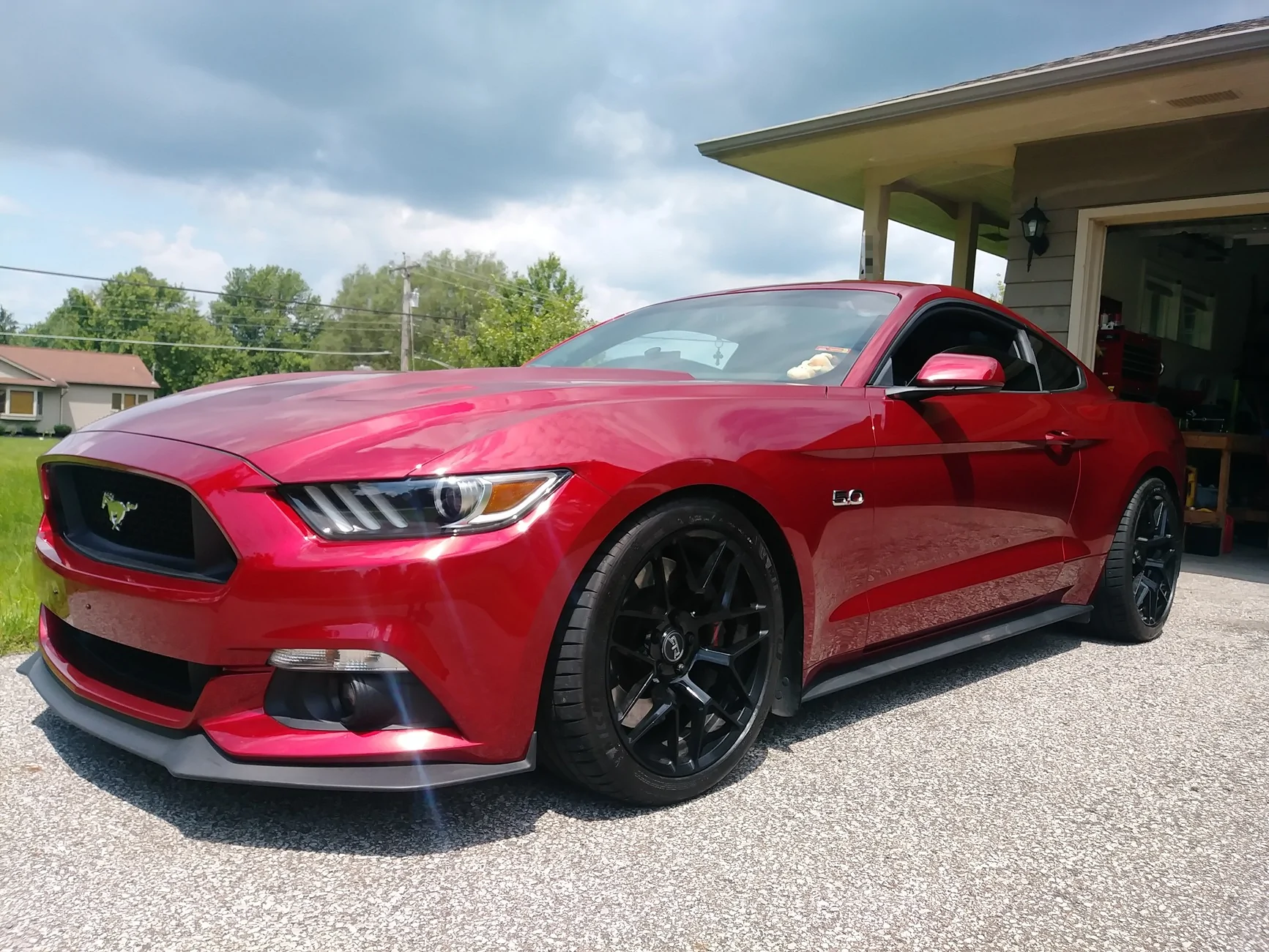
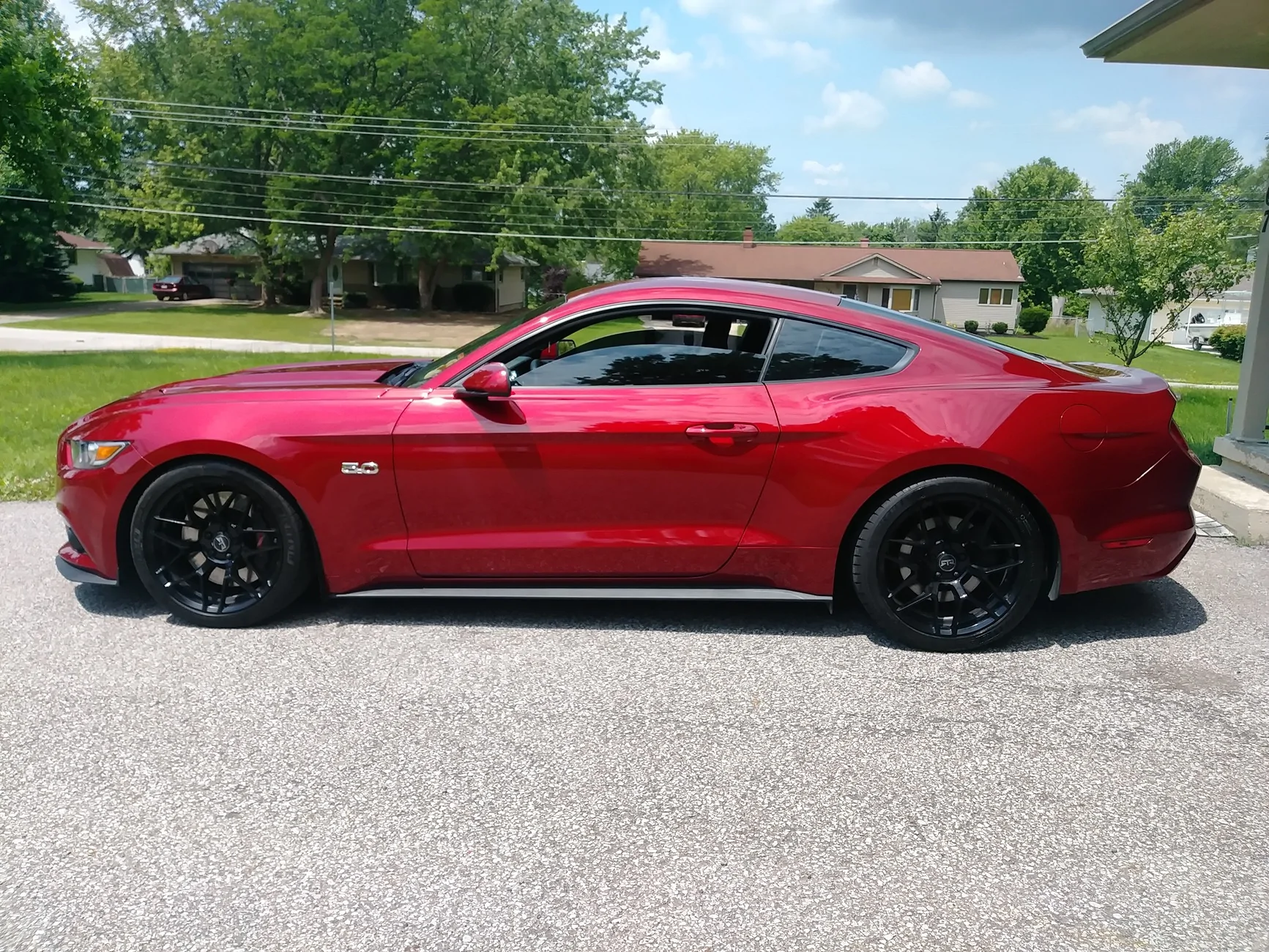
BTW, I had that GT dialed pretty good.
Mods:
FP Stage 2 Power Pack
FP Short Throw
FP Braided Stainless Clutch Line
BMR adjustable bars front and rear
BMR IRS bushings
BRM Street Lowering Springs
Steeda Roll Center Correction Rear Front Links (yes, I corrected the roll center for the lower ride height)
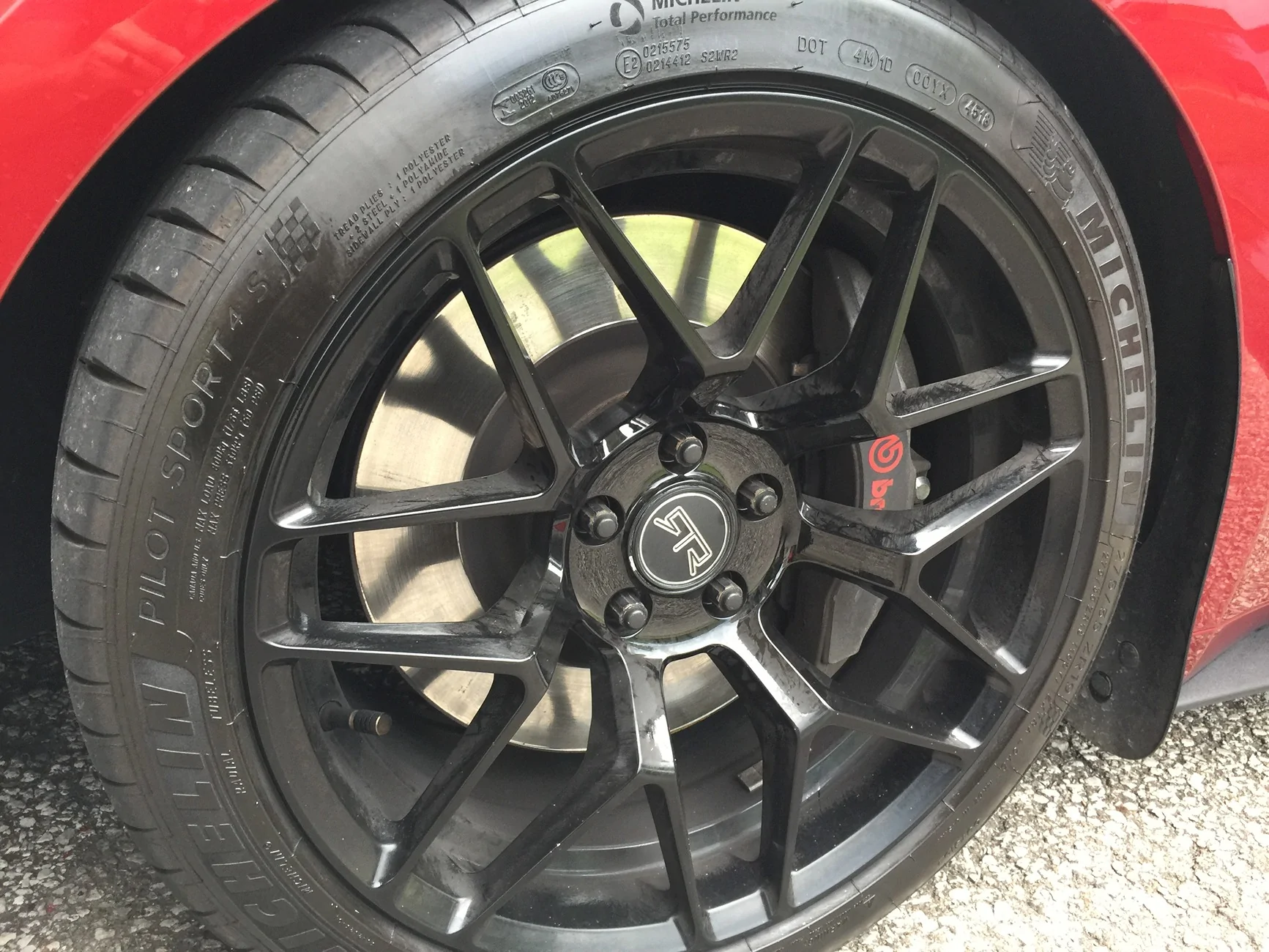
RTR Tech 7 Fow Formed Wheels (I think they were less than 21lbs each) with a square tire setup 275/35R19 Pilot Sport 4S
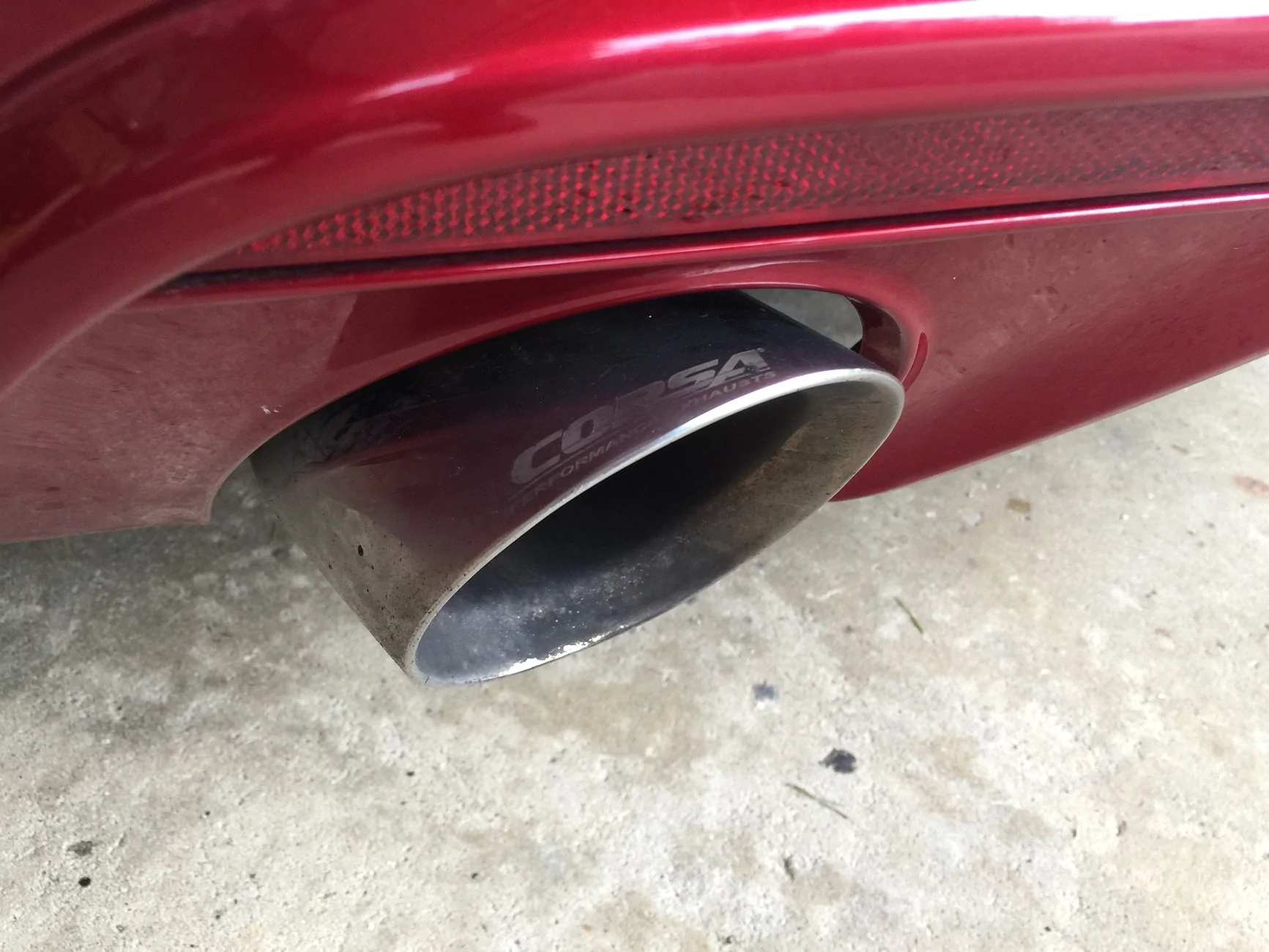
Corsa Cat Back Exhaust
Tinted windows
Last mods were going to be functional spoiler front and rear + FP Track Struts...until the clutch / dealer fiasco which ended the reign of the GT.

Mods:
FP Stage 2 Power Pack
FP Short Throw
FP Braided Stainless Clutch Line
BMR adjustable bars front and rear
BMR IRS bushings
BRM Street Lowering Springs
Steeda Roll Center Correction Rear Front Links (yes, I corrected the roll center for the lower ride height)
RTR Tech 7 Fow Formed Wheels (I think they were less than 21lbs each) with a square tire setup 275/35R19 Pilot Sport 4S
Corsa Cat Back Exhaust
Tinted windows
Last mods were going to be functional spoiler front and rear + FP Track Struts...until the clutch / dealer fiasco which ended the reign of the GT.
saf1
Well-Known Member
- Joined
- Mar 14, 2026
- Threads
- 3
- Messages
- 52
- Reaction score
- 34
- Location
- California
- Vehicle(s)
- 2007 Toyota Sequoia
Thank you for the detailed reply. I apologize also because I didn't mean for you to do all of that but it makes complete sense. I only owned my 2015 for about 18 months before I traded it in for an explorer. It was not due to issues but it was just too low for me to get in and out of after a hip replacement. The recaro's didn't help but it was just too low so it had to go.Are you ready for the LONGEST answer ever?
History of The 2016 GT PP Woes and Why I'm A Former Disgruntled GT Owner:
1. Catalytic Converter failed on one side at just 17k miles but was replaced under warranty (car was stock at that point).
2. Had issues since I bought it with just 3,500 miles on it with the clutch pedal getting stuck to the floor at WOT when hot lapping it or even on just a single WOT pull....but it's a Track Pack car...never did resolve that issue until the replacement clutch, but did not occur 100% of the time prior to, so i just put up with it.
3. At 30k miles the factory clutch friction plate separated at the rivets. 1/3 of the friction plate on the back side just broke off and I had to have the car towed to the dealer. I never drag raced it, just track use, saw the actual clutch after it was out and it looked brand new, wasn't worn down at all, no sign of overheating common from drag launching it, it just BROKE OFF. Car did have a Ford Performance Stage 2 Power Pack at that point in time, but I also heel and toe even during daily driving it, so it had very little wear (also had 15 years prior experience with manual, so not a "new driver issue" either).
4. Dealer screwed up the clutch install and ended up taking the transmission off and of the car 4x to get the stock replacement seated and the lines bled. I did have them upgrade the clutch line to the Ford Performance Stainless braided line, but by that time they also unknowingly damaged the main bearing seal and it came back leaking oil all over my garage floor.
5. Dealer then took the transmission off again, replaced the main bearing seal but then damaged something else on the engine (I was thinking crank angle sensor maybe or a vacuum line) and I suddenly had multiple cylinder misfire at high RPM / load, but they couldn't "duplicate the issue" because they couldn't drive that fast on public roads. Car has ZERO engine issues before the clutch failure.
6. The car sat low and I asked them to take it in through the back so the pinch weld didn't scrape across their gigantic speedbump going into the service garage....they didn't listen and literally watched them drag the bottom of the car across the entire bump and scraped like nails on a chalk board as it slowly moved across....that sucker gonna rust out now unless it gets under coated.
7. They broke several trim pieces on the interior around the shifter and super glued them back on hoping I wouldn't notice, only to have them pop off while I was driving home.
8. The mechanic completely forgot to replace the flywheel access cover on the bell housing that was forward facing, leaving the entire flywheel / clutch with a 3" access hole exposed to road debris that was forward facing....who knows what got in there until I looked underneath and saw it.
The "mustang mechanic" aka, the tech they usually had work mostly on mustangs who was pretty good was out with a broken arm for months, so a diesel mechanic did the work. The car sat for 4 weeks before they got to it initially, then 2 weeks of taking it apart and putting it back together wrong (should have done the freakin' clutch myself, but I was really busy and didn't want to go through the headache).
The diesel mechanic said the manual F-250's and F-350's had the same clutch issue as the GT. During towing with the manuals, the polymer lines heat up and expand, you lose hydraulic pressure and the clutch doesn't disengage properly, pedal gets stuck to the floor, hence why Ford Performance came up with a $300 braided stainless clutch line which I originally thought was a rip-off, nope they know EXACTLY why, to solve a design flaw with the manuals!
Note, the 6R80 Auto GT's had zero issues. At that time the 6R80 was pretty refined a nearly bomb-proof. Should have gotten the GT in the Auto, but the manual was more fun. So yah, turned into a nightmare between Ford's crap-tastic Getrag manual (oh, I almost forgot the grindy syncros on cold shifting), poly clutch lines and horrid dealer service, traded it in for a 2018 CX-9 with only 2k miles on it and 100k extended warranty for my wife and I went to driving a 2012 Prius....yes, I actually went from 470 HP fire breathing V8 to a 73 HP put put car...but 50 mpg was hard to argue with at the time.
Now I drive a 23' Mazda 3 Carbon as my daily, still great gas mileage (35~40 mpg), wife traded in for a CX-50 to downsize a bit since we got the Raptor as a 3rd vehicle that serves tripple duty as utility vehicle, hot rod off-roader and family road-tripper. Gave the Prius to our daughter for her first car.
Happy with what I got, thankful everything works and aside from maybe a GT350, I will never again buy a manual GT mustang, not with the Getrag in any flavor. GT350 uses the Tremec TR6060, same transmission that's in the Camaro SS and the TR6060 is pretty good, but Getrag is hit or miss, some are good, some just blow gears, have syncro issues and kill clutches. Getrag is a German company, but they are mfg. in China...Toyota uses Getrag too, same quality issues but there not many manuals left with Ford or Toyota products, so it's a bit moot now.
After reading your experience I'm wondering if we didn't encounter these due to low mileage we put on it and length of ownership. The original plan was to buy a GT350 but the dealer markups got into stupid territory and no one was budging unless you know the dealer owner and they liked you. Otherwise it was all 25K and over here in northern Cali.
Glad it worked out. We are also happy with the Raptor. Sort of like a mustang with a bed attached.
Lion77
Well-Known Member
- Joined
- Feb 27, 2025
- Threads
- 36
- Messages
- 1,069
- Reaction score
- 1,626
- Location
- United States
- Vehicle(s)
- 2024 Ranger Raptor
- Occupation
- Electrical Engineer
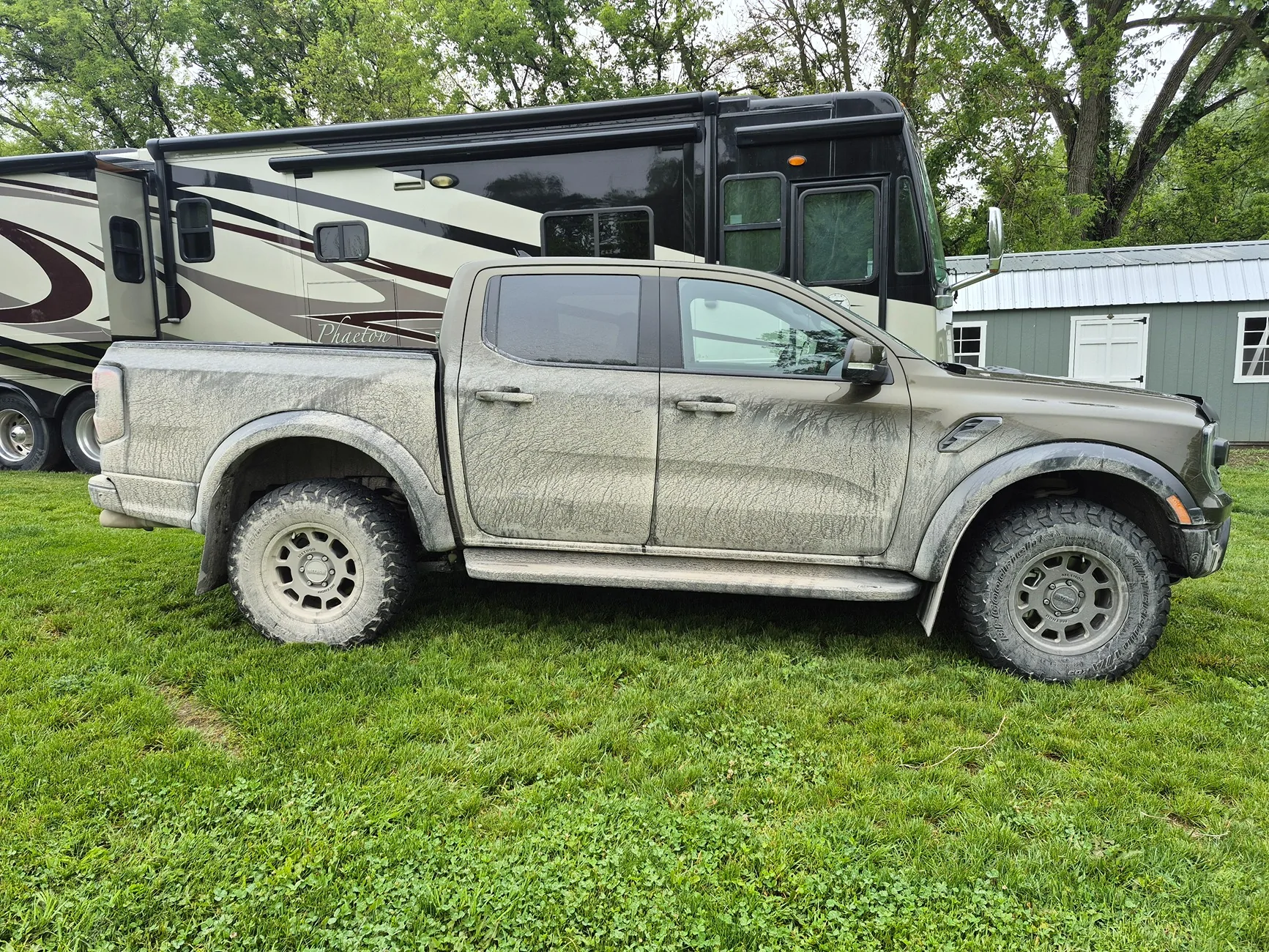
The RR I got now:
Sponsored
Similar threads


- Replies
- 27
- Views
- 24,820


- Replies
- 16
- Views
- 6,149


- Replies
- 6
- Views
- 3,662