

wymnzdblwlm
New Member
- First Name
- Guang
- Joined
- Jul 31, 2026
- Threads
- 1
- Messages
- 3
- Reaction score
- 2
- Location
- WI United States
- Vehicle(s)
- 2026 Ford Ranger XLT 2.7
- Occupation
- Software Technical Service
- Thread starter
- #1
So… I purchased my first truck two weeks ago! Love it, and I think the standard 6 speaker system is pretty ok for standard stock system (Much better than the 4-speaker Jetta from rental, about on par with my 2016 VW Golf R 8 speaker stock system). Through out the two weeks of ownership, I have the following painpoints that need to adjust:
1. Treble is a bit too bright / harsh sometimes.
2. Sometimes the vocal is missing something… hard to tell, but is noticeable on the RTA/FFT analysis.
3. Good amount of bass, but is not very “clean” due to harmonics between the door panel.
At first, I posted on the other post here that I used in-car EQ with:
Treble -4
Midrange +1
Bass 0
It helps, but I would like to have a better results. I then use my iPhone 15’s stock mics to do RTA analysis. As expected, it is not very accurate indeed. It just very limited on both ends. I then tried iPad Pro’s studio mics. Better, but at this point I just want to invest a proper microphone with calibration to have peace in mind.
I then purchased a type-c microphone with calibration file downloadable on their website (matches serial number). I also purchased AudioTools app (I used to use the old version but no longer supported properly, so I have purchase the new version…).
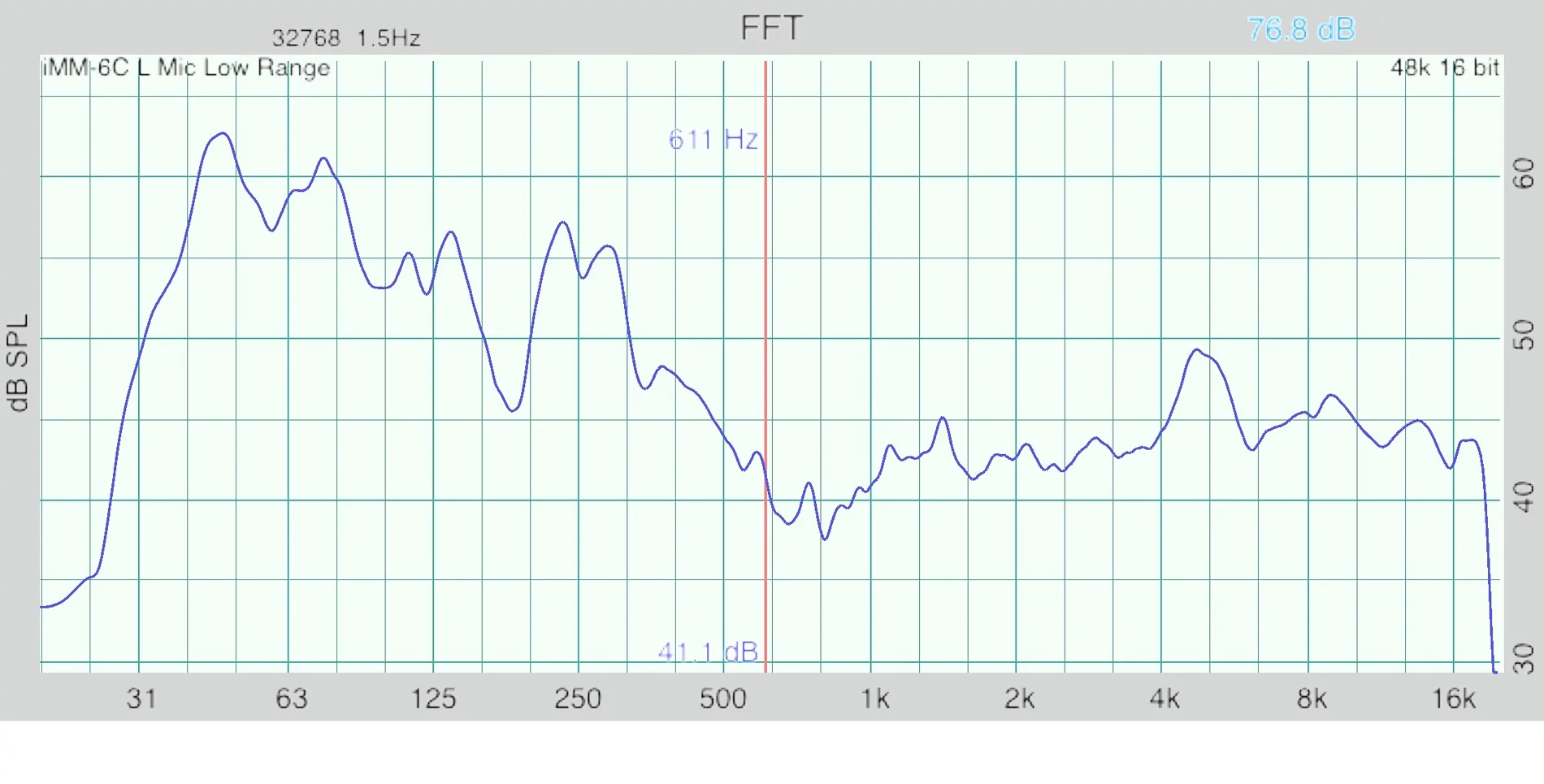
I first record a 30-second pink noise playback sample without any EQ (both in-car and external from my Android digital player FiiO M21). I use Bluetooth (SBC codec), since I cannot use Android Auto due to this app is not installed as system app so the car won’t recognize it (It worked for 2 years with my older M11S, but somehow Google does not allowed me to do so earlier 2026, weird). Anyway, below is the measurement without any EQ. There are some huge dips around 170Hz (I guess due to door panel harmonics maybe?) and between 400Hz and 1kHz (which explained why I felt the vocal was missing something). There is also a spike up on 4700Hz but that should be easy to attenuate. Good news is that the the frequency is pretty flat overall for 1kHz and above.

I output the FFT analysis in .txt file and feed to Claude to give me an initial approach draft (yes I am being lazy lol). I reviewed two draft pass and made some minor adjustment for a pass 3. Here is the final result I got for now:
I think it is a much better representation, although low frequency spike & dip is still there. The dip in midrange is mostly resolved, and high frequency above 1kHz is just beautiful within 2-3dB.
In-car EQ now is completely Flat (0dB default for all three bands). I might turn up bass for 1 or 2 steps depends on condition.
Here is the Parametric EQ setup I use now on my FiiO in PowerAmp EQ:
46Hz -5.0dB 3.5Q,
90Hz -3.5dB 0.6Q,
125Hz -5.0dB 1.8Q,
170Hz +7.4dB 3.5Q,
255Hz -9.0dB 3.0Q,
380Hz +3.0dB 3.5Q,
640Hz +6.5dB 2.5Q,
4700Hz -10.0dB 3.0Q,
8400Hz -8.0dB 1.5Q,
9000Hz high shelf -3.0dB 0.7Q.
Preamp set to -7dB to prevent clipping on specific boosted frequencies. I also turned on compressor with the following settings, to compensate road & wind noise:
Attack: 35ms
Release: 190ms
Ratio: 1.8-2.0
2-band cutover Frequency: 600Hz
Threshold: -18dB
Gain: +10dB
Knee: Soft 4dB
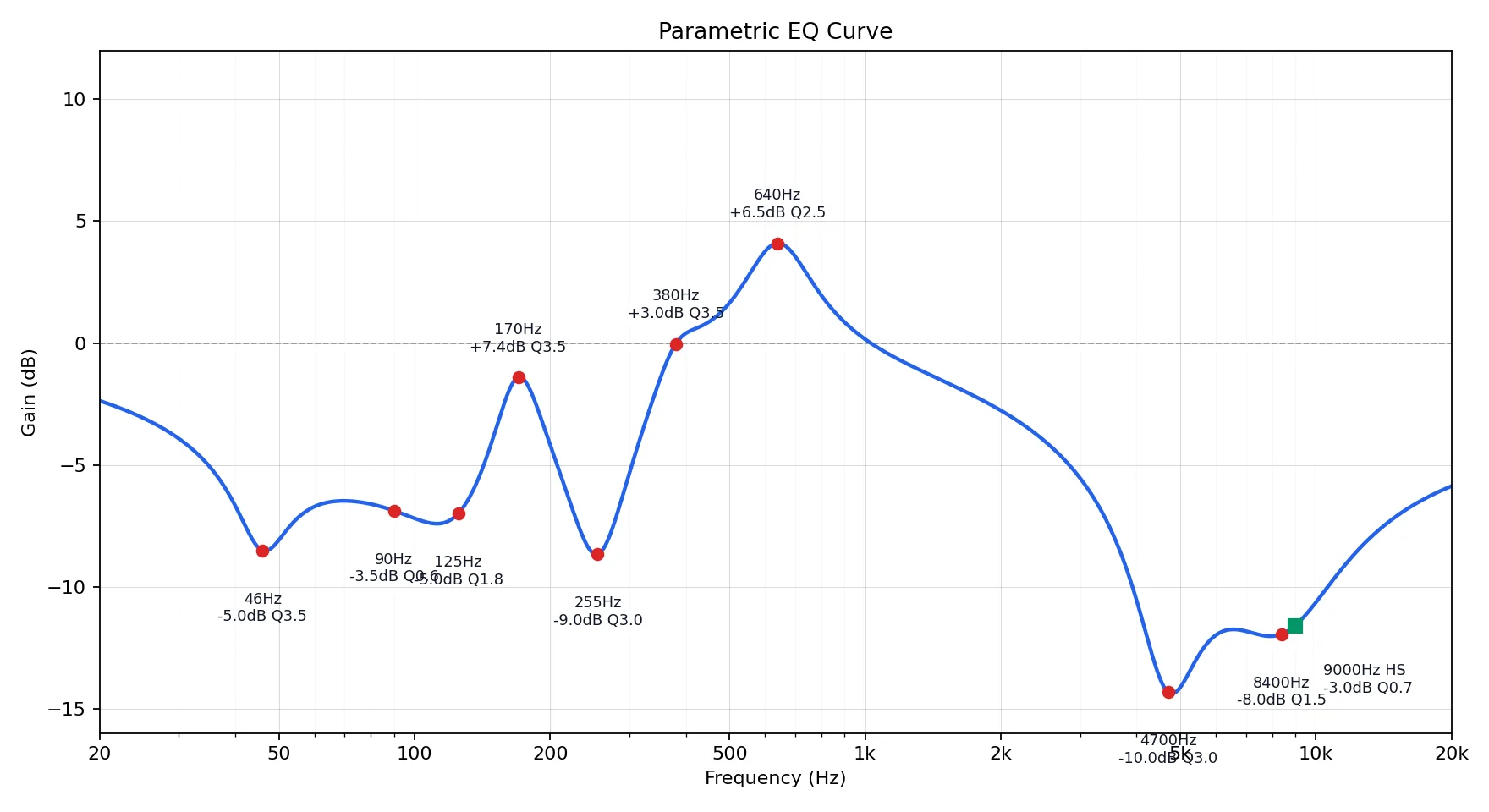
Final EQ summing curve is like (I used Claude to show an overview, although the 4700Hz dip seems too deep in my opinion, need further checking.):

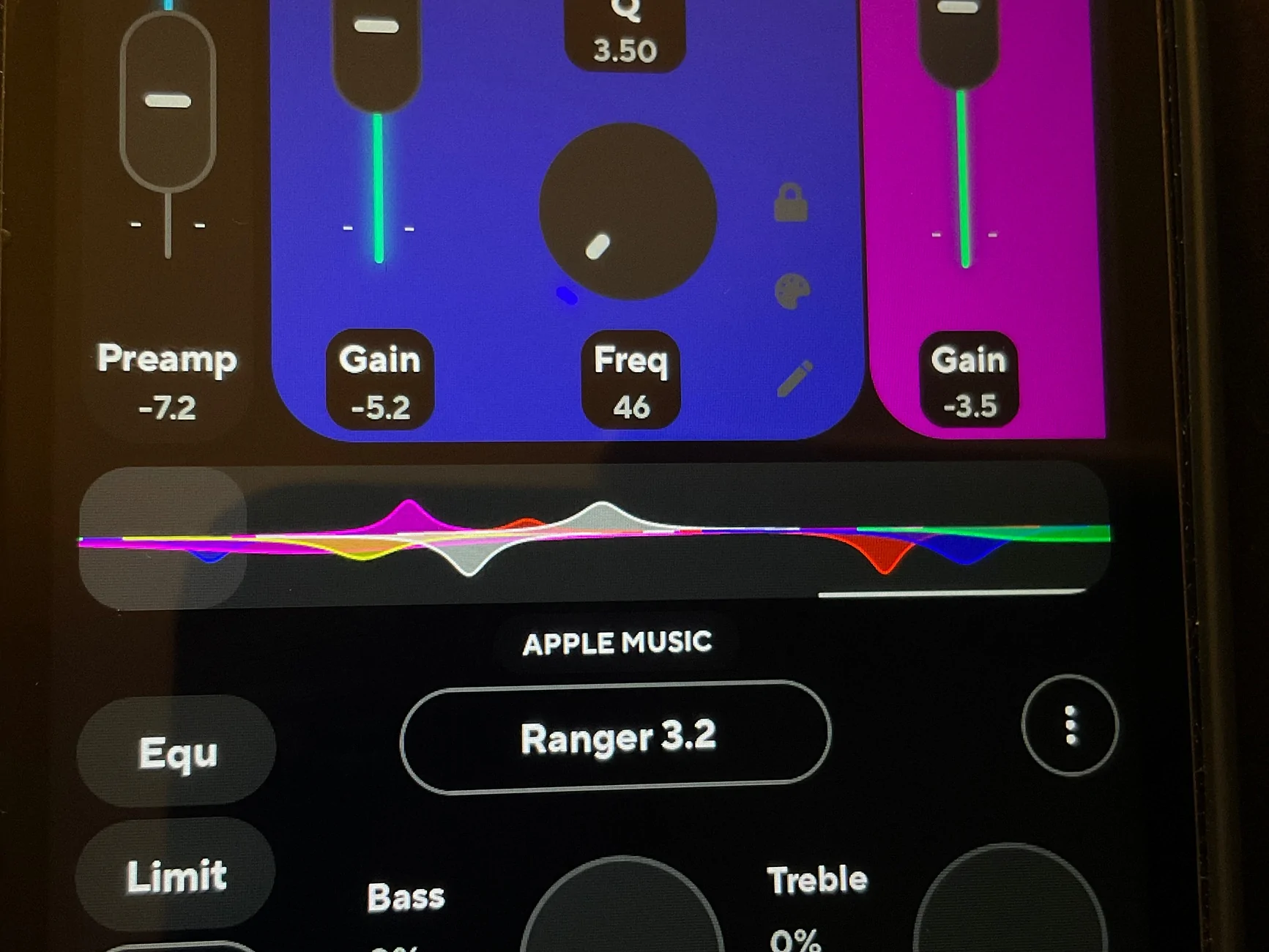
My Poweramp EQ shows:

Now the audio is more balanced but a bit bland. I might turn up bass gain a little bit to get some beats lol.
Next up would be sound proof the door panel at least. I saw several posts with sound proof and the difference is amazing. While doing that I might just go for aftermarket speaker upgrades at the same time. It would be in a year or two, when I am not that busy
1. Treble is a bit too bright / harsh sometimes.
2. Sometimes the vocal is missing something… hard to tell, but is noticeable on the RTA/FFT analysis.
3. Good amount of bass, but is not very “clean” due to harmonics between the door panel.
At first, I posted on the other post here that I used in-car EQ with:
Treble -4
Midrange +1
Bass 0
It helps, but I would like to have a better results. I then use my iPhone 15’s stock mics to do RTA analysis. As expected, it is not very accurate indeed. It just very limited on both ends. I then tried iPad Pro’s studio mics. Better, but at this point I just want to invest a proper microphone with calibration to have peace in mind.
I then purchased a type-c microphone with calibration file downloadable on their website (matches serial number). I also purchased AudioTools app (I used to use the old version but no longer supported properly, so I have purchase the new version…).
I first record a 30-second pink noise playback sample without any EQ (both in-car and external from my Android digital player FiiO M21). I use Bluetooth (SBC codec), since I cannot use Android Auto due to this app is not installed as system app so the car won’t recognize it (It worked for 2 years with my older M11S, but somehow Google does not allowed me to do so earlier 2026, weird). Anyway, below is the measurement without any EQ. There are some huge dips around 170Hz (I guess due to door panel harmonics maybe?) and between 400Hz and 1kHz (which explained why I felt the vocal was missing something). There is also a spike up on 4700Hz but that should be easy to attenuate. Good news is that the the frequency is pretty flat overall for 1kHz and above.
I output the FFT analysis in .txt file and feed to Claude to give me an initial approach draft (yes I am being lazy lol). I reviewed two draft pass and made some minor adjustment for a pass 3. Here is the final result I got for now:
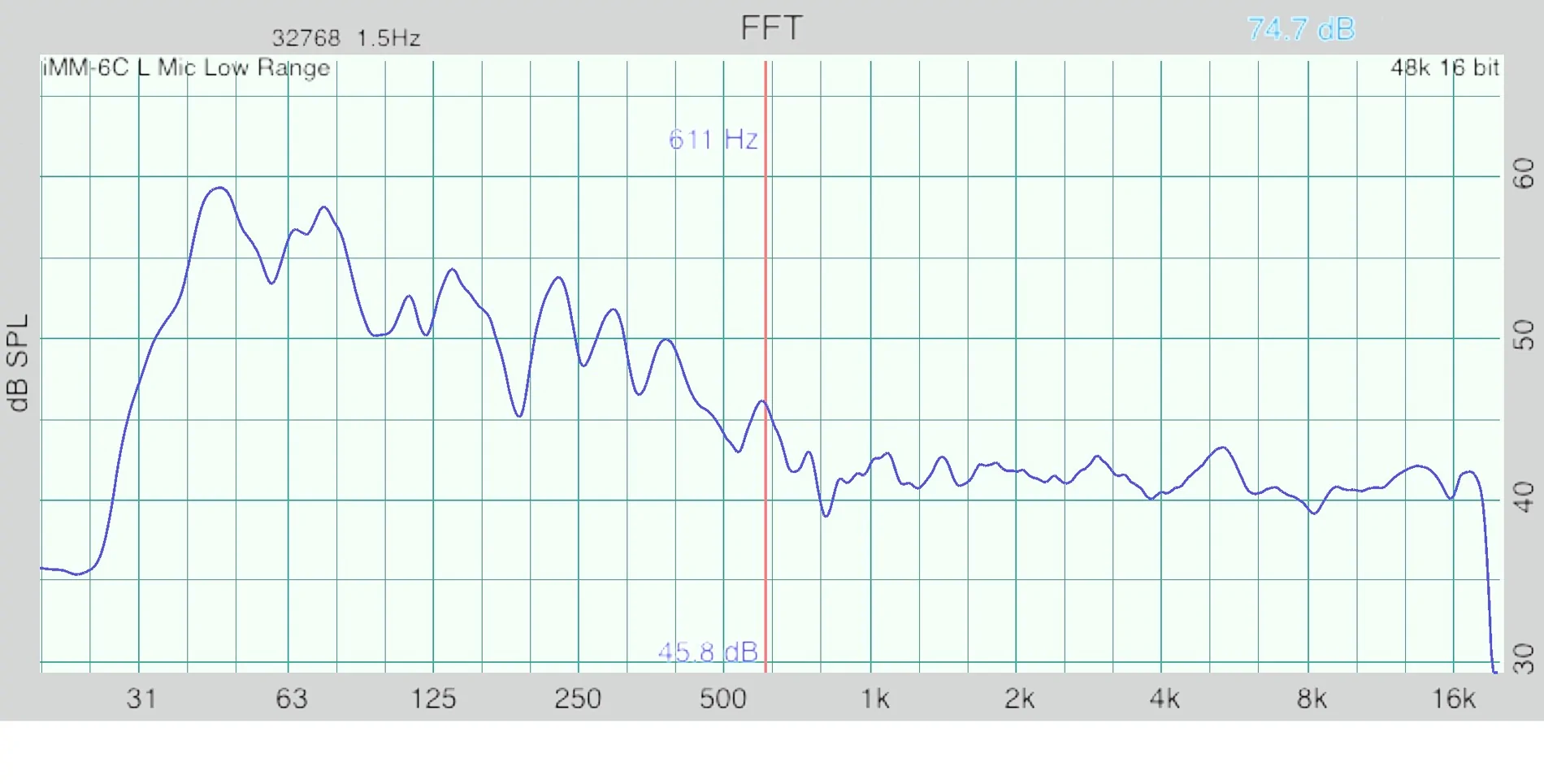
I think it is a much better representation, although low frequency spike & dip is still there. The dip in midrange is mostly resolved, and high frequency above 1kHz is just beautiful within 2-3dB.
In-car EQ now is completely Flat (0dB default for all three bands). I might turn up bass for 1 or 2 steps depends on condition.
Here is the Parametric EQ setup I use now on my FiiO in PowerAmp EQ:
46Hz -5.0dB 3.5Q,
90Hz -3.5dB 0.6Q,
125Hz -5.0dB 1.8Q,
170Hz +7.4dB 3.5Q,
255Hz -9.0dB 3.0Q,
380Hz +3.0dB 3.5Q,
640Hz +6.5dB 2.5Q,
4700Hz -10.0dB 3.0Q,
8400Hz -8.0dB 1.5Q,
9000Hz high shelf -3.0dB 0.7Q.
Preamp set to -7dB to prevent clipping on specific boosted frequencies. I also turned on compressor with the following settings, to compensate road & wind noise:
Attack: 35ms
Release: 190ms
Ratio: 1.8-2.0
2-band cutover Frequency: 600Hz
Threshold: -18dB
Gain: +10dB
Knee: Soft 4dB
Final EQ summing curve is like (I used Claude to show an overview, although the 4700Hz dip seems too deep in my opinion, need further checking.):
My Poweramp EQ shows:
Now the audio is more balanced but a bit bland. I might turn up bass gain a little bit to get some beats lol.
Next up would be sound proof the door panel at least. I saw several posts with sound proof and the difference is amazing. While doing that I might just go for aftermarket speaker upgrades at the same time. It would be in a year or two, when I am not that busy
Sponsored


