Sponsored

2024 Ranger XLT FX4 4X4 mpg?

NevadaBob

Well-Known Member
Joined
Jul 18, 2025
Threads
10
Messages
98
Reaction score
99
Location
Nevada
Vehicle(s)
2024 Ranger Lariat
Why would you ever put 87 in your 2.3? 91 is recommended by ford and is pretty much required for any turbo charged engine. They allow 87 because they have sensors to help prevent knock but you’re still putting a lot of extra wear on engine just to save a few bucks at the pump.
Well first it’s not a 2.3, it’s a 2.7. And saying “91 is recommended by ford” while not untrue is not the whole story either. The manual says “Your vehicle operates on regular unleaded gasoline with a minimum pump (R+M)/2 octane rating of 87” along with a cartoon of a fuel pump with a big 87. That sounds like they recommend 87 octane (or better), and to answer your question, that’s why I’d put 87 in my 2.7.

It does also say “For best overall vehicle and engine performance, premium fuel with an octane rating of 91 or higher is recommended.” So you could say they “recommend “ it, I guess, for “best overall vehicle and engine performance “. No mention of “a lot of extra engine wear”. I haven’t seen any data that suggests an engine that is designed to run on 87 octane, and doesn’t knock using 87 octane, will incur a lot of extra wear compared to the same engine running 91 or higher.

To be clear I’m not against using higher octane fuel, and even said I do use it. I’ll just say using 87 is in accordance with the manufacturer’s instructions, and probably not going to be the thing that kills my truck.
Sponsored

 

AugPal

Well-Known Member
First Name
Augie
Joined
Nov 8, 2024
Threads
20
Messages
271
Reaction score
217
Location
Chicago
Vehicle(s)
2024 Ford Ranger XLT 2018 Ford Fiesta
Occupation
Retired IBEW
I have only put 91 octane in my Ranger. I read somewhere before buying it that turbo engines do best with the higher octane gas. I really hate paying the higher price for 91, but I do it.

Before my Ranger I had a Jeep Grand Cherokee with a non-turbo 3.6 liter V6. It ran fine on 87 octane, but when I towed my 3500lb trailer with it, I had to use 91 octane or else it would get a knock on acceleration.
 

Jason B

Well-Known Member
First Name
Jason
Joined
Apr 27, 2023
Threads
1
Messages
1,196
Reaction score
1,274
Location
Louisiana
Vehicle(s)
2024 Ranger XLT FX4
Occupation
machinist
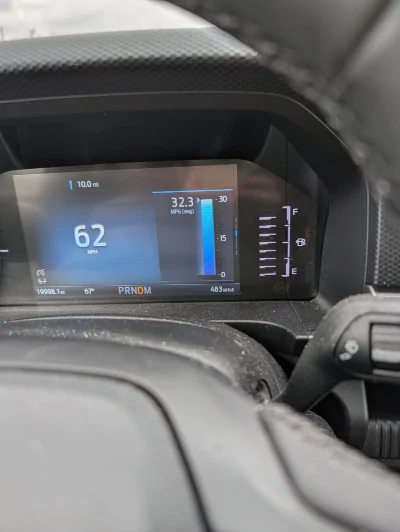
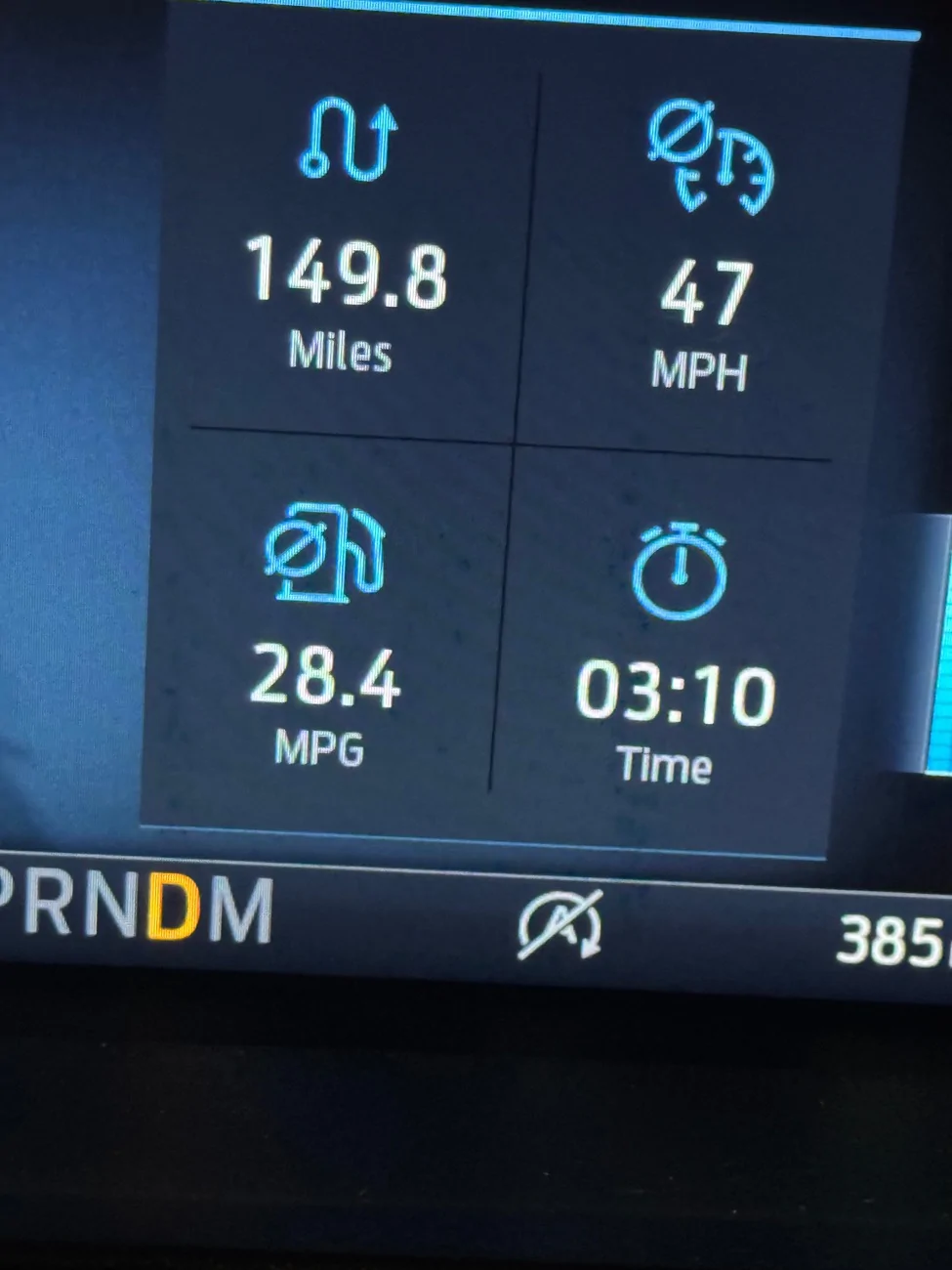
24 XLT FX4 with 2.3 driving from southern Tennessee to Kentucky on highway 641 speed limit varies from 55 to 65. 32.3mpg


mpg.webp
One of 2 things happening:
1. The ECU has wrong MPG cal data.
2. You were going downhill, both ways.
 

james1108

Well-Known Member
First Name
james
Joined
Oct 2, 2025
Threads
0
Messages
51
Reaction score
66
Location
Tennessee
Vehicle(s)
2025 Ranger Raptor
Well first it’s not a 2.3, it’s a 2.7. And saying “91 is recommended by ford” while not untrue is not the whole story either. The manual says “Your vehicle operates on regular unleaded gasoline with a minimum pump (R+M)/2 octane rating of 87” along with a cartoon of a fuel pump with a big 87. That sounds like they recommend 87 octane (or better), and to answer your question, that’s why I’d put 87 in my 2.7.

It does also say “For best overall vehicle and engine performance, premium fuel with an octane rating of 91 or higher is recommended.” So you could say they “recommend “ it, I guess, for “best overall vehicle and engine performance “. No mention of “a lot of extra engine wear”. I haven’t seen any data that suggests an engine that is designed to run on 87 octane, and doesn’t knock using 87 octane, will incur a lot of extra wear compared to the same engine running 91 or higher.

To be clear I’m not against using higher octane fuel, and even said I do use it. I’ll just say using 87 is in accordance with the manufacturer’s instructions, and probably not going to be the thing that kills my truck.
2.7 is also a turbo engine so the same still applies. Throw 87 in it if you want to. You won’t get longevity out of it though. All of these new turbo engines require 91+ for longevity. Not just Ford’s. Ford allows 87 because the sensors will help prevent knock. Ford is also banking on you buying a new car from them within 60k miles. Thats why they also recommend 10k oil changes instead of 3k to 5k which is what it should be for a turbo engine. You do you. I’m just saying your truck won’t last that way. If you don’t believe me keep at it.
 

mrmike7189

Well-Known Member
First Name
Mike
Joined
May 23, 2025
Threads
4
Messages
248
Reaction score
272
Location
MA
Vehicle(s)
2024 ranger STX 4x4
2.7 is also a turbo engine so the same still applies. Throw 87 in it if you want to. You won’t get longevity out of it though. All of these new turbo engines require 91+ for longevity. Not just Ford’s. Ford allows 87 because the sensors will help prevent knock. Ford is also banking on you buying a new car from them within 60k miles. Thats why they also recommend 10k oil changes instead of 3k to 5k which is what it should be for a turbo engine. You do you. I’m just saying your truck won’t last that way. If you don’t believe me keep at it.
10K mile oil changes are fine for synthetic oil . 87 octane gas is also fine.
I throw a fuel system cleaner in the tank every other oil change and I'm confident my truck will go over 100K with no issues. Dont believe the naysayers... "the sky is falling if you dont use this high octane gasoline. " Please spare us your negativity!
 

Sponsored

james1108

Well-Known Member
First Name
james
Joined
Oct 2, 2025
Threads
0
Messages
51
Reaction score
66
Location
Tennessee
Vehicle(s)
2025 Ranger Raptor
10K mile oil changes are fine for synthetic oil . 87 octane gas is also fine.
I throw a fuel system cleaner in the tank every other oil change and I'm confident my truck will go over 100K with no issues. Dont believe the naysayers... "the sky is falling if you dont use this high octane gasoline. " Please spare us your negativity!
It’s not. Running lower than 91 causes knocking. The only reason ford allows less is that they have sensors that can help prevent the knocking but running lower absolutely still adds more stress to the truck as your truck is now trying to compensate for the gas instead of running it. That’s why you’re seeing the motor performance dip on 87 gas. The motor is changing timing and ratios to compensate. 91+ fuel is not giving you more power in these motors. It’s the bar that the motor is supposed to be on to begin with. If you don’t think running less is adding extra wear you’re a fool. Synthetic oil is fine for 10k mile on most NA engines. Not a turbo engine which runs hotter and breaks the oil down faster. There’s been a lot of research into this and everyone I have seen says the same thing. But to each their own. As me for me oil is cheap and running 91+ isn’t that much more either. Definitely cheap insurance compared to a motor replacement. And I prefer to listen to motor experts instead of doing whatever I want and expecting longevity out of a vehicle.
 

AugPal

Well-Known Member
First Name
Augie
Joined
Nov 8, 2024
Threads
20
Messages
271
Reaction score
217
Location
Chicago
Vehicle(s)
2024 Ford Ranger XLT 2018 Ford Fiesta
Occupation
Retired IBEW
I can't find the article I read about using 91 octane with a turbo engine, but a Google search gave me this, so I have only used 91 octane in my Ranger.

Yes, premium gas (91+ octane) is generally better for turbocharged engines
as it prevents "engine knocking" (pre-ignition) caused by high cylinder pressures. While some modern turbos are designed to run on regular (87 octane), premium is often required for peak performance, better fuel efficiency, and to prevent long-term engine damage, especially under heavy load or hot weather.

Turbo engines do run hotter. I'm changing oil every 3000 miles. I do think changing synthetic every 5000 is okay, but I'm sticking with 3000. Am I wasting money? Probably, but I know my engine will be clean and I tow a 3500lbs trailer from time to time.,
 
Last edited:

superj

Well-Known Member
First Name
Jason
Joined
Feb 8, 2025
Threads
41
Messages
3,513
Reaction score
3,235
Location
Corpus christi texas
Vehicle(s)
2004 ford ranger, 2024 ford ranger
Occupation
Aircraft examiner
i could see what googly says there

"
Yes, premium gas (91+ octane) is generally better for turbocharged engines
as it prevents "engine knocking" (pre-ignition) caused by high cylinder pressures. While some modern turbos are designed to run on regular (87 octane), premium is often required for peak performance, better fuel efficiency, and to prevent long-term engine damage, especially under heavy load or hot weather. "

if we were port injection, tbi, or carb, i would agree that 91 would be better on a stock turbo motor but we are direct injection. direct injection injects at the time fuel is needed so its not being compressed and pre-ignited. if you are running a stock motor, whatever ford says to use is fine, or, if you wish to run 91, thats fine too. if you are tuned, then you do need to run higher octane, and the instructions from your tuner will say that, just like the procal from ford says to do.

but a stock motor doesn't require 91 or it would say it in the book and when you open the fuel filler door
 
Last edited:

purdyd

Well-Known Member
Joined
Apr 28, 2025
Threads
31
Messages
935
Reaction score
1,280
Location
california
Vehicle(s)
2025 Ford Ranger Lariat
I can't find the article I read about using 91 octane with a turbo engine, but a Google search gave me this, so I have only used 91 octane in my Ranger.

Yes, premium gas (91+ octane) is generally better for turbocharged engines
as it prevents "engine knocking" (pre-ignition) caused by high cylinder pressures. While some modern turbos are designed to run on regular (87 octane), premium is often required for peak performance, better fuel efficiency, and to prevent long-term engine damage, especially under heavy load or hot weather.

Turbo engines do run hotter. I'm changing oil every 3000 miles. I do think changing synthetic every 5000 is okay, but I'm sticking with 3000. Am I wasting money? Probably, but I know my engine will be clean and I tow a 3500lbs trailer from time to time.,
here is what Google tells me


Not all turbocharged engines require 91 octane
, but many high-performance or higher-compression models do to maximize performance and prevent engine knock. While many modern, smaller, or consumer-focused turbo engines are calibrated to run safely on 87 octane, using 91+ is still recommended for towing, high-load conditions, or to unlock maximum horsepower.
Reddit +4”


and it is always a good idea to check the references, notice the Reddit as the source.

some of which are 12 year old where turbos were more likely to run on 91 octane

with electronic variable timing and fuel injection in these engines to say that these engines are designed for 91 octane and tolerate 87 octane would be incorrect.

but like google says, 91 might be used for high performance applications

same with oil. 5k is probably more than sufficient for normal driving

changing at 3k might be good if you are running the turbo a lot.

but I haven’t seen or performed an oil analysis report to support or contradict this

i could see a case for 91 octane and shorter oil changes if you are towing or hauling heavy loads
 

CEW2

New Member
First Name
Charles
Joined
May 22, 2026
Threads
0
Messages
3
Reaction score
10
Location
Illinois
Vehicle(s)
2024 Ford Ranger
Just purchased 2024 Ranger 3.2 ecoboost XLT FX4 4X4.
I was hoping for mpg numbers to be a little better. With 500 miles on it I'm averaging between 18.7 and 19 mpg. I live in the foothills (Auburn, Ca)
with elevation change from sea level to 2000ft. 19 mpg is the best I've gotten even going down hill with an average freeway distance of 20 miles. No long trips yet. Some other owners are reporting up to 25 mpg on thier freeway trips. I drive very concervitaly and have it in eco mode. Any thoughts?
I'm getting similar MPG that you mention with my 24 Lariat 2.3L. I've tried the various drive modes (ECO, Regular, and Sport) and found that ECO mode for in-town driving is not as efficient as Regular mode. Sport mode is great if you want to really get moving from stop to start but that doesn't help with MPG.

I live in the midwest with fairly flat terrain. For this location, it really depends on wind direction. If I'm driving in a 20 mile per hour head wind at highway speeds (70-75) I get 20-22 MPG using cruise control. If I'm driving with a 20 mile per hour tail wind at highway speeds using cruise control I get 26-28.

For me, MPG is best when driving roads where speeds are 60-65 miles per hour. Using cruise with a head wind I get 22-24 MPG. With a tail wind I get 27-29 MPG.

Although I dislike the stop/start feature, I've tried it a few times while driving in-town and it does seem to help with MPG. However, I've only tried it when I'm not using the AC or putting any extra load on the engine.

Hope this information helps.
 

Sponsored
OP
OP
JR RANGER

JR RANGER

Well-Known Member
First Name
JR
Joined
Jul 5, 2024
Threads
19
Messages
193
Reaction score
98
Location
Auburn CA
Vehicle(s)
2024 Ranger XLT FX4 4x4
Occupation
Retired
Well first it’s not a 2.3, it’s a 2.7. And saying “91 is recommended by ford” while not untrue is not the whole story either. The manual says “Your vehicle operates on regular unleaded gasoline with a minimum pump (R+M)/2 octane rating of 87” along with a cartoon of a fuel pump with a big 87. That sounds like they recommend 87 octane (or better), and to answer your question, that’s why I’d put 87 in my 2.7.

It does also say “For best overall vehicle and engine performance, premium fuel with an octane rating of 91 or higher is recommended.” So you could say they “recommend “ it, I guess, for “best overall vehicle and engine performance “. No mention of “a lot of extra engine wear”. I haven’t seen any data that suggests an engine that is designed to run on 87 octane, and doesn’t knock using 87 octane, will incur a lot of extra wear compared to the same engine running 91 or higher.

To be clear I’m not against using higher octane fuel, and even said I do use it. I’ll just say using 87 is in accordance with the manufacturer’s instructions, and probably not going to be the thing that kills my truck.
Thanks, for the reply. I'm mirroring your results now. Truck has 15k miles on it now.
JRRANGER
 

NevadaBob

Well-Known Member
Joined
Jul 18, 2025
Threads
10
Messages
98
Reaction score
99
Location
Nevada
Vehicle(s)
2024 Ranger Lariat
Along these lines, I've gone to bigger tires on my FX4 and have not changed anything using Forescan to compensate. So it seems that since now I'm actually going faster than the speedometer says, and I'm going farther than the odometer says, the MPG figure on the screen is probably lower than actual, correct? i.e., in theory my revolutions per mile are 5% greater, so my mileage should be 5% better than shown?

Last trip was about 1700 miles in Montana/Idaho/Utah/Nevada and averaged 19.7 (on the screen) with heavy winds all the time. Adding 5% would make that closer to 20.7mpg... That's with 285/70R17 tires.
 
OP
OP
JR RANGER

JR RANGER

Well-Known Member
First Name
JR
Joined
Jul 5, 2024
Threads
19
Messages
193
Reaction score
98
Location
Auburn CA
Vehicle(s)
2024 Ranger XLT FX4 4x4
Occupation
Retired
Along these lines, I've gone to bigger tires on my FX4 and have not changed anything using Forescan to compensate. So it seems that since now I'm actually going faster than the speedometer says, and I'm going farther than the odometer says, the MPG figure on the screen is probably lower than actual, correct? i.e., in theory my revolutions per mile are 5% greater, so my mileage should be 5% better than shown?

Last trip was about 1700 miles in Montana/Idaho/Utah/Nevada and averaged 19.7 (on the screen) with heavy winds all the time. Adding 5% would make that closer to 20.7mpg... That's with 285/70R17 tires.
That's great.
 

Uncle Buck

Active Member
Joined
Mar 9, 2025
Threads
2
Messages
34
Reaction score
70
Location
Western Mass, USA, Planet Earth, Milkey Way Galaxy
Vehicle(s)
2024 Ranger XLT
Occupation
Powersports Industry(Petired)
Along these lines, I've gone to bigger tires on my FX4 and have not changed anything using Forescan to compensate. So it seems that since now I'm actually going faster than the speedometer says, and I'm going farther than the odometer says, the MPG figure on the screen is probably lower than actual, correct? i.e., in theory my revolutions per mile are 5% greater, so my mileage should be 5% better than shown?

Last trip was about 1700 miles in Montana/Idaho/Utah/Nevada and averaged 19.7 (on the screen) with heavy winds all the time. Adding 5% would make that closer to 20.7mpg... That's with 285/70R17 tires.
My on screen MPG generally shows a little higher than actual mileage. I have a 24 4X4 with the 2.3L.
I recently took a trip from western MA to north western NC to visit my brother and his family.
I went down in eco mode and back in standard mode. On the way down my screen MPG showed 26.1 My actual mileage was 24.9 On the way back my screen showed 28.1 My actual mileage was 27.35
The actual numbers are miles driven ÷ gallons used. Its been my experience that eco mode gets the worst mileage whether its local or long distance driving.
Sponsored

 
Last edited:


Top