
Sponsored
DTE with the Long Range America 35 gallon fuel tank (500+ miles range now)
Stumpm2
Well-Known Member
I got a Long Ranger 140L tank from Australia via a Canadian dealer that should be delivered tomorrow. Total cost with shipping was significantly cheaper than Long Ranger America without shipping with exchange rates. biggest bonus is the tank is larger and comes with a larger vapor canister to handle the larger capacity rather than try to reuse the stock one.the long ranger 140l tanks aren’t sold here. We get a smaller tank from long ranger America that is produced by long range automotive in Australia. Since the long ranger tanks are distributed through ARB and offered as dealer add ons down there, I believe you guys get a 140l tank option in fdrs. I don’t think we have that option for the 136 or so l tank LRA sells.
Stumpm2
Well-Known Member
I also have a 2022 Super Duty was able to change the DTE to match larger fuel tank with Forescan. Looking at the latest post on the Super Duty forums it sounds like Ford made some changes on how the DTE is calculated in 2023 or 2024 that does not allow Forescan to make these changes anymore. Sounds like the DTE was previously calculated using the tank volume entered in Forescan and now it uses something else.
mAtTyG04
Well-Known Member
what Canadian dealer?I got a Long Ranger 140L tank from Australia via a Canadian dealer that should be delivered tomorrow. Total cost with shipping was significantly cheaper than Long Ranger America without shipping with exchange rates. biggest bonus is the tank is larger and comes with a larger vapor canister to handle the larger capacity rather than try to reuse the stock one.
superj
Well-Known Member
- First Name
- Jason
- Joined
- Feb 8, 2025
- Threads
- 40
- Messages
- 3,481
- Reaction score
- 3,201
- Location
- Corpus christi texas
- Vehicle(s)
- 2004 ford ranger, 2024 ford ranger
- Occupation
- Aircraft examiner
i wonder if you use some bed liner on the tank will it stop the sounds?I was thinking one it would look more OEM if in poly, and two I was concerned that every pebble flying off the tires and bouncing off the tank would make a lot of racket.
That is sort of in a nutshell why I would prefer a poly tank.
I was sort of curious if they just labeled them Diesel only because all Rangers in those countries are diesel of if there was a reason they would not fit or work on gas US spec truck.

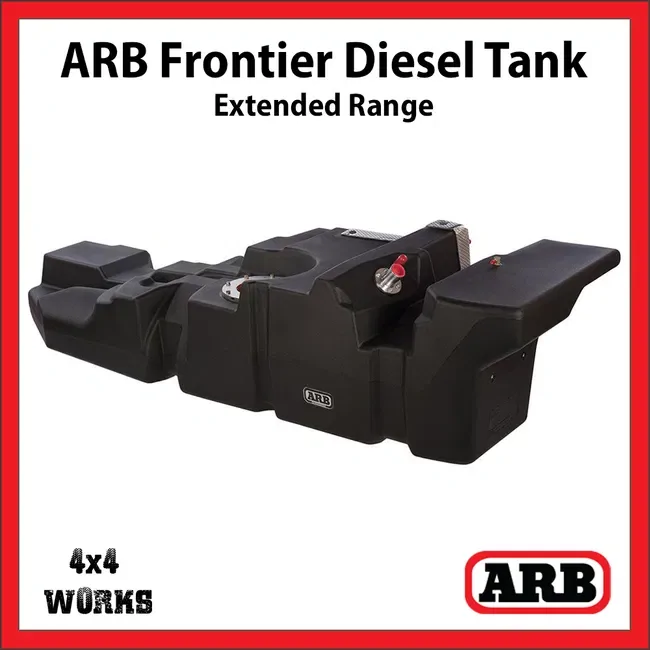
ARB Frontier Long Range Extended Diesel Fuel Tank Ford Ranger T6.2 P703 2022-on - 4x4 Works
Sponsored
cc1999
Well-Known Member
That is a good thought. I had both mine undercoated I am sure that might work out pretty well.i wonder if you use some bed liner on the tank will it stop the sounds?
wilsoN_
Member
I considered one, but aluminized steel tank material at that cost is simply a no-go. The asking price should cover stainless steel, or even have an option of SS for $1-200 more.
schwartzki
Active Member
- Joined
- Jun 16, 2025
- Threads
- 1
- Messages
- 30
- Reaction score
- 26
- Location
- NE Indiana
- Vehicle(s)
- '24 Ranger Raptor, '23 GTI Autobahn
I spoke to ARB USA about the possibility of importing one of the Frontier tanks to the US but they are not federalized or approved by the EPA so that is why they are not selling them stateside.
They also said the frame and suspension is different on the AU Ranger Raptors which is why most of the other accessories have not been brought over but I cant find another source for that claim.
They also said the frame and suspension is different on the AU Ranger Raptors which is why most of the other accessories have not been brought over but I cant find another source for that claim.
Black Shadow
Well-Known Member
- First Name
- William
- Joined
- Jun 27, 2025
- Threads
- 5
- Messages
- 72
- Reaction score
- 99
- Location
- Richmond Va
- Vehicle(s)
- 2025 Ford Ranger XLT
- Occupation
- CDL trainer
Exactly and who drives more than 435 miles without stopping for fuel or to stretch. My 2.7L is routinely getting 500+ on trips with all highway driving.I get around 435 miles on the highway with my stock tank
cc1999
Well-Known Member
Just genuinely curious ?Exactly and who drives more than 435 miles without stopping for fuel or to stretch. My 2.7L is routinely getting 500+ on trips with all highway driving.
That’s really odd , the math behind that claim indicates your getting over 28-30 mpg out of a 2.7L EB Ranger.
I am mainly curious because many report the 2.7s getting closer to 20mpg.
The 3 Lariat 2.7L trucks I own are all getting right at 19-21 mpg.
Our functional range with ours is more like 300 miles.
My Raptors both get 14-16 mpg. Giving them a functional range of around 275, maybe 300 if you like flirting with walking . Lol
Last edited:
Sponsored
superj
Well-Known Member
- First Name
- Jason
- Joined
- Feb 8, 2025
- Threads
- 40
- Messages
- 3,481
- Reaction score
- 3,201
- Location
- Corpus christi texas
- Vehicle(s)
- 2004 ford ranger, 2024 ford ranger
- Occupation
- Aircraft examiner
good point, functional versus displayed is a bit difference. mine will read up to 410 or 420 at fill up but i normally get 390 at most.
but, if i lived somewhere with speeds around 65, and actually tried to do them, that would be totally different. if you are less than 80mph, you are going to be the right lane rider. and people are still going to be passing you since the left lane is generally 85+ so the guys doing 81-83 will be hopping all the right lane guys
but, if i lived somewhere with speeds around 65, and actually tried to do them, that would be totally different. if you are less than 80mph, you are going to be the right lane rider. and people are still going to be passing you since the left lane is generally 85+ so the guys doing 81-83 will be hopping all the right lane guys

Raptor Family
Well-Known Member
- First Name
- Jeff
- Joined
- Apr 2, 2025
- Threads
- 5
- Messages
- 113
- Reaction score
- 220
- Location
- Dallas, Texas
- Vehicle(s)
- ‘25 Ranger Raptor, ‘97 Jeep Cherokee, ‘24 Lexus NX450h+
- Occupation
- retired
Has anybody found a solution to this yet? I installed a Long Range America tank about 3 months ago and I have no clue as to how much gas I have in the tank--and in all honesty, I really haven't looked at a conventional fuel gauge in 20 years--I only look at the Distance To Empty (DTE) and MPG--which do not read correctly now--and the Ford gauge sucks. I'm kind of old and blind, I would rather have all the gauges with a needle, and the needle, in normal operation is at 12 o'clock. Oil pressure, Temperature, Fuel, etc. In your peripheral vision, you just have to know all the needles are pointed up at 12--even fuel 1/2 tank--you don't have to focus on anything unless the needle is not pointed up and there is a problem.
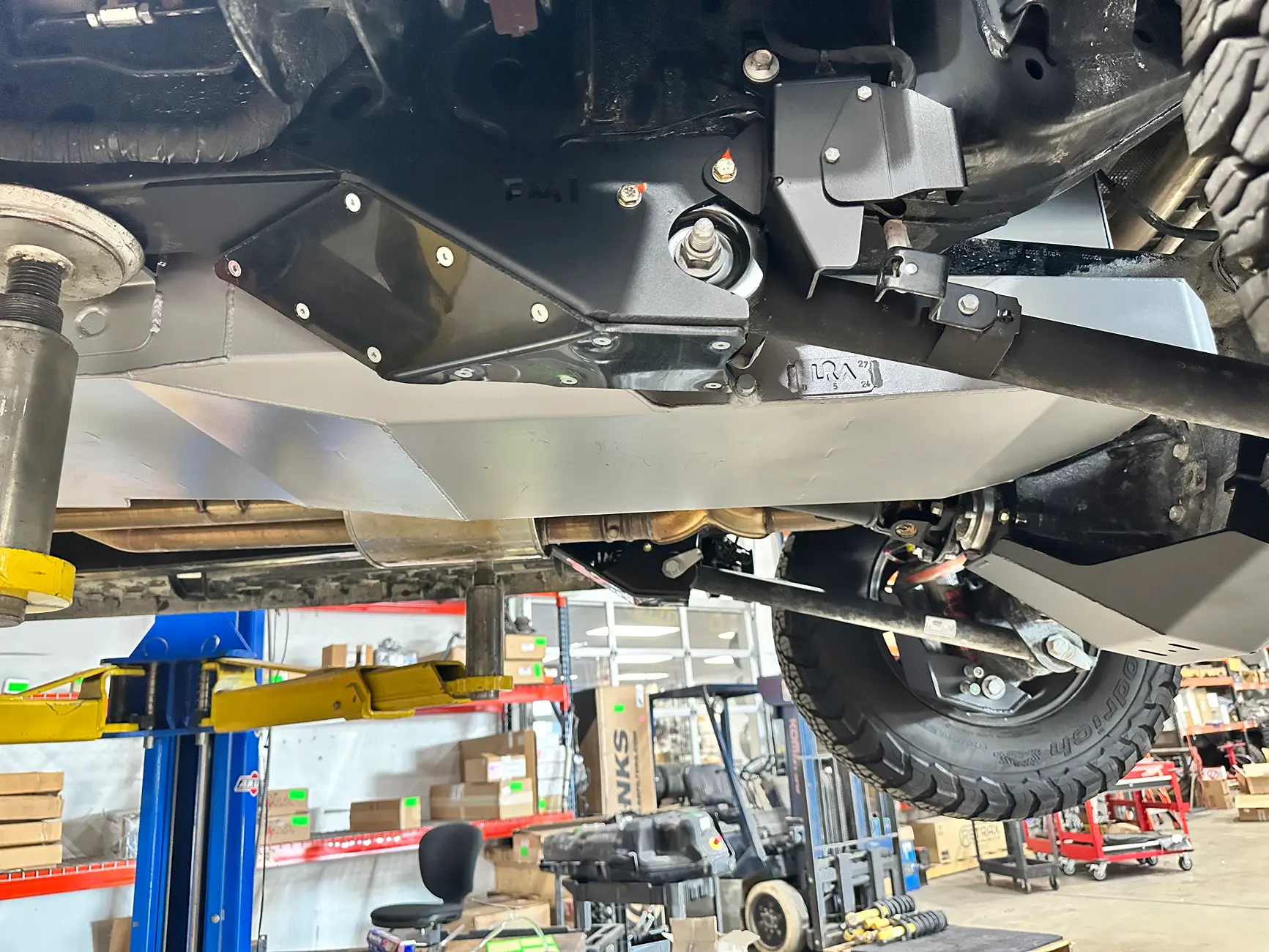
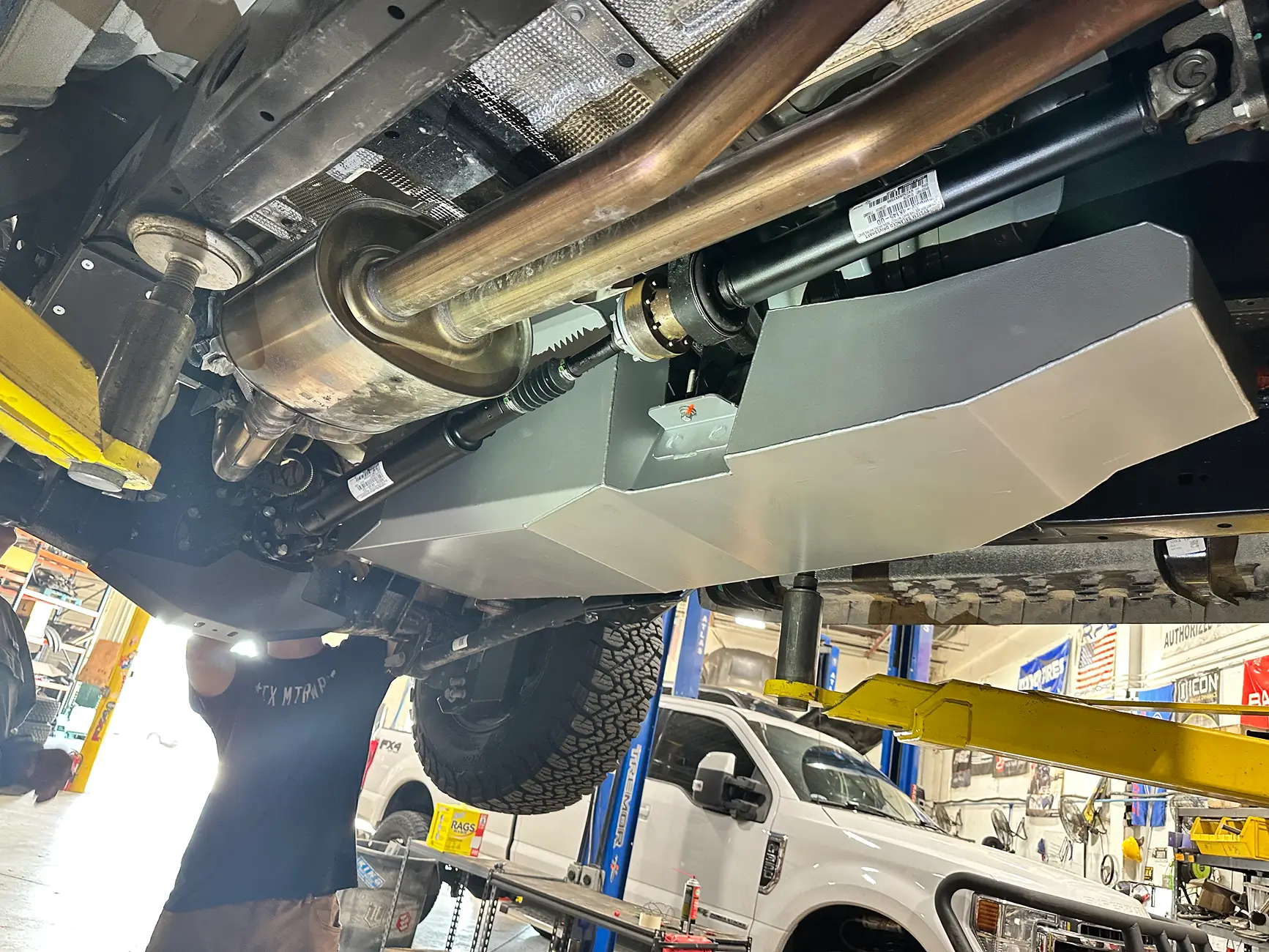
For anybody considering installing one of these tanks, they are extremely well made and take up virtually every square millimeter of space possible under your truck to achieve that 35 gallon capacity. A lot of attention to detail. I purchased mine from Long Range America, the US distributor out of Boise, Idaho. Even though they say Long Range America--they still are made in Australia and only fit US spec-ed Ranger Raptors. I bought mine on sale for quite a bit less than they are now--I think they were pre-tariff priced at less than $2500 total with tax and delivery to the shop I had install it. I saved a couple of hundred on delivery, as the shop was able to forklift the pallet off the delivery truck. Installation I think almost requires a 2 or 4 post lift and transmission jack. It could be done in a good DIY garage but I had a pro shop do it for about $1200. Here is a pic of it installed.

I have had it at two different shops--my installation shop, TMX, in Dallas (which are Raptor specialists) had already done several extended tank installs on f150s with some years that they could not recalibrate and one Ranger Raptor before mine that didn't work either--they didn't even attempt to do mine because they experienced it before. I had it in at my Ford dealer at the same time to warranty broken driveshaft (don't ask), and they had no idea what I was even talking about.
My truck is highly modified--(well, at least I think it is), but even without all of the speed parts, the original fuel tank is way too small--a sub 300mile range is not enough--come on Ford, what were you thinking? Just for clarity, modifying and tuning my truck INCREASED my fuel mileage almost 1MPG from 14.7 stock to 15.4-15.6MPG at about 475whp on chassis dyno (that's about 555bhp at crank)--so it didn't make it worse---but, with what I am doing now, the mileage is about to get way, way worse, 30% worse.
I have spent the last couple of months preparing my truck to run ethanol--e85 specifically. E85 requires 1/3 more fuel (by volume) to do the same work as gas--so instead of getting sub 300mile range on 93 octane gas, I would have only been able to do sub 200mile (I think my exact computation estimate was 187miles) per tank range on e85--that is just way, way too little range per tank. With this Extended capacity fuel tank, I should be able to get over 500mile range on 93 octane gas, and about 350miles on e85 (which is more range than the stock tank on gas). Now, someone is going to ask why switch to e85? There are a whole host of reasons beyond Recalibration our fuel gauges which we are talking about here--in a nutshell--1. Performance, 2. Engine Longevity, 3. Greener Emissions, and Economics.
But here is another reason I need my tank/fuel gauge calibrated, I need to know almost exactly how much fuel is remaining in the tank to safely change the Tune to run different fuels. I am in the Dallas area and e85 is available here all over and is relatively cheap--$2.30-$2.70 a gallon verses $2.99-$3.54 for Top Tier 93. But, in winter/cold weather, or if I head out towards California or Mexico there is almost no e85 and it even becomes hard to find 93 octane. When I switch fuels, if there is 1 or 2 gallons left in the tank and it becomes diluted by the new fuel I am changing to, the computer can adjust for that. If there were 10 gallons left in the tank and you top it off with a different fuel, the resulting blend is more than 30% off and the computer will fault--you risk running way too rich and clog or overheat Cats, or way too lean and burn pistons and valves--either way, it could be lots of money. There are other ways to monitor and correct. If you look in the picture of my fuel tank above, look at the fuel tank just below the front of the trailing arm, where there is the welded on tag that says LRA--just to the left of that you see a silver bolt head (it is kind of in-between the LRA tag to the right and the Faust Trailing Arm Skid. That's the drain plug. Its a pain, but I could just drain the tank and know exactly how much is in it--or I could use an ethanol content meter like the Nostrum ESSIM. etc (when they get a new sensor kit).
Now, somebody correct me if I am wrong, my understanding of what is going on is that newer Ranger Raptors Store and receive data differently than the older/Aussie/Worldwide versions. Older versions/Worldwide spec trucks store the tank capacity in the dash module and we can use Forscan to change the fuel tank size using published data in that location. The problem is with the newer US vehicles, they store and retrieve the data from the PCM--not the dash module. If you use Forscan on the dash module of a later vehicle, it still has the legacy fuel tank parameters there--you can even change them--but nothing happens or changes because it draws the data from the PCM. How do we change the tank capacity in the PCM?
I am not sure, but if our tank capacity is stored and has to be changed in the PCM, is this something that can be accessed and changed using a tuning device like HP Tuner, Cobbs, Livernois, etc? Is there something I am missing?
If anybody has any knowledgeable input how to do this I'd really appreciate an answer.
.
For anybody considering installing one of these tanks, they are extremely well made and take up virtually every square millimeter of space possible under your truck to achieve that 35 gallon capacity. A lot of attention to detail. I purchased mine from Long Range America, the US distributor out of Boise, Idaho. Even though they say Long Range America--they still are made in Australia and only fit US spec-ed Ranger Raptors. I bought mine on sale for quite a bit less than they are now--I think they were pre-tariff priced at less than $2500 total with tax and delivery to the shop I had install it. I saved a couple of hundred on delivery, as the shop was able to forklift the pallet off the delivery truck. Installation I think almost requires a 2 or 4 post lift and transmission jack. It could be done in a good DIY garage but I had a pro shop do it for about $1200. Here is a pic of it installed.
I have had it at two different shops--my installation shop, TMX, in Dallas (which are Raptor specialists) had already done several extended tank installs on f150s with some years that they could not recalibrate and one Ranger Raptor before mine that didn't work either--they didn't even attempt to do mine because they experienced it before. I had it in at my Ford dealer at the same time to warranty broken driveshaft (don't ask), and they had no idea what I was even talking about.
My truck is highly modified--(well, at least I think it is), but even without all of the speed parts, the original fuel tank is way too small--a sub 300mile range is not enough--come on Ford, what were you thinking? Just for clarity, modifying and tuning my truck INCREASED my fuel mileage almost 1MPG from 14.7 stock to 15.4-15.6MPG at about 475whp on chassis dyno (that's about 555bhp at crank)--so it didn't make it worse---but, with what I am doing now, the mileage is about to get way, way worse, 30% worse.
I have spent the last couple of months preparing my truck to run ethanol--e85 specifically. E85 requires 1/3 more fuel (by volume) to do the same work as gas--so instead of getting sub 300mile range on 93 octane gas, I would have only been able to do sub 200mile (I think my exact computation estimate was 187miles) per tank range on e85--that is just way, way too little range per tank. With this Extended capacity fuel tank, I should be able to get over 500mile range on 93 octane gas, and about 350miles on e85 (which is more range than the stock tank on gas). Now, someone is going to ask why switch to e85? There are a whole host of reasons beyond Recalibration our fuel gauges which we are talking about here--in a nutshell--1. Performance, 2. Engine Longevity, 3. Greener Emissions, and Economics.
But here is another reason I need my tank/fuel gauge calibrated, I need to know almost exactly how much fuel is remaining in the tank to safely change the Tune to run different fuels. I am in the Dallas area and e85 is available here all over and is relatively cheap--$2.30-$2.70 a gallon verses $2.99-$3.54 for Top Tier 93. But, in winter/cold weather, or if I head out towards California or Mexico there is almost no e85 and it even becomes hard to find 93 octane. When I switch fuels, if there is 1 or 2 gallons left in the tank and it becomes diluted by the new fuel I am changing to, the computer can adjust for that. If there were 10 gallons left in the tank and you top it off with a different fuel, the resulting blend is more than 30% off and the computer will fault--you risk running way too rich and clog or overheat Cats, or way too lean and burn pistons and valves--either way, it could be lots of money. There are other ways to monitor and correct. If you look in the picture of my fuel tank above, look at the fuel tank just below the front of the trailing arm, where there is the welded on tag that says LRA--just to the left of that you see a silver bolt head (it is kind of in-between the LRA tag to the right and the Faust Trailing Arm Skid. That's the drain plug. Its a pain, but I could just drain the tank and know exactly how much is in it--or I could use an ethanol content meter like the Nostrum ESSIM. etc (when they get a new sensor kit).
Now, somebody correct me if I am wrong, my understanding of what is going on is that newer Ranger Raptors Store and receive data differently than the older/Aussie/Worldwide versions. Older versions/Worldwide spec trucks store the tank capacity in the dash module and we can use Forscan to change the fuel tank size using published data in that location. The problem is with the newer US vehicles, they store and retrieve the data from the PCM--not the dash module. If you use Forscan on the dash module of a later vehicle, it still has the legacy fuel tank parameters there--you can even change them--but nothing happens or changes because it draws the data from the PCM. How do we change the tank capacity in the PCM?
I am not sure, but if our tank capacity is stored and has to be changed in the PCM, is this something that can be accessed and changed using a tuning device like HP Tuner, Cobbs, Livernois, etc? Is there something I am missing?
If anybody has any knowledgeable input how to do this I'd really appreciate an answer.
.
superj
Well-Known Member
- First Name
- Jason
- Joined
- Feb 8, 2025
- Threads
- 40
- Messages
- 3,481
- Reaction score
- 3,201
- Location
- Corpus christi texas
- Vehicle(s)
- 2004 ford ranger, 2024 ford ranger
- Occupation
- Aircraft examiner
Now, somebody correct me if I am wrong, my understanding of what is going on is that newer Ranger Raptors Store and receive data differently than the older/Aussie/Worldwide versions. Older versions/Worldwide spec trucks store the tank capacity in the dash module and we can use Forscan to change the fuel tank size using published data in that location. The problem is with the newer US vehicles, they store and retrieve the data from the PCM--not the dash module. If you use Forscan on the dash module of a later vehicle, it still has the legacy fuel tank parameters there--you can even change them--but nothing happens or changes because it draws the data from the PCM. How do we change the tank capacity in the PCM?
I am not sure, but if our tank capacity is stored and has to be changed in the PCM, is this something that can be accessed and changed using a tuning device like HP Tuner, Cobbs, Livernois, etc? Is there something I am missing?
If anybody has any knowledgeable input how to do this I'd really appreciate an answer.
i never checked the pcm to see if there is anything about fuel volume in forscan but your post is a very good explanation on alot of things having to do with the tank and reasons a person might need to swap. the pics are great, too
cc1999
Well-Known Member
Excellent post.Has anybody found a solution to this yet? I installed a Long Range America tank about 3 months ago and I have no clue as to how much gas I have in the tank--and in all honesty, I really haven't looked at a conventional fuel gauge in 20 years--I only look at the Distance To Empty (DTE) and MPG--which do not read correctly now--and the Ford gauge sucks. I'm kind of old and blind, I would rather have all the gauges with a needle, and the needle, in normal operation is at 12 o'clock. Oil pressure, Temperature, Fuel, etc. In your peripheral vision, you just have to know all the needles are pointed up at 12--even fuel 1/2 tank--you don't have to focus on anything unless the needle is not pointed up and there is a problem.
For anybody considering installing one of these tanks, they are extremely well made and take up virtually every square millimeter of space possible under your truck to achieve that 35 gallon capacity. A lot of attention to detail. I purchased mine from Long Range America, the US distributor out of Boise, Idaho. Even though they say Long Range America--they still are made in Australia and only fit US spec-ed Ranger Raptors. I bought mine on sale for quite a bit less than they are now--I think they were pre-tariff priced at less than $2500 total with tax and delivery to the shop I had install it. I saved a couple of hundred on delivery, as the shop was able to forklift the pallet off the delivery truck. Installation I think almost requires a 2 or 4 post lift and transmission jack. It could be done in a good DIY garage but I had a pro shop do it for about $1200. Here is a pic of it installed.
I have had it at two different shops--my installation shop, TMX, in Dallas (which are Raptor specialists) had already done several extended tank installs on f150s with some years that they could not recalibrate and one Ranger Raptor before mine that didn't work either--they didn't even attempt to do mine because they experienced it before. I had it in at my Ford dealer at the same time to warranty broken driveshaft (don't ask), and they had no idea what I was even talking about.
My truck is highly modified--(well, at least I think it is), but even without all of the speed parts, the original fuel tank is way too small--a sub 300mile range is not enough--come on Ford, what were you thinking? Just for clarity, modifying and tuning my truck INCREASED my fuel mileage almost 1MPG from 14.7 stock to 15.4-15.6MPG at about 475whp on chassis dyno (that's about 555bhp at crank)--so it didn't make it worse---but, with what I am doing now, the mileage is about to get way, way worse, 30% worse.
I have spent the last couple of months preparing my truck to run ethanol--e85 specifically. E85 requires 1/3 more fuel (by volume) to do the same work as gas--so instead of getting sub 300mile range on 93 octane gas, I would have only been able to do sub 200mile (I think my exact computation estimate was 187miles) per tank range on e85--that is just way, way too little range per tank. With this Extended capacity fuel tank, I should be able to get over 500mile range on 93 octane gas, and about 350miles on e85 (which is more range than the stock tank on gas). Now, someone is going to ask why switch to e85? There are a whole host of reasons beyond Recalibration our fuel gauges which we are talking about here--in a nutshell--1. Performance, 2. Engine Longevity, 3. Greener Emissions, and Economics.
But here is another reason I need my tank/fuel gauge calibrated, I need to know almost exactly how much fuel is remaining in the tank to safely change the Tune to run different fuels. I am in the Dallas area and e85 is available here all over and is relatively cheap--$2.30-$2.70 a gallon verses $2.99-$3.54 for Top Tier 93. But, in winter/cold weather, or if I head out towards California or Mexico there is almost no e85 and it even becomes hard to find 93 octane. When I switch fuels, if there is 1 or 2 gallons left in the tank and it becomes diluted by the new fuel I am changing to, the computer can adjust for that. If there were 10 gallons left in the tank and you top it off with a different fuel, the resulting blend is more than 30% off and the computer will fault--you risk running way too rich and clog or overheat Cats, or way too lean and burn pistons and valves--either way, it could be lots of money. There are other ways to monitor and correct. If you look in the picture of my fuel tank above, look at the fuel tank just below the front of the trailing arm, where there is the welded on tag that says LRA--just to the left of that you see a silver bolt head (it is kind of in-between the LRA tag to the right and the Faust Trailing Arm Skid. That's the drain plug. Its a pain, but I could just drain the tank and know exactly how much is in it--or I could use an ethanol content meter like the Nostrum ESSIM. etc (when they get a new sensor kit).
Now, somebody correct me if I am wrong, my understanding of what is going on is that newer Ranger Raptors Store and receive data differently than the older/Aussie/Worldwide versions. Older versions/Worldwide spec trucks store the tank capacity in the dash module and we can use Forscan to change the fuel tank size using published data in that location. The problem is with the newer US vehicles, they store and retrieve the data from the PCM--not the dash module. If you use Forscan on the dash module of a later vehicle, it still has the legacy fuel tank parameters there--you can even change them--but nothing happens or changes because it draws the data from the PCM. How do we change the tank capacity in the PCM?
I am not sure, but if our tank capacity is stored and has to be changed in the PCM, is this something that can be accessed and changed using a tuning device like HP Tuner, Cobbs, Livernois, etc? Is there something I am missing?
If anybody has any knowledgeable input how to do this I'd really appreciate an answer.
.
I am very interested now in looking into getting one of these tanks for a project I working on also involving a Godzilla swap. LOL I have the feeling I will need that larger tank more then ever with that monster under the hood.
But I am curious, since Juicy Motorsports who is creating these V8 swap / conversions is said to be able to make everything fully functional, all the drive modes, the exhaust modes etc etc. Really makes me wonder if they could not also fix the DTE and fuel capacity info in the PCM for these tank swaps too.
Raptor Family
Well-Known Member
- First Name
- Jeff
- Joined
- Apr 2, 2025
- Threads
- 5
- Messages
- 113
- Reaction score
- 220
- Location
- Dallas, Texas
- Vehicle(s)
- ‘25 Ranger Raptor, ‘97 Jeep Cherokee, ‘24 Lexus NX450h+
- Occupation
- retired
Godzilla swap—-I bow to give propsExcellent post.
I am very interested now in looking into getting one of these tanks for a project I working on also involving a Godzilla swap. LOL I have the feeling I will need that larger tank more then ever with that monster under the hood.
But I am curious, since Juicy Motorsports who is creating these V8 swap / conversions is said to be able to make everything fully functional, all the drive modes, the exhaust modes etc etc. Really makes me wonder if they could not also fix the DTE and fuel capacity info in the PCM for these tank swaps too.
Sponsored
Similar threads


- Replies
- 11
- Views
- 12,644


- Replies
- 13
- Views
- 1,424


- Replies
- 4
- Views
- 1,273


- Replies
- 16
- Views
- 6,366
