Sponsored

Rear brakes shot

Depotgeorge

Active Member
First Name
George
Joined
Jun 13, 2024
Threads
6
Messages
42
Reaction score
23
Location
Nj
Vehicle(s)
24 ranger
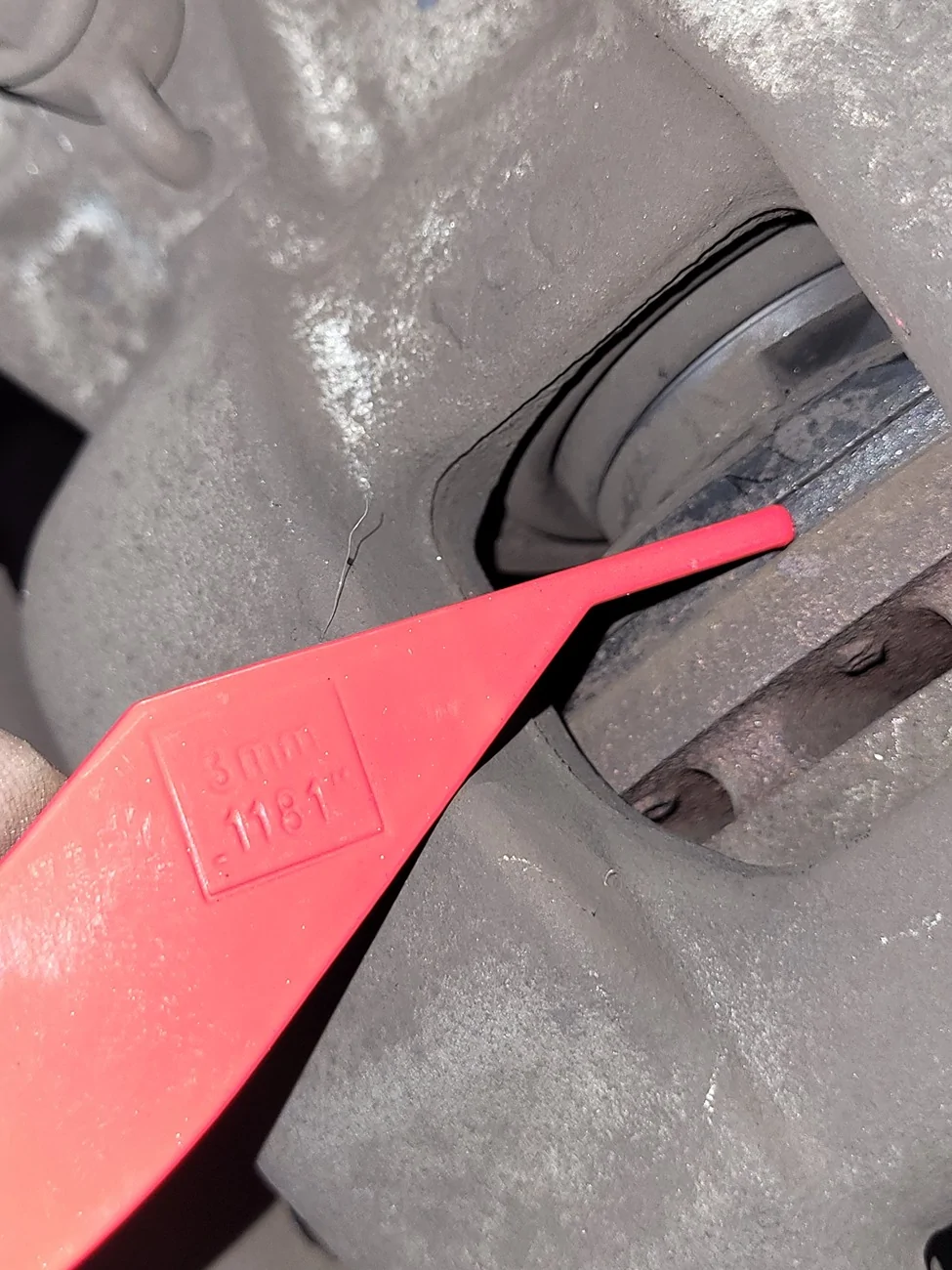
24 xlt 2.3 4x4 19,500 rear brakes are cooked already 3 mil left I have raised concerd at delaer for fast wear and they say they are made poorly. Meanwhile front are damn near perfect still. No towing or heavy leads just seems odd to have to replace the rears already. Also rear rotors are smooth no shine or hot spots no high lips. At 10k I did notice that all the slid bolts had almost no grease on them obviously lunes then up then. And now what pads to pick for the rear. Any suggestions.

Ford Ranger Rear brakes shot 20251123_164933
Sponsored

 
OP
OP

Depotgeorge

Active Member
First Name
George
Joined
Jun 13, 2024
Threads
6
Messages
42
Reaction score
23
Location
Nj
Vehicle(s)
24 ranger
At 14k I was 5mil dealer said normal wear
 

bigb

Well-Known Member
First Name
Brian
Joined
Aug 6, 2025
Threads
57
Messages
699
Reaction score
737
Location
Tucson
Vehicle(s)
2025 Ranger 2.7
I understand that the rear pads are now also the parking brakes, there are no longer parking brake shoes inside the rotors. I wonder if that has anything to do with it. I've never seen a vehicle where the rears wore out faster than the fronts.
 

embedded rock

Well-Known Member
Joined
May 6, 2023
Threads
15
Messages
638
Reaction score
672
Location
Earth
Vehicle(s)
One truck, two motorcycles
Just remember to clean those caliper pistons before pushing them back in to accommodate new pads.
 

TurboRanger

Well-Known Member
First Name
Jack
Joined
Apr 10, 2025
Threads
13
Messages
189
Reaction score
142
Location
Oakley , Comifornia
Vehicle(s)
2024 Ranger Lariat 2.7 2021 Ranger XLT
Occupation
Retired Truck Mechanic
Look at a new set of pads they might be 6 mm
 

Sponsored

Hande

Well-Known Member
First Name
Hannu
Joined
Oct 15, 2025
Threads
5
Messages
93
Reaction score
47
Location
Estonia
Vehicle(s)
2025 Ford Ranger Raptor Diesel
Occupation
Business Owner
It is a known issue, where brake caliper sliding pins get stuck or otherwise do not move freely. My RR had this problem as a new from factory, both front and rear.

Parking brake should not activate while the vehicle is moving, thus parking brake effect on pad life is unnoticeable.
 

MGKRISTON

Active Member
First Name
Mark
Joined
Aug 27, 2025
Threads
3
Messages
42
Reaction score
12
Location
Mint Hill North Carolina
Vehicle(s)
2024 Ford Ranger XLT
Occupation
Retired
Electronic brake force distribution is designed to apply the correct amount of braking force to each wheel to stop the vehicle during hard braking and emergency braking situations while maintaining stability control.

The Basics of Electronic Braking Force Distribution
When a vehicle brakes, the weight shifts forward, increasing the load on the front wheels while reducing it on the rear wheels. This weight transfer means that the front brakes must handle more braking force to stop the vehicle effectively, while the rear brakes require less force. If too much braking force is applied to the rear wheels, they can lock up, leading to skidding and loss of control. Conversely, insufficient braking force on the front wheels can reduce the overall stopping power of the vehicle.


Traditionally, vehicles used mechanical proportioning valves to regulate the amount of braking force sent to the rear wheels, reducing it as the load decreased. However, these systems were not adaptable to varying conditions, such as changes in load, road surface, or vehicle dynamics, and could not provide optimal braking performance in all scenarios. This is where Electronic Brake Force Distribution comes into play.

On older vehicles the front brakes perform about 70% to 80% of the braking power. That’s because the front weighs more than the rear (engine, transmission, driver, passengers, etc) and during hard stops vehicle weight transfers forward. Forward weight transfer causes nose dive which shifts even more weight onto the front brakes. The rear brakes simply prevented rear-end lift and aided in stability.

Mechanical proportioning valves reduced rear-end lift
Older vehicles also used a variable proportioning valve located in the rear of the vehicle. The valve was mounted on the rear axle, with a sensing rod connected to the body. During hard stops, as body weight shifted forward causing nose dive, the rear of the vehicle would rise. The sensing rod detected this rear end lift and moved a mechanical valve that diverted more brake fluid pressure to the rear brakes. The added pressure neutralized rear end lift and weigh transfer.

Automatic emergency braking (AEB) and stability control changed things
Late-model vehicles still carry more weight in the front of the vehicle. But they now have automatic emergency braking that’s designed to apply the brakes hard enough and rapidly enough to prevent a crash.

During an AEB event the hard braking and forward weight transfer can overwhelm to front brakes, causing the tires to lose traction, even with ABS assistance.

The most sensible way to reduce weight transfer and nose dive is to apply more rear braking power and apply it sooner in the process.

EBD senses hard braking and immediately distributes more braking power to the rear wheels to prevent rear-end lift, forward weight transfer, and nose dive. The result is more even braking from front to rear and faster stopping.

How EBD works
EBD uses the same wheel speed sensors as the ABS system. It also uses sensors to detect rapid deceleration and body weight shifts. To redistribute the braking force, the system uses Brake Force Modulators built into the ABS valve unit.
 

bigb

Well-Known Member
First Name
Brian
Joined
Aug 6, 2025
Threads
57
Messages
699
Reaction score
737
Location
Tucson
Vehicle(s)
2025 Ranger 2.7
Electronic brake force distribution is designed to apply the correct amount of braking force to each wheel to stop the vehicle during hard braking and emergency braking situations while maintaining stability control.

The Basics of Electronic Braking Force Distribution
When a vehicle brakes, the weight shifts forward, increasing the load on the front wheels while reducing it on the rear wheels. This weight transfer means that the front brakes must handle more braking force to stop the vehicle effectively, while the rear brakes require less force. If too much braking force is applied to the rear wheels, they can lock up, leading to skidding and loss of control. Conversely, insufficient braking force on the front wheels can reduce the overall stopping power of the vehicle.


Traditionally, vehicles used mechanical proportioning valves to regulate the amount of braking force sent to the rear wheels, reducing it as the load decreased. However, these systems were not adaptable to varying conditions, such as changes in load, road surface, or vehicle dynamics, and could not provide optimal braking performance in all scenarios. This is where Electronic Brake Force Distribution comes into play.

On older vehicles the front brakes perform about 70% to 80% of the braking power. That’s because the front weighs more than the rear (engine, transmission, driver, passengers, etc) and during hard stops vehicle weight transfers forward. Forward weight transfer causes nose dive which shifts even more weight onto the front brakes. The rear brakes simply prevented rear-end lift and aided in stability.

Mechanical proportioning valves reduced rear-end lift
Older vehicles also used a variable proportioning valve located in the rear of the vehicle. The valve was mounted on the rear axle, with a sensing rod connected to the body. During hard stops, as body weight shifted forward causing nose dive, the rear of the vehicle would rise. The sensing rod detected this rear end lift and moved a mechanical valve that diverted more brake fluid pressure to the rear brakes. The added pressure neutralized rear end lift and weigh transfer.

Automatic emergency braking (AEB) and stability control changed things
Late-model vehicles still carry more weight in the front of the vehicle. But they now have automatic emergency braking that’s designed to apply the brakes hard enough and rapidly enough to prevent a crash.

During an AEB event the hard braking and forward weight transfer can overwhelm to front brakes, causing the tires to lose traction, even with ABS assistance.

The most sensible way to reduce weight transfer and nose dive is to apply more rear braking power and apply it sooner in the process.

EBD senses hard braking and immediately distributes more braking power to the rear wheels to prevent rear-end lift, forward weight transfer, and nose dive. The result is more even braking from front to rear and faster stopping.

How EBD works
EBD uses the same wheel speed sensors as the ABS system. It also uses sensors to detect rapid deceleration and body weight shifts. To redistribute the braking force, the system uses Brake Force Modulators built into the ABS valve unit.
Great info. After coming from a 2002 there's a lot I need to learn about these rolling computers.
 

Alaska Steve

Well-Known Member
First Name
Steve
Joined
Sep 17, 2024
Threads
8
Messages
247
Reaction score
314
Location
Alaska
Vehicle(s)
2024 Ranger Lariat FX4
I understand that the rear pads are now also the parking brakes, there are no longer parking brake shoes inside the rotors. I wonder if that has anything to do with it. I've never seen a vehicle where the rears wore out faster than the fronts.
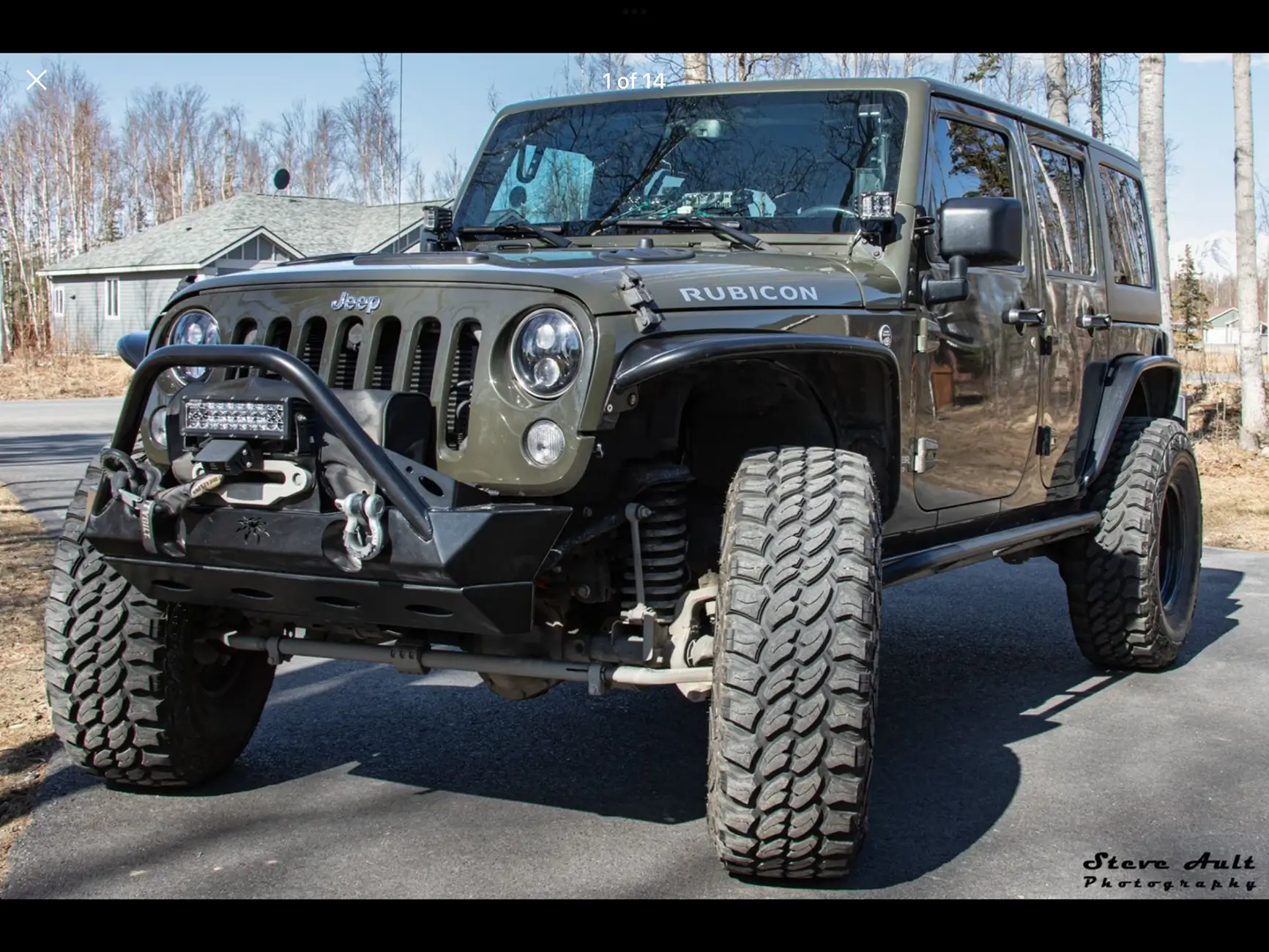
My Jeep wrangler rear brakes wore twice as fast as the front brakes. It is a known wear pattern on the wrangler.
 

Sponsored

sikedsyko

Well-Known Member
Joined
May 16, 2023
Threads
9
Messages
274
Reaction score
282
Location
Texas
Vehicle(s)
24 RRaptor, 05 Z4
Yeah when I've seen rear brakes wear out faster than front, its usually from lots of intervention from the ABS/TCS systems.
 

Alaska Steve

Well-Known Member
First Name
Steve
Joined
Sep 17, 2024
Threads
8
Messages
247
Reaction score
314
Location
Alaska
Vehicle(s)
2024 Ranger Lariat FX4
What year?
2016 Wrangler Unlimited Rubicon. And I’ll also note that after the Jeep was lifted 4.5”, braking was significantly worse (35” tires instead of 32” tires). Because of that, I put a big brake kit on and eventually went up to 37” tires. The big brake kit (larger rotors and stock pads) resolved the braking issues of the lift and larger tires. The lift was done at ~32kmi, but the rear pads were shot at 25kmi. Over the time I owned the Jeep (84kmi), I replaced the rear pads three times and the front pads once.
Ford Ranger Rear brakes shot IMG_0439
 

MGKRISTON

Active Member
First Name
Mark
Joined
Aug 27, 2025
Threads
3
Messages
42
Reaction score
12
Location
Mint Hill North Carolina
Vehicle(s)
2024 Ford Ranger XLT
Occupation
Retired
Electronic brake force distribution is designed to apply the correct amount of braking force to each wheel to stop the vehicle during hard braking and emergency braking situations while maintaining stability control.

The Basics of Electronic Braking Force Distribution
When a vehicle brakes, the weight shifts forward, increasing the load on the front wheels while reducing it on the rear wheels. This weight transfer means that the front brakes must handle more braking force to stop the vehicle effectively, while the rear brakes require less force. If too much braking force is applied to the rear wheels, they can lock up, leading to skidding and loss of control. Conversely, insufficient braking force on the front wheels can reduce the overall stopping power of the vehicle.


Traditionally, vehicles used mechanical proportioning valves to regulate the amount of braking force sent to the rear wheels, reducing it as the load decreased. However, these systems were not adaptable to varying conditions, such as changes in load, road surface, or vehicle dynamics, and could not provide optimal braking performance in all scenarios. This is where Electronic Brake Force Distribution comes into play.

On older vehicles the front brakes perform about 70% to 80% of the braking power. That’s because the front weighs more than the rear (engine, transmission, driver, passengers, etc) and during hard stops vehicle weight transfers forward. Forward weight transfer causes nose dive which shifts even more weight onto the front brakes. The rear brakes simply prevented rear-end lift and aided in stability.

Mechanical proportioning valves reduced rear-end lift
Older vehicles also used a variable proportioning valve located in the rear of the vehicle. The valve was mounted on the rear axle, with a sensing rod connected to the body. During hard stops, as body weight shifted forward causing nose dive, the rear of the vehicle would rise. The sensing rod detected this rear end lift and moved a mechanical valve that diverted more brake fluid pressure to the rear brakes. The added pressure neutralized rear end lift and weigh transfer.

Automatic emergency braking (AEB) and stability control changed things
Late-model vehicles still carry more weight in the front of the vehicle. But they now have automatic emergency braking that’s designed to apply the brakes hard enough and rapidly enough to prevent a crash.

During an AEB event the hard braking and forward weight transfer can overwhelm to front brakes, causing the tires to lose traction, even with ABS assistance.

The most sensible way to reduce weight transfer and nose dive is to apply more rear braking power and apply it sooner in the process.

EBD senses hard braking and immediately distributes more braking power to the rear wheels to prevent rear-end lift, forward weight transfer, and nose dive. The result is more even braking from front to rear and faster stopping.

How EBD works
EBD uses the same wheel speed sensors as the ABS system. It also uses sensors to detect rapid deceleration and body weight shifts. To redistribute the braking force, the system uses Brake Force Modulators built into the ABS valve unit.
I would have hoped the dealership would have diagnosed it better for you.
 

joordan

Well-Known Member
Joined
Apr 22, 2024
Threads
21
Messages
324
Reaction score
142
Location
Italy
Vehicle(s)
ranger wildtrak 2023
I had to replace my rear pads (I did myself); front still has few mm

rear was worn out way more on the inner side than the outer

pretty bad pads overall, let’s see if the new non ford are better

first time I see rear pads worn out before the front where all the weight is, and where the big disks are

by the way, had to replace the front disk at the same time..bad vibration under breaking..
Sponsored


Top