
Sponsored

Cold Air Intakes--are they worth it?

Raptor Family

Well-Known Member
First Name
Jeff
Joined
Apr 2, 2025
Threads
5
Messages
113
Reaction score
220
Location
Dallas, Texas
Vehicle(s)
‘25 Ranger Raptor, ‘97 Jeep Cherokee, ‘24 Lexus NX450h+
Occupation
retired
Ford Ranger Cold Air Intakes--are they worth it? 836EC31B-D48C-4E1C-B395-F38429BA9D9B_1_201_a


I have seen a lot of questions lately about buying the best Cold Air Intake for our trucks and I think a lot of manufacturer advertising is pushing false issues of needs and wants. We are being convinced that what we have stock from Ford is inferior to these new shinny objects that range in cost from sub $100 for a performance filter element, to $1.5k for Carbon Fiber unit from Indiecarbon (Thailand--where global RRs are manufactured) or an aluminum box from the boys down under (Process West, Fabulous Fab, and others)--and the mid-priced $400-600 plastic rotomolded U.S. units from AFE, S&B, and K&N--there is another U.S. unit called RamAir, being marketed by a vendor on this site (Dirt D)--I have only seen pictures of it, but its design takes a completely different approach to solve some of the deficiencies in the factory system--and it doesn't cost much. So, in this post, I want to look at the factory Ford system, what it does good, what it does bad--and identify any design defects. I want to look at the aftermarket intake units from various manufacturers and see how their design approaches improve upon the original unit---basically, what makes them better than the factory unit--or worse (and the best bang for the buck).

First, what is a Cold Air Intake, and why is it desirable? Similarly, what is Ram Air, and why do we want it as well? We want cold air because every 10 degree decrease in intake air temperature is a 1% increase in horsepower--free horsepower. The extra power is from efficiency created from the denser air; better emissions, better MPG, more power; win, win, win. As an example, in our trucks, we have 405bhp. If we decreased the temperature of the air entering the intake by 10 degrees, we would make about 4.05 more HP. If we dropped temp by 20 degrees; 8.10HP, and so on. Ram Air is free power too. It is the velocity of the air entering the intake and converted into PSI; where every 1 PSI in boost adds 6.8% more HP. One psi of boost is worth about 28hp on a 405bhp Ranger Raptor. Problem is, that Ram Air does not increase boost as much as we think it does. The air velocity at 60mph only produces .06psi of boost. 100mph only produces .18 psi. So at 60mph we multiply 405bhp x .068 (percent of increase)x .06 (psi of boost)=1.65hp. The hp gain is so low, it almost can't be measured. At 100 mph; 405x.068x.18=4.96hp--almost 5 hp. Anything over 112mph doesn't matter as you are driving faster than the speed safety rating of the tires our trucks are equipped with.

Engine compartment temperatures are hot, and over the last 2 decades they have got even hotter. Up until about the mid 1990s most cars ran 180 degree thermostats which began opening around 180 and created about a 185-200 degree normal operating temperature. Not anymore. The thermostats in our trucks begin opening at 197.6 and become fully open at 222.8 degrees. The normal operating temperature is between 190 and 220 with spikes higher under load considered acceptable. You can cook a Texas brisket on that kind of heat. For those of you that have never looked, peer into your front grille. You will see what looks like black Venetian blinds--those are the computer controlled shutters that stop airflow from cooling the radiator and entering the engine compartment. They are designed to bring the temperature up high quickly and keep it there. We do not want to suck this hot air into our air intake--for the opposite reasons mentioned above--every 10 degrees of hotter intake air decreases HP by 1%. And here is the next thing, almost every modern car runs at these hotter temperatures, and virtually all vehicles have some form of cold air intake already as factory--our trucks included. We already have a cold air intake. Our intake path takes cold air from the grill and brings it over the radiator support into the air filter box snorkel. The underside of our hood has a "U" shaped weather stripping that seals this cold air path from hot engine compartment air. Up until this part, all aftermarket CAIs utilize the exact same design with the air path as the factory Ford.

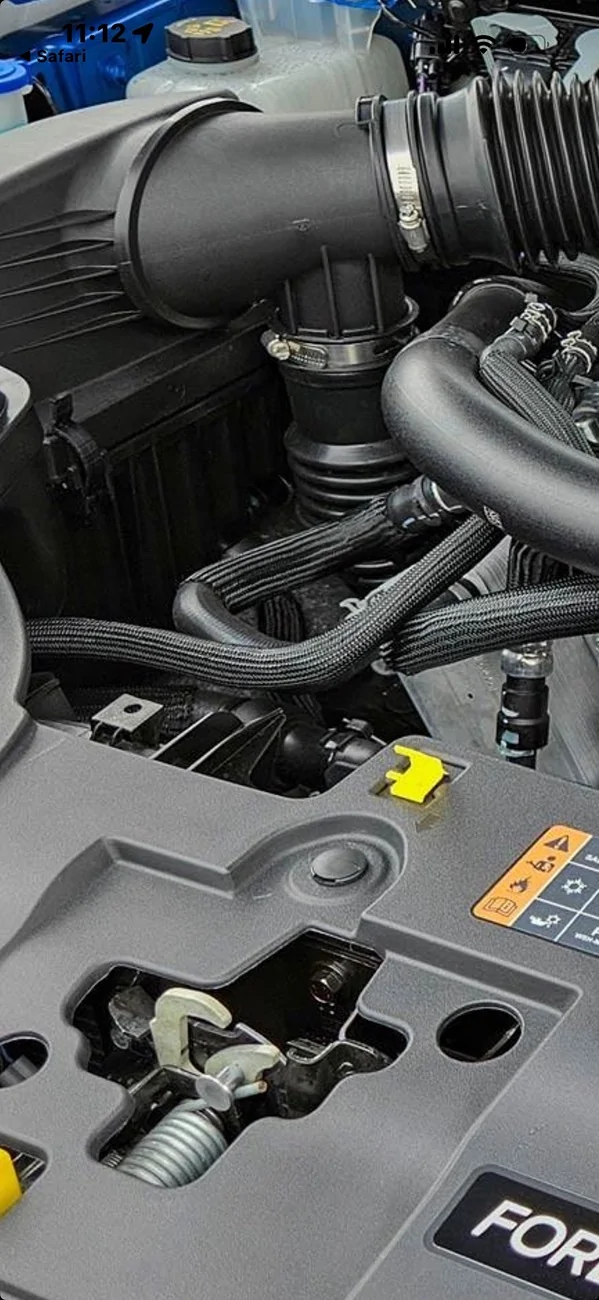
Here is a video that describes the air path better than I can S&B Breakdown of Ranger intake Some of the things I don't like about this video are how he describes the factory air flow through the Ford filter box as bad. The air comes into the box at the top, heads straight down and makes a "U" turn and goes up to the air filter with the filter media facing down. I think this is a good design, any dirt, dust or debris--or even rain will travel with the air down inside the air filter box when the air changes directions making the "U" to head back up, all the heavier particles of dirt, dust, and water fall out of suspension and do not even make it to the air filter. The filter lasts longer and doesn't get moisture saturated. With the filter upside down, all the heavier dirt and debris constantly falls to the bottom of the air filter box, helping keep the filter cleaner. There is a 5mm hole in the bottom that drains out any water and can allow some particles to fall out of the box as well. When he describes the superiority of air flow path being direct to his filter, that is not a bonus--water, dust, and debris have a straight shot at the upper facing pleats that are just little trenches to hold all of the dust, dirt, and and debris--any water in the air, goes straight onto the filter without any mitigation. In the installation, he says you have a choice about putting the side cover on the Air box or leaving it off--he advises to leave it off to get "more air into the engine". I think that is totally wrong--because it no longer is a cold air system with the air filter exposed to the hot engine compartment. In the video, he has the entire factory system laying on the table and it is easy to see the air piping that exits the factory filter box. The Part I want to bring your attention to is the "T" junction feeding the passenger side turbo inlet. It is easier to see when the whole system is laid out on the table. Here is a picture of the "T" Junction in the truck.


Ford Ranger Cold Air Intakes--are they worth it? 0AA2AB65-B992-4D15-913F-96246594127B_1_102_o

Look at the piping coming out of the air box, it starts out larger at the air box, shrinks to a funnel shape and has a 90 degree junction just as the pipe is shrinking. This I believe is horrible engineering from Ford. Anybody that has ever studied anything to do with fluid dynamics (and yes, air is a fluid), knows that a "T" junction such as this causes a loss of laminar air flow, turbulence, and a loss of pressure (more about pressure later) as does the accordion type bellows, the flattening of the crossover, and short bend radius of the plastic elbow of the drivers side turbo inlet.

Here is a short paper discussing the loss of laminar flow in a 90 degree "T" junction T Junction Loss of Laminar.
here is the primary picture from that article

Ford Ranger Cold Air Intakes--are they worth it? F613394B-41EB-42B7-9DEF-09EFF6AB2773_1_102_o

What is depicted here is what happens to air flow under pressure--it is not exactly the same as air under vacuum, but the picture is a good visual reference of what occurs in 90 degree "T" junctions. The Red, orange, and green are all different layers of laminar air velocities with a lot of velocity loss at the junction where the blue is almost zero. The loss of velocity affects the pressure to the turbo inlets. Our turbos; stock, modified, etc are very sensitive to inlet pressure.

Don't take my word for it, in this video 700hp Monster , Adam from ZFG tuning is talking about the highest Horsepower Ranger Raptor in North America--and possibly the World (Nathan's 714hp Monster), speaks about how sensitive the turbos are to inlet pressures--he is the tuner that makes these things go--and go really fast, I think he knows what the hell he is talking about. If you look really closely at the type of air intake that is being used it is a split system with a separate filter on the left turbo, and one on the right. There is no crossover, no air box, the passenger side filter just lays on the passenger side fender well, and the drivers side air filter lays on the inner fender well just behind the battery. The system is made by FenFab and I think these are prototypes, as I have never seen them for sale on his website. These are not truly CAI, as they are in the engine compartment. They are proof of concept that our turbo inlet pressures are very sensitive and that the factory system is inadequate.
.

Lets look at the different manufacturer systems and how the try to fix the "T" Junction flaw in the Ford design:
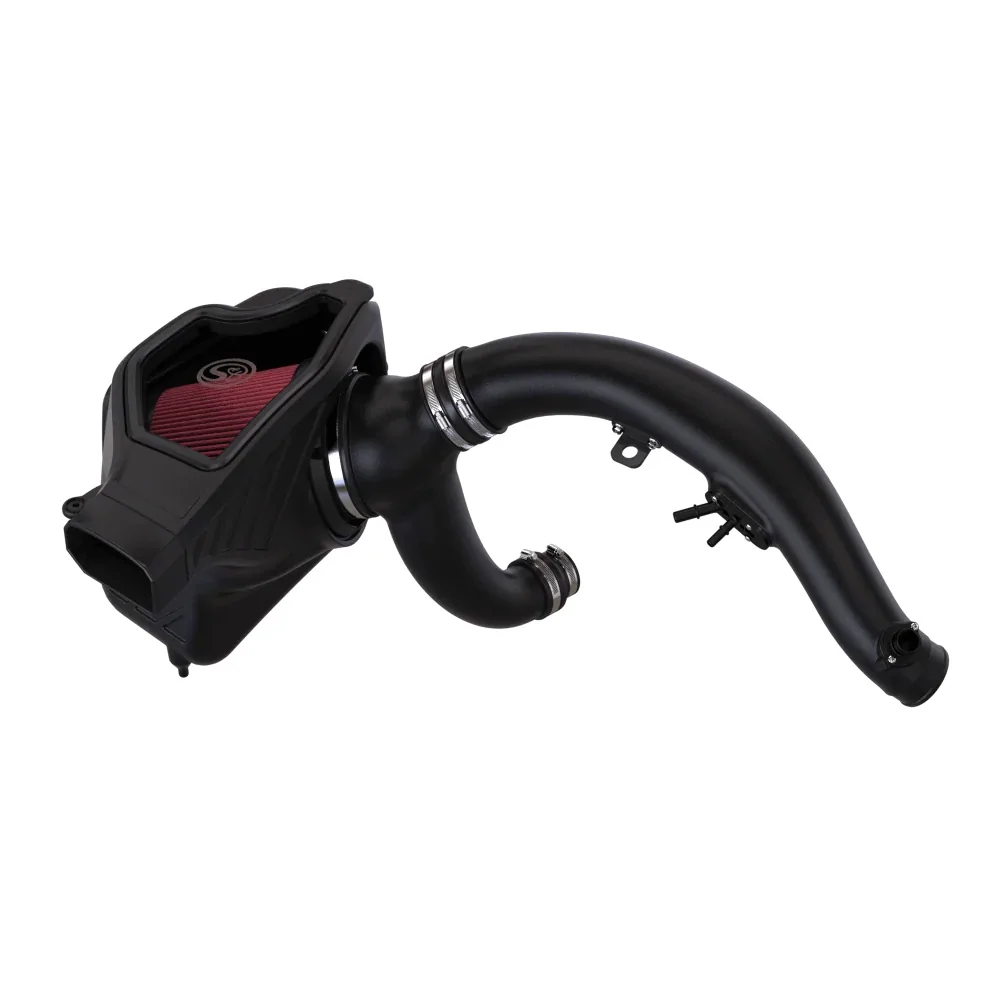


Ford Ranger Cold Air Intakes--are they worth it? C5D73A0D-E6BD-4C15-90B9-B78427FA4D6A_1_102_o

Here is the S&B. They kind of enlarged the base of the funnel (where the air filter is) and located the the passenger side turbo inlet similar to a "T". It is like the inlet side of the "T" is fatter than the two legs. It is an improvement over stock, but I don't think it is optimal. They smoothed out some of the the other stuff and ditched the bellows.
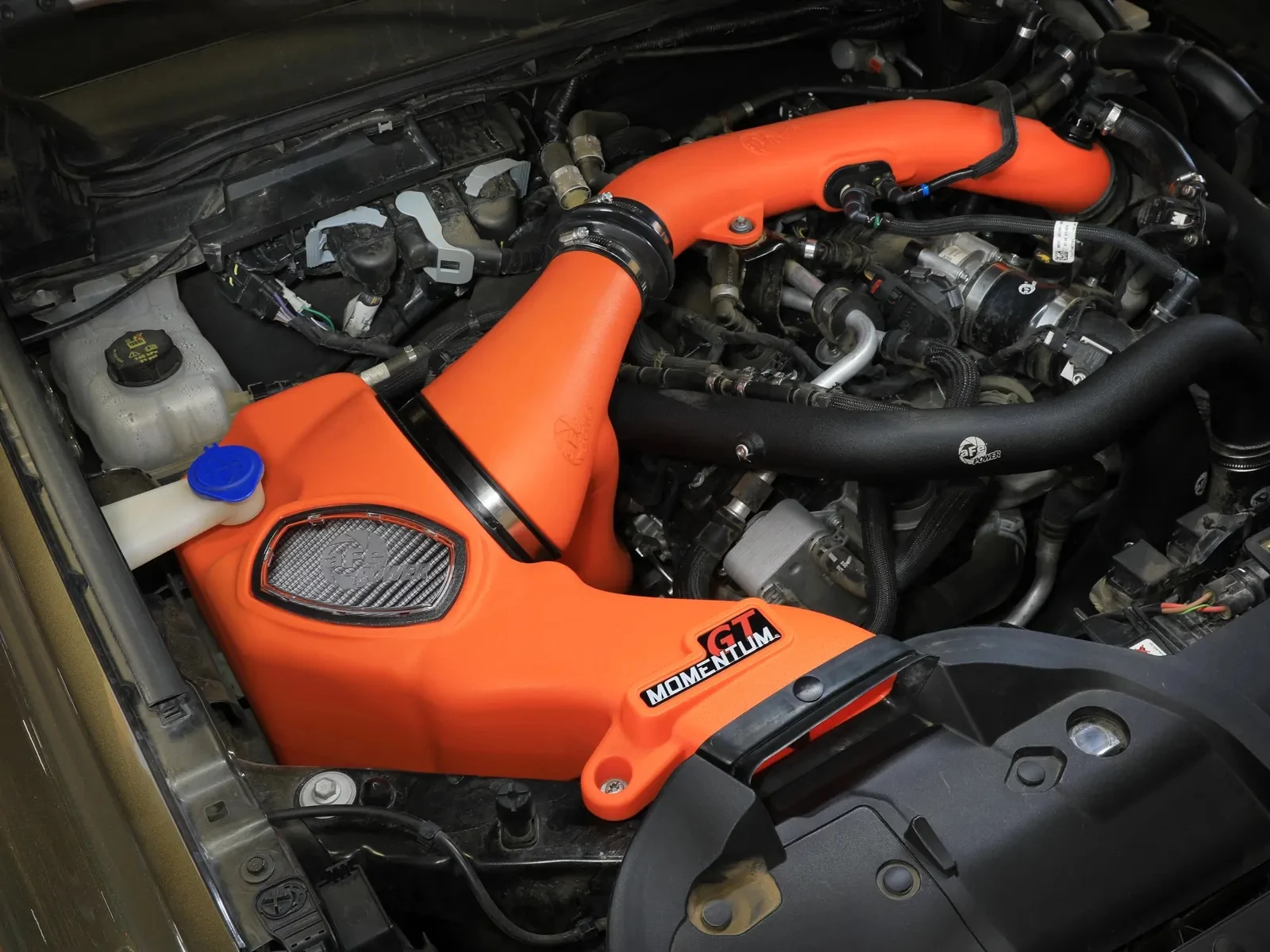

Ford Ranger Cold Air Intakes--are they worth it? 1E64B4E9-4456-4DD0-83F8-F875FCDE7F0D_1_102_o

Here is the AFE. It is nice, bright , and colorful--but look at the passenger turbo inlet--it is still a 90 degree"T". They made a big funnel coming directly off the air box (mainly because that is the base of the filter sticking out--same as S&B). Not optimal


Ford Ranger Cold Air Intakes--are they worth it? 6A203908-6702-4690-A9B9-12382E3BEC98_1_102_o

Here is the K&N. Out of all the U.S. plastic air intakes, their design looks the best compared to the others with reference to the dreaded "T". They have a smooth looking "Y" which should pose a minimal pressure loss and have more balanced laminar flow. Their crossover pipe is not flattened, and they god rid of the bellows that cause turbulence. I think they claim a 27hp gain.
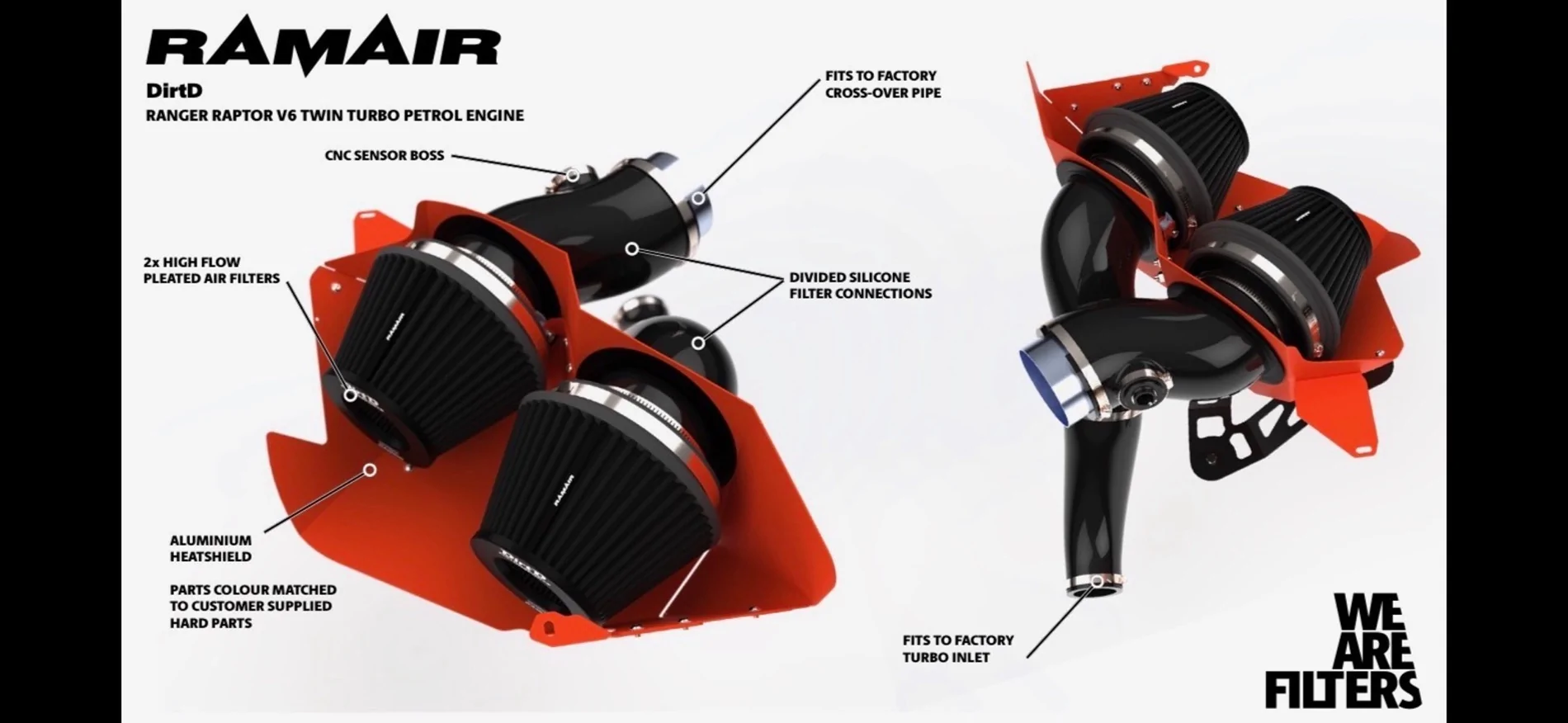

Ford Ranger Cold Air Intakes--are they worth it? C3C0D9EC-9D0C-402F-A371-BD95B948BB40_1_102_o

This is the new system from Dirt D. I don't have any experience with it and have only seen the picture. It fixes the "T" problem (as do all dual filter systems) the main difference is this system is less than a third of the cost of the Indiecarbon or the Fabulous Fab dual filter units. It is in the same price range as the plastic U.S. units. I am curious how it attaches, and if it seals to be cold air. This could be best of all worlds--fixes all the flaws of original, and doesn't cost a fortune. Nathan is usually on here, this is his baby, maybe he can chime in.
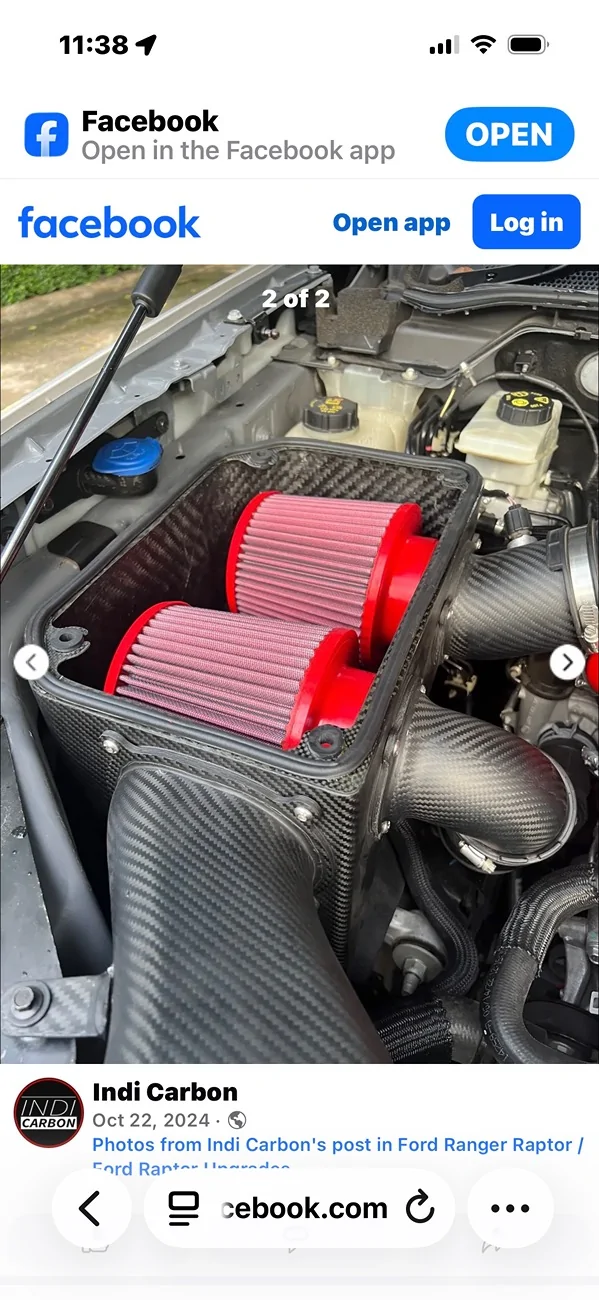

Ford Ranger Cold Air Intakes--are they worth it? 456BBB1E-709A-4CAF-9523-CA7E9FD010ED_1_102_o

The Indicarbon made in Thailand. Last time I checked it was around $1400. Not sure if or how much Tarrif we have with Thailand. It seems to fix all of the Ford flaws and does it with style--costly style. It is beautiful with the lid on. There is a video out on the installation. One thing I did not like was the mounting of the tab to the radiator support. if you look in the bottom left of the picture, you can see what I am talking about. In the video, he says if the spacing isn't right, put a couple of washers under the tab to take up the space--not to just tighten it under stress--and break it. But, when I saw the video, it appeared as if the tab was at the wrong angle, and if you tightened it down, it would probably break off. If you look at where the tab is glued onto the snorkel inlet, it appears if it has already cracked off. I have other Indicarbon items (Carbon key fob covers, etc) that are extremely high quality. Maybe these were prototypes or early production units--or maybe Im just too picky.

Ford Ranger Cold Air Intakes--are they worth it? D929FE4B-6BE5-43A5-85C7-2823EF32EB84_1_102_o

The Fabulous Fab cold air. These boys down under know how to weld! Look at those beautiful Tig welds--that is skill, and a lot of attention to detail. There are a few features of this I like compared to the other Australian CAI, the Process West. First, see all of the stainless screws that hold down the plexiglass lid? What the screws are actually attached to is a metal ring that is placed over the plexiglass and more evenly distributes the load from tightening the screws down. The Process West doesn't have that and there are perfect little "star' cracks all around every screw. See that red handle ball valve? It is in the open position. No other CAI has one that Im aware of. It is for draining the water out of the Air box. When you are just normally cruising around, leave it open so water can drain out. If you are going water fording, close it to prevent water entry from the bottom. Here is the Fabulous CAI Dyno results--10HP gain.

Ford Ranger Cold Air Intakes--are they worth it? A7BC3F2F-439E-42C6-9906-D2C4F6D00CC3

This is the Process West. I chose this picture to show how they handled the dreaded "T" junction. They kind of made a "Y" pipe with different size pipe volumes. I purposely listed this one last. It is the one I have on my truck--and I have a bias. I purchased this in January of 2025 while my truck was on order. At the time, I don't think there was any other option--none of the U.S. plastic ones were out yet. And, I didn't even know of Fabulous Fab or Indicarbon. I got an exceptional deal on it. I bought it from a member on here 3 months old and he sold his truck. it cost about half of what they cost new now, and arrived in the original box, with all papers, instructions, etc. and in flawless new condition. If I had to do it over, knowing what I know now, would I make the same choice? Probably not. I think I would get one of the two filter units--Probably the Fabulous Fab one.

For people thinking about getting a CAI, the following video from Freedom Worx is very useful. He primarily talks about Diesels, but the information transfers. The most important things I think he mentions are scientific studies of the various different brands and types of air filters. Factory vs AFE dry media vs K&N oiled cotton. Also, power lost because of clogged filters, or how about filters being more efficient after the are old? I haven't used oiled cotton filters (K&N style) for years. I ran into a problem with oil contamination of a Mass Airflow Sensor that was damaged when it was cleaned--it was expensive. I also hated cleaning and recharging the dirty filters. Once you get the filter wet to clean, you have to wait for it to dry to recharge it. I didn't like to wait, so I bought another air filter and could just swap them out while one was being cleaned, dried, and recharged--until I never cleaned the first one both were dirty. I switched to performance dry media after that and just throw them away after a year or two. When I saw one of his studies about how poorly K&N filters allow ingestion of dirt and particles Into the engine--it just further reinforces why I never want to run an oiled cotton filter again--watch the bullet demonstration--it might make a believer out of you too. Truth about Cold Air Intakes

I hope this may help somebody, or spurs information that we all may benefit from.
Sponsored

 

Sauce

Well-Known Member
Joined
Apr 30, 2025
Threads
45
Messages
505
Reaction score
425
Location
Northeast
Vehicle(s)
2025 Ranger XLT FX4
Very informative read! Thank you for sharing this knowledge.

Other than the bias against oiled filters, any insights into whether there is a better option than the OEM filters in terms of both filtration and airflow? Or is that not really a bottleneck on these trucks? I know some of the aftermarket filters represent higher airflow, but if the bottleneck is before or after the filter I would imagine it doesn't have any real world benefit.
 

landiscarrier

Well-Known Member
First Name
Landis
Joined
Feb 6, 2026
Threads
2
Messages
88
Reaction score
148
Location
pocono mtns
Vehicle(s)
2025 Ranger Raptor
Occupation
sales
Nice write up for sure!

I’ve added CAI in so many cars I owned including my last 19 Ranger 2.3. Then I bought a RR and watched a lot of videos and read a fair amount. The gains(if any) are minimal at best. So I opted for a custom tune and been very happy!

 
Last edited:
OP
OP
Raptor Family

Raptor Family

Well-Known Member
First Name
Jeff
Joined
Apr 2, 2025
Threads
5
Messages
113
Reaction score
220
Location
Dallas, Texas
Vehicle(s)
‘25 Ranger Raptor, ‘97 Jeep Cherokee, ‘24 Lexus NX450h+
Occupation
retired
I finished this and hit send before I was going to show another member on here with a good write up on cross over pipes with good pictures Cross over Cold Air? take a look at his
 

Buellsox

Well-Known Member
First Name
Scott
Joined
Oct 22, 2025
Threads
2
Messages
185
Reaction score
283
Location
Tacoma, WA
Vehicle(s)
2025 Ranger Raptor
Occupation
Local 26 Union Plumber
DAMN!!! Just Wow! Now that’s an impressive & informative write up! Well done & thanks so much for taking the time to do such an in depth & lengthy post.
You’ve definitely given me some things to take pause on & think about the choices I’ve made. Currently running the PW crossover pipe kit, but with the factory air box with a K&N filter. Never been a big fan of CAI and been running K&N’s in everything I’ve owned since the early 90’s. After taking all that in I’m realizing there’s more to it than what I had presumed. Maybe the proper air box kit with the PW crossover kit would be a great option and maybe I should be concerned with the K&N’s possible downstream oiling & under performing filtration.

Good Stuff!!!
 

Sponsored

Buellsox

Well-Known Member
First Name
Scott
Joined
Oct 22, 2025
Threads
2
Messages
185
Reaction score
283
Location
Tacoma, WA
Vehicle(s)
2025 Ranger Raptor
Occupation
Local 26 Union Plumber
I finished this and hit send before I was going to show another member on here with a good write up on cross over pipes with good pictures Cross over Cold Air? take a look at his
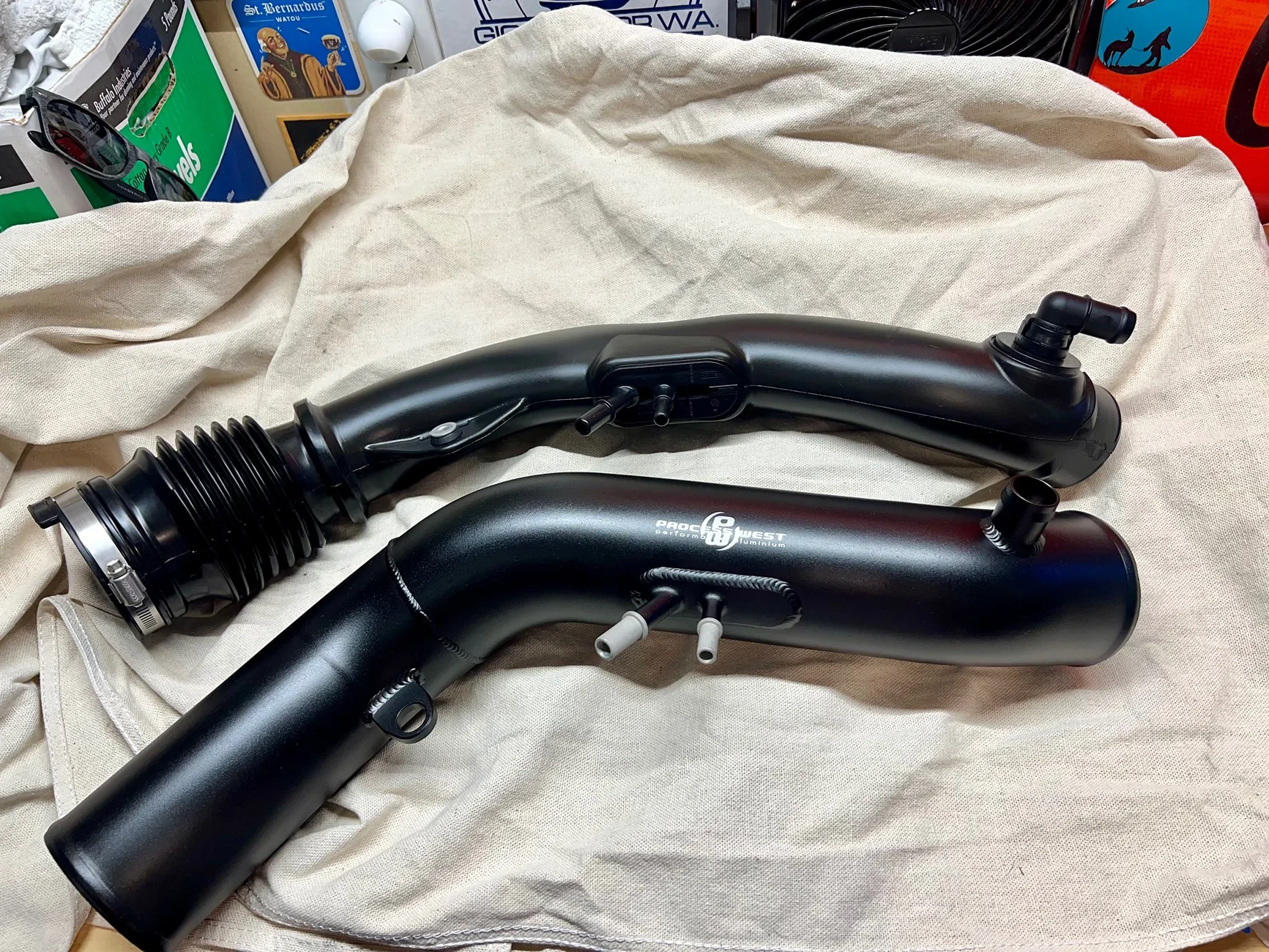
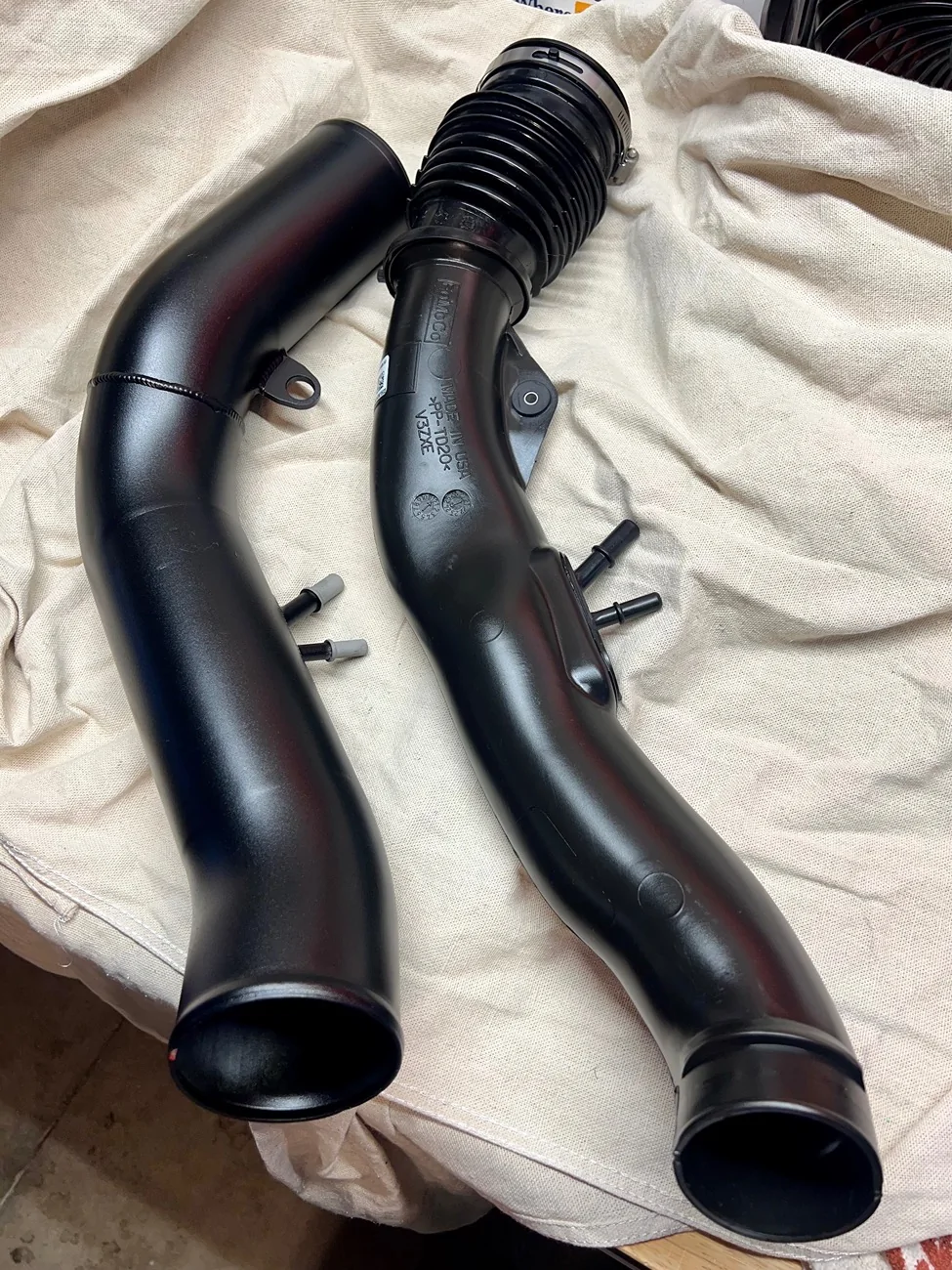
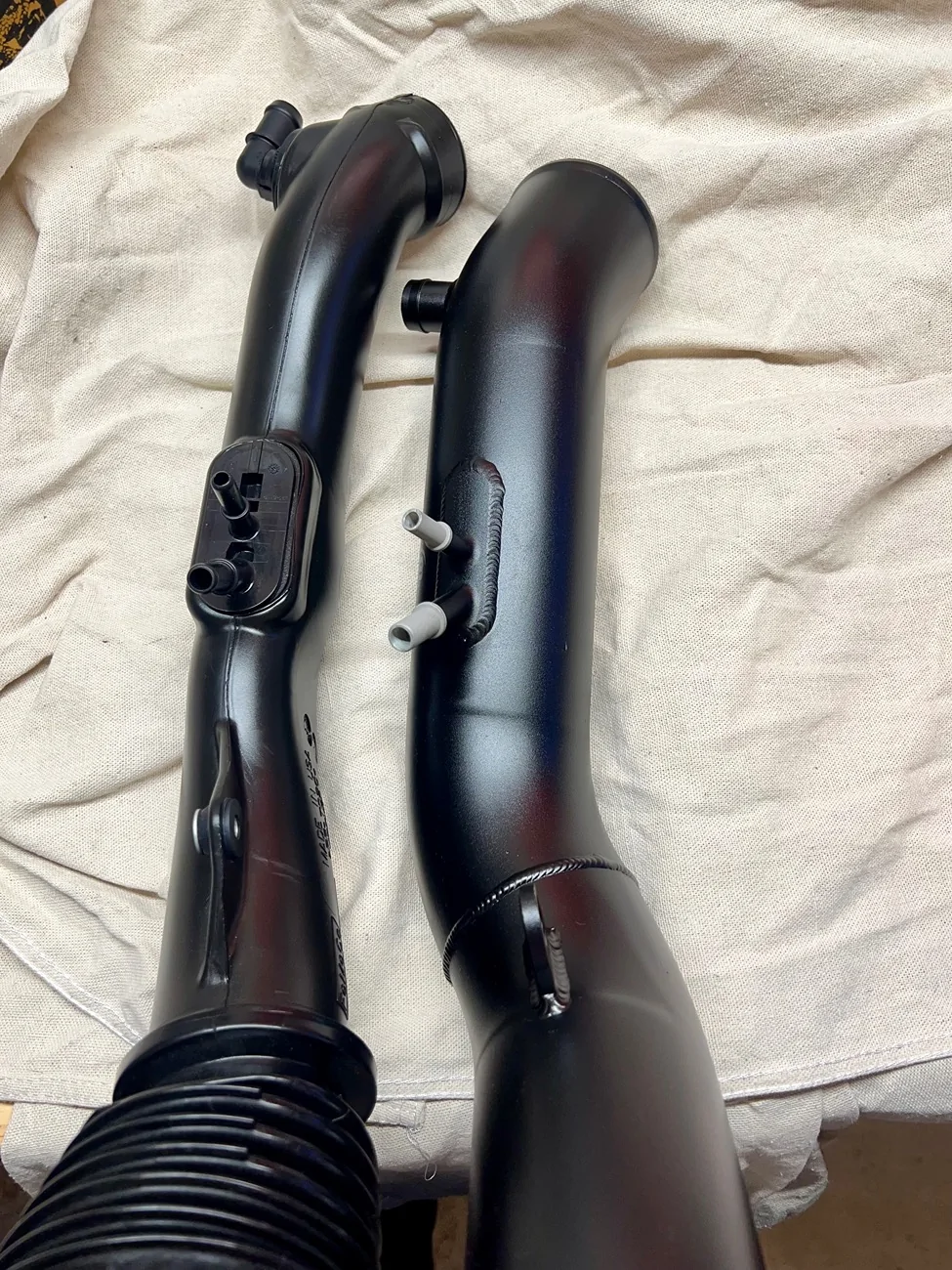
Hey that’s my write up! I can attest to the PW crossover kit. Big difference in the size and smoothed out bends of the piping versus the factory Ford plastic stuff.
Ford Ranger Cold Air Intakes--are they worth it? IMG_2139
Ford Ranger Cold Air Intakes--are they worth it? IMG_2143
Ford Ranger Cold Air Intakes--are they worth it? IMG_2140
Ford Ranger Cold Air Intakes--are they worth it? IMG_2142
Ford Ranger Cold Air Intakes--are they worth it? IMG_2145
 
OP
OP
Raptor Family

Raptor Family

Well-Known Member
First Name
Jeff
Joined
Apr 2, 2025
Threads
5
Messages
113
Reaction score
220
Location
Dallas, Texas
Vehicle(s)
‘25 Ranger Raptor, ‘97 Jeep Cherokee, ‘24 Lexus NX450h+
Occupation
retired
Very informative read! Thank you for sharing this knowledge.

Other than the bias against oiled filters, any insights into whether there is a better option than the OEM filters in terms of both filtration and airflow? Or is that not really a bottleneck on these trucks? I know some of the aftermarket filters represent higher airflow, but if the bottleneck is before or after the filter I would imagine it doesn't have any real world benefit.
Did you watch the last video from Freedom Work, with the hotline Titled the Truth about cold air intakes. He has some scientific studies that answer exactly what you are asking. He takes the data from several stock types of filters compares them to an aFe dry media, and an oil cotton K&N. He uses jars full of bullets to demonstrate the difference in how many particles go past the filter. The K&N loses horribly.

A stock replacement AFE Magnum flow Pro Dry S #3010413D fits Ranger Raptors--currently on sale from VividRacing for $97. It is a dry filter--you can actually clean and recharge it--I think these are the best filters balancing the few particles passing through and performance.
 

Sauce

Well-Known Member
Joined
Apr 30, 2025
Threads
45
Messages
505
Reaction score
425
Location
Northeast
Vehicle(s)
2025 Ranger XLT FX4
Did you watch the last video from Freedom Work, with the hotline Titled the Truth about cold air intakes. He has some scientific studies that answer exactly what you are asking. He takes the data from several stock types of filters compares them to an aFe dry media, and an oil cotton K&N. He uses jars full of bullets to demonstrate the difference in how many particles go past the filter. The K&N loses horribly.

A stock replacement AFE Magnum flow Pro Dry S #3010413D fits Ranger Raptors--currently on sale from VividRacing for $97. It is a dry filter--you can actually clean and recharge it--I think these are the best filters balancing the few particles passing through and performance.
No - but I'll watch it tonight. Thanks.

And BTW - thats the exact filter I was going to buy to replace my OEM (in the OEM airbox).
 
OP
OP
Raptor Family

Raptor Family

Well-Known Member
First Name
Jeff
Joined
Apr 2, 2025
Threads
5
Messages
113
Reaction score
220
Location
Dallas, Texas
Vehicle(s)
‘25 Ranger Raptor, ‘97 Jeep Cherokee, ‘24 Lexus NX450h+
Occupation
retired
Hey that’s my write up! I can attest to the PW crossover kit. Big difference in the size and smoothed out bends of the piping versus the factory Ford plastic stuff.
IMG_2139.webp
IMG_2143.webp
IMG_2140.webp
IMG_2142.webp
IMG_2145.webp
I liked your write up and all the pictures that are worth more than a thousand words.
 

RaptorME

Well-Known Member
Joined
Aug 20, 2025
Threads
2
Messages
145
Reaction score
162
Location
Maine
Vehicle(s)
2025 Ranger Raptor


I have referenced this video in other posts. They install the S&B around the 6 minute mark and then dyno again on the same tune and the BR picks up 25 hp. Goosetuned has verified that the S&B makes real gains. You can feel how much freer the top end power feels after install but I do think some type of tune is needed to take full advantage of it. That is the tune I currently have and in the comments you can see that SVT states the RR would make more power w/o the heavy 37's.
 

Sponsored

JrHDRanger

Well-Known Member
First Name
Josh
Joined
Oct 21, 2024
Threads
15
Messages
237
Reaction score
316
Location
Indiana
Vehicle(s)
2025 Ranger Raptor
I have the IndiCarbon and that tab broke off. High strength epoxied it and it was good for a few months and broke off again. Beautiful airbox, but that tab is an eyesore. Should have been molded in with some reinforcement.
 

Crapblaster

Well-Known Member
Joined
May 27, 2023
Threads
15
Messages
313
Reaction score
297
Location
Texas
Vehicle(s)
2025 F150 Space White Platinum, 2024 HPR Ranger Raptor
I think most of these intakes make more power by having an open hole in the box. The stock box has to draw air through the funnel to the grill. It would be interesting to see dyno numbers on these intakes with all the panels on and drawing air though the intake funnel.
 

yerkool

Well-Known Member
First Name
Warren
Joined
Jan 21, 2026
Threads
8
Messages
89
Reaction score
100
Location
SoCal
Vehicle(s)
2025 Ford Ranger Crew Cab FX4
836EC31B-D48C-4E1C-B395-F38429BA9D9B_1_201_a.webp


I have seen a lot of questions lately about buying the best Cold Air Intake for our trucks and I think a lot of manufacturer advertising is pushing false issues of needs and wants. We are being convinced that what we have stock from Ford is inferior to these new shinny objects that range in cost from sub $100 for a performance filter element, to $1.5k for Carbon Fiber unit from Indiecarbon (Thailand--where global RRs are manufactured) or an aluminum box from the boys down under (Process West, Fabulous Fab, and others)--and the mid-priced $400-600 plastic rotomolded U.S. units from AFE, S&B, and K&N--there is another U.S. unit called RamAir, being marketed by a vendor on this site (Dirt D)--I have only seen pictures of it, but its design takes a completely different approach to solve some of the deficiencies in the factory system--and it doesn't cost much. So, in this post, I want to look at the factory Ford system, what it does good, what it does bad--and identify any design defects. I want to look at the aftermarket intake units from various manufacturers and see how their design approaches improve upon the original unit---basically, what makes them better than the factory unit--or worse (and the best bang for the buck).

First, what is a Cold Air Intake, and why is it desirable? Similarly, what is Ram Air, and why do we want it as well? We want cold air because every 10 degree decrease in intake air temperature is a 1% increase in horsepower--free horsepower. The extra power is from efficiency created from the denser air; better emissions, better MPG, more power; win, win, win. As an example, in our trucks, we have 405bhp. If we decreased the temperature of the air entering the intake by 10 degrees, we would make about 4.05 more HP. If we dropped temp by 20 degrees; 8.10HP, and so on. Ram Air is free power too. It is the velocity of the air entering the intake and converted into PSI; where every 1 PSI in boost adds 6.8% more HP. One psi of boost is worth about 28hp on a 405bhp Ranger Raptor. Problem is, that Ram Air does not increase boost as much as we think it does. The air velocity at 60mph only produces .06psi of boost. 100mph only produces .18 psi. So at 60mph we multiply 405bhp x .068 (percent of increase)x .06 (psi of boost)=1.65hp. The hp gain is so low, it almost can't be measured. At 100 mph; 405x.068x.18=4.96hp--almost 5 hp. Anything over 112mph doesn't matter as you are driving faster than the speed safety rating of the tires our trucks are equipped with.

Engine compartment temperatures are hot, and over the last 2 decades they have got even hotter. Up until about the mid 1990s most cars ran 180 degree thermostats which began opening around 180 and created about a 185-200 degree normal operating temperature. Not anymore. The thermostats in our trucks begin opening at 197.6 and become fully open at 222.8 degrees. The normal operating temperature is between 190 and 220 with spikes higher under load considered acceptable. You can cook a Texas brisket on that kind of heat. For those of you that have never looked, peer into your front grille. You will see what looks like black Venetian blinds--those are the computer controlled shutters that stop airflow from cooling the radiator and entering the engine compartment. They are designed to bring the temperature up high quickly and keep it there. We do not want to suck this hot air into our air intake--for the opposite reasons mentioned above--every 10 degrees of hotter intake air decreases HP by 1%. And here is the next thing, almost every modern car runs at these hotter temperatures, and virtually all vehicles have some form of cold air intake already as factory--our trucks included. We already have a cold air intake. Our intake path takes cold air from the grill and brings it over the radiator support into the air filter box snorkel. The underside of our hood has a "U" shaped weather stripping that seals this cold air path from hot engine compartment air. Up until this part, all aftermarket CAIs utilize the exact same design with the air path as the factory Ford.

Here is a video that describes the air path better than I can S&B Breakdown of Ranger intake Some of the things I don't like about this video are how he describes the factory air flow through the Ford filter box as bad. The air comes into the box at the top, heads straight down and makes a "U" turn and goes up to the air filter with the filter media facing down. I think this is a good design, any dirt, dust or debris--or even rain will travel with the air down inside the air filter box when the air changes directions making the "U" to head back up, all the heavier particles of dirt, dust, and water fall out of suspension and do not even make it to the air filter. The filter lasts longer and doesn't get moisture saturated. With the filter upside down, all the heavier dirt and debris constantly falls to the bottom of the air filter box, helping keep the filter cleaner. There is a 5mm hole in the bottom that drains out any water and can allow some particles to fall out of the box as well. When he describes the superiority of air flow path being direct to his filter, that is not a bonus--water, dust, and debris have a straight shot at the upper facing pleats that are just little trenches to hold all of the dust, dirt, and and debris--any water in the air, goes straight onto the filter without any mitigation. In the installation, he says you have a choice about putting the side cover on the Air box or leaving it off--he advises to leave it off to get "more air into the engine". I think that is totally wrong--because it no longer is a cold air system with the air filter exposed to the hot engine compartment. In the video, he has the entire factory system laying on the table and it is easy to see the air piping that exits the factory filter box. The Part I want to bring your attention to is the "T" junction feeding the passenger side turbo inlet. It is easier to see when the whole system is laid out on the table. Here is a picture of the "T" Junction in the truck.


0AA2AB65-B992-4D15-913F-96246594127B_1_102_o.webp

Look at the piping coming out of the air box, it starts out larger at the air box, shrinks to a funnel shape and has a 90 degree junction just as the pipe is shrinking. This I believe is horrible engineering from Ford. Anybody that has ever studied anything to do with fluid dynamics (and yes, air is a fluid), knows that a "T" junction such as this causes a loss of laminar air flow, turbulence, and a loss of pressure (more about pressure later) as does the accordion type bellows, the flattening of the crossover, and short bend radius of the plastic elbow of the drivers side turbo inlet.

Here is a short paper discussing the loss of laminar flow in a 90 degree "T" junction T Junction Loss of Laminar.
here is the primary picture from that article

F613394B-41EB-42B7-9DEF-09EFF6AB2773_1_102_o.webp

What is depicted here is what happens to air flow under pressure--it is not exactly the same as air under vacuum, but the picture is a good visual reference of what occurs in 90 degree "T" junctions. The Red, orange, and green are all different layers of laminar air velocities with a lot of velocity loss at the junction where the blue is almost zero. The loss of velocity affects the pressure to the turbo inlets. Our turbos; stock, modified, etc are very sensitive to inlet pressure.

Don't take my word for it, in this video 700hp Monster , Adam from ZFG tuning is talking about the highest Horsepower Ranger Raptor in North America--and possibly the World (Nathan's 714hp Monster), speaks about how sensitive the turbos are to inlet pressures--he is the tuner that makes these things go--and go really fast, I think he knows what the hell he is talking about. If you look really closely at the type of air intake that is being used it is a split system with a separate filter on the left turbo, and one on the right. There is no crossover, no air box, the passenger side filter just lays on the passenger side fender well, and the drivers side air filter lays on the inner fender well just behind the battery. The system is made by FenFab and I think these are prototypes, as I have never seen them for sale on his website. These are not truly CAI, as they are in the engine compartment. They are proof of concept that our turbo inlet pressures are very sensitive and that the factory system is inadequate.
.

Lets look at the different manufacturer systems and how the try to fix the "T" Junction flaw in the Ford design:


C5D73A0D-E6BD-4C15-90B9-B78427FA4D6A_1_102_o.webp

Here is the S&B. They kind of enlarged the base of the funnel (where the air filter is) and located the the passenger side turbo inlet similar to a "T". It is like the inlet side of the "T" is fatter than the two legs. It is an improvement over stock, but I don't think it is optimal. They smoothed out some of the the other stuff and ditched the bellows.


1E64B4E9-4456-4DD0-83F8-F875FCDE7F0D_1_102_o.webp

Here is the AFE. It is nice, bright , and colorful--but look at the passenger turbo inlet--it is still a 90 degree"T". They made a big funnel coming directly off the air box (mainly because that is the base of the filter sticking out--same as S&B). Not optimal


6A203908-6702-4690-A9B9-12382E3BEC98_1_102_o.webp

Here is the K&N. Out of all the U.S. plastic air intakes, their design looks the best compared to the others with reference to the dreaded "T". They have a smooth looking "Y" which should pose a minimal pressure loss and have more balanced laminar flow. Their crossover pipe is not flattened, and they god rid of the bellows that cause turbulence. I think they claim a 27hp gain.


C3C0D9EC-9D0C-402F-A371-BD95B948BB40_1_102_o.webp

This is the new system from Dirt D. I don't have any experience with it and have only seen the picture. It fixes the "T" problem (as do all dual filter systems) the main difference is this system is less than a third of the cost of the Indiecarbon or the Fabulous Fab dual filter units. It is in the same price range as the plastic U.S. units. I am curious how it attaches, and if it seals to be cold air. This could be best of all worlds--fixes all the flaws of original, and doesn't cost a fortune. Nathan is usually on here, this is his baby, maybe he can chime in.


456BBB1E-709A-4CAF-9523-CA7E9FD010ED_1_102_o.webp

The Indicarbon made in Thailand. Last time I checked it was around $1400. Not sure if or how much Tarrif we have with Thailand. It seems to fix all of the Ford flaws and does it with style--costly style. It is beautiful with the lid on. There is a video out on the installation. One thing I did not like was the mounting of the tab to the radiator support. if you look in the bottom left of the picture, you can see what I am talking about. In the video, he says if the spacing isn't right, put a couple of washers under the tab to take up the space--not to just tighten it under stress--and break it. But, when I saw the video, it appeared as if the tab was at the wrong angle, and if you tightened it down, it would probably break off. If you look at where the tab is glued onto the snorkel inlet, it appears if it has already cracked off. I have other Indicarbon items (Carbon key fob covers, etc) that are extremely high quality. Maybe these were prototypes or early production units--or maybe Im just too picky.


D929FE4B-6BE5-43A5-85C7-2823EF32EB84_1_102_o.webp

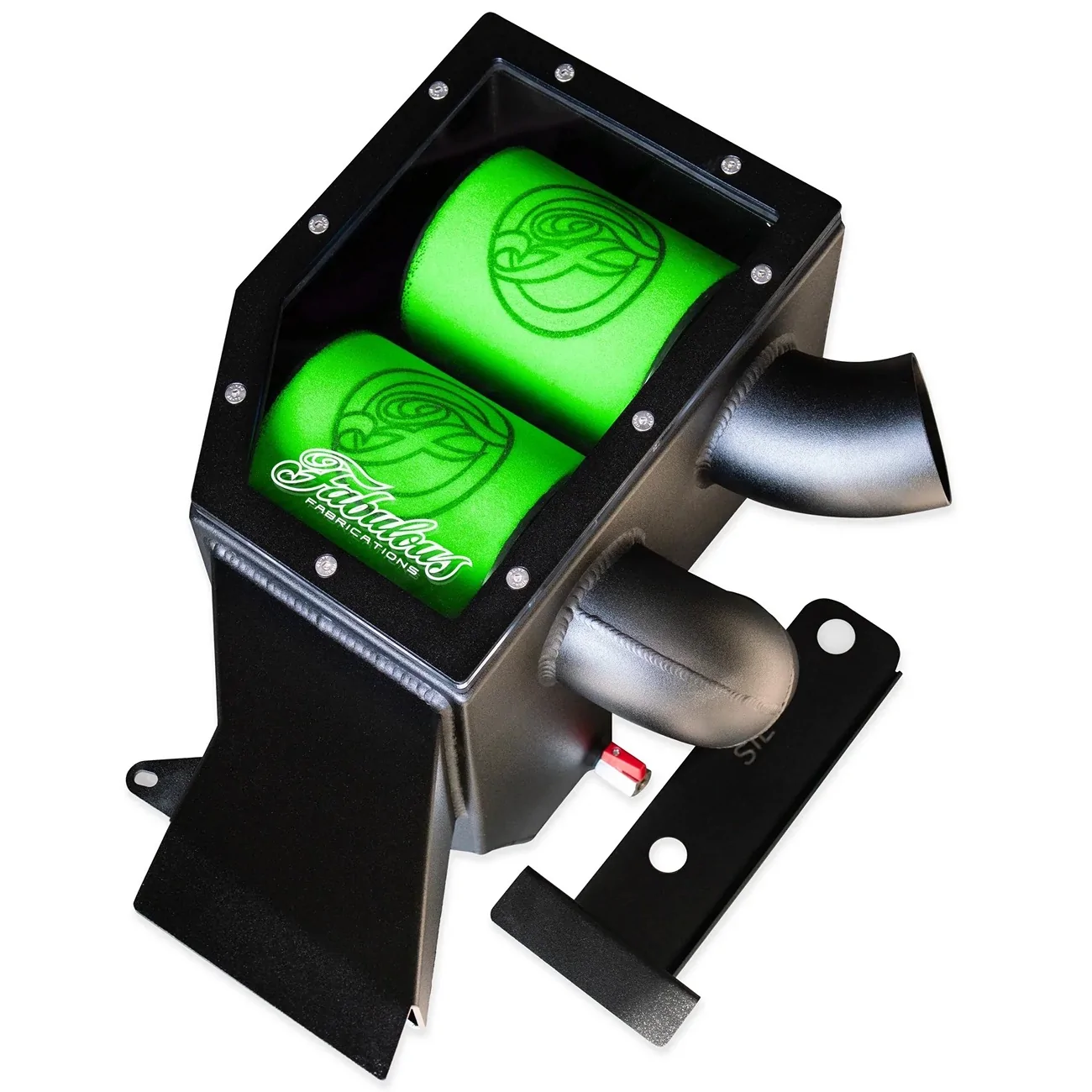
The Fabulous Fab cold air. These boys down under know how to weld! Look at those beautiful Tig welds--that is skill, and a lot of attention to detail. There are a few features of this I like compared to the other Australian CAI, the Process West. First, see all of the stainless screws that hold down the plexiglass lid? What the screws are actually attached to is a metal ring that is placed over the plexiglass and more evenly distributes the load from tightening the screws down. The Process West doesn't have that and there are perfect little "star' cracks all around every screw. See that red handle ball valve? It is in the open position. No other CAI has one that Im aware of. It is for draining the water out of the Air box. When you are just normally cruising around, leave it open so water can drain out. If you are going water fording, close it to prevent water entry from the bottom. Here is the Fabulous CAI Dyno results--10HP gain.


A7BC3F2F-439E-42C6-9906-D2C4F6D00CC3.webp

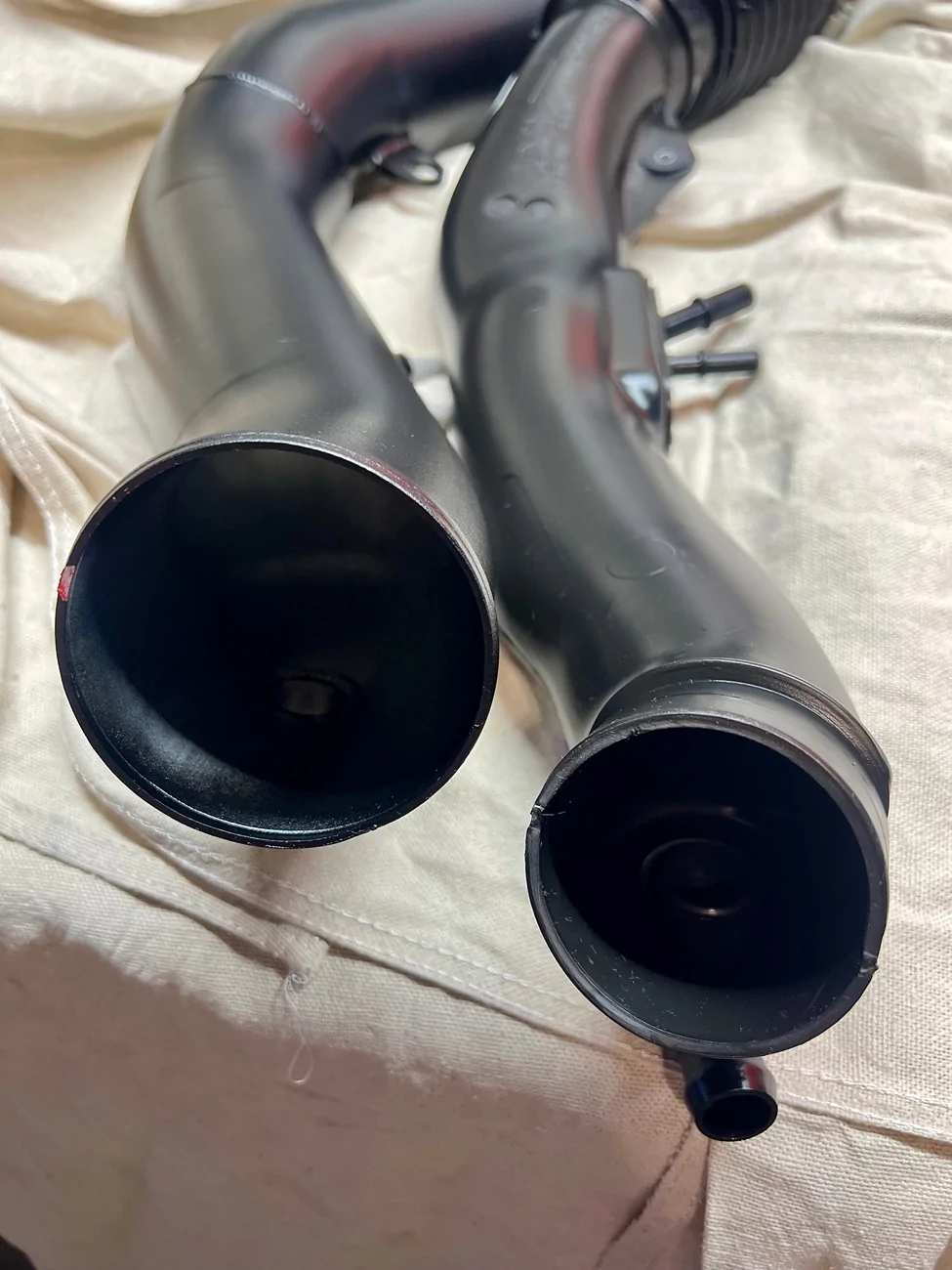
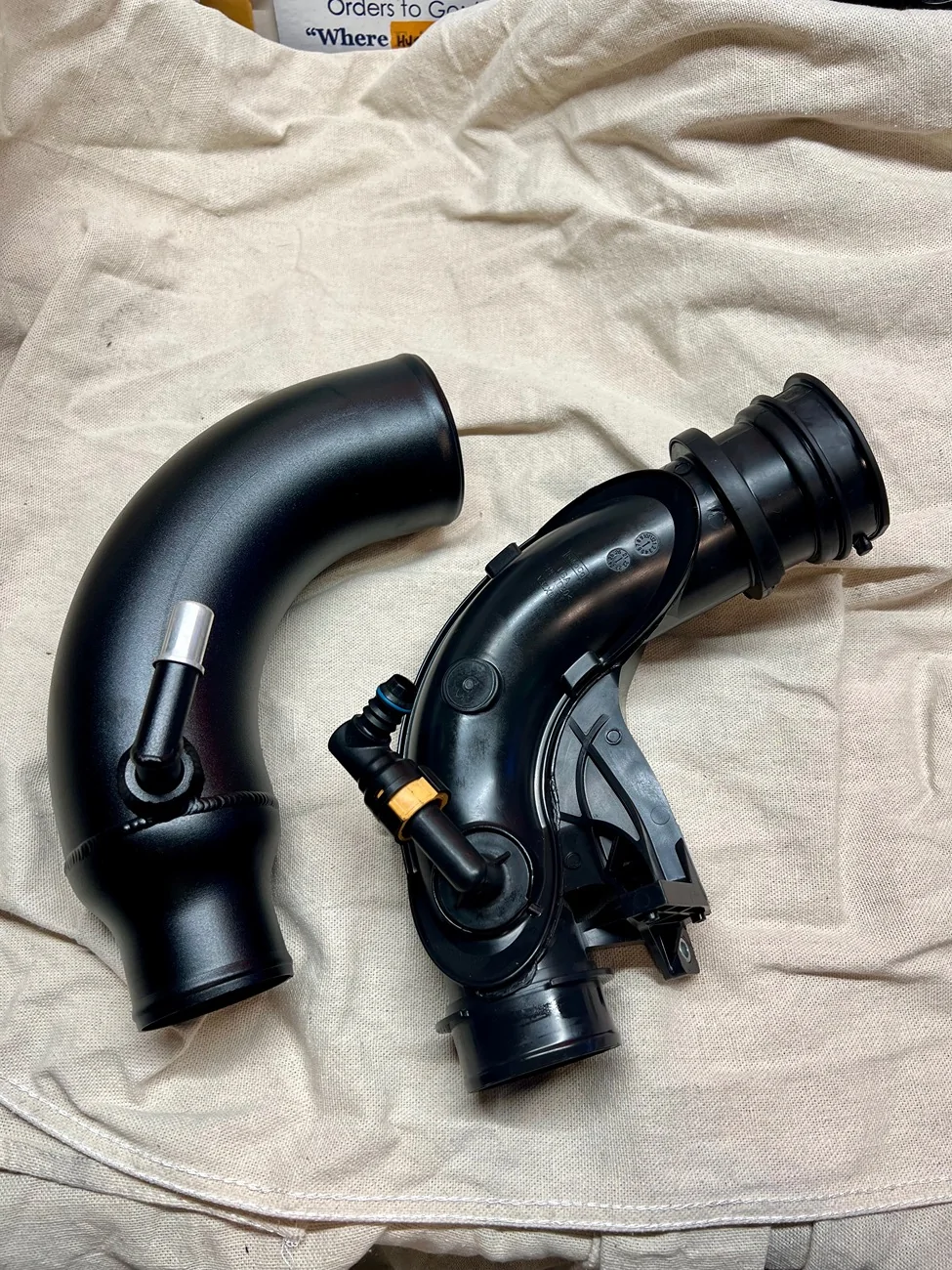
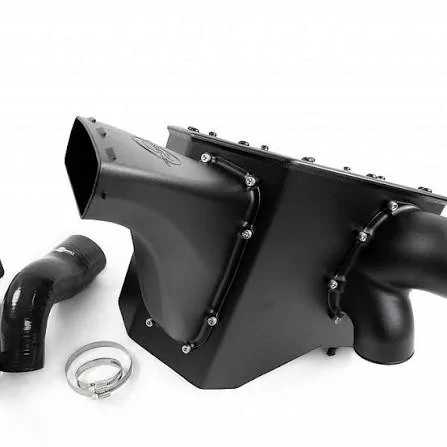
This is the Process West. I chose this picture to show how they handled the dreaded "T" junction. They kind of made a "Y" pipe with different size pipe volumes. I purposely listed this one last. It is the one I have on my truck--and I have a bias. I purchased this in January of 2025 while my truck was on order. At the time, I don't think there was any other option--none of the U.S. plastic ones were out yet. And, I didn't even know of Fabulous Fab or Indicarbon. I got an exceptional deal on it. I bought it from a member on here 3 months old and he sold his truck. it cost about half of what they cost new now, and arrived in the original box, with all papers, instructions, etc. and in flawless new condition. If I had to do it over, knowing what I know now, would I make the same choice? Probably not. I think I would get one of the two filter units--Probably the Fabulous Fab one.

For people thinking about getting a CAI, the following video from Freedom Worx is very useful. He primarily talks about Diesels, but the information transfers. The most important things I think he mentions are scientific studies of the various different brands and types of air filters. Factory vs AFE dry media vs K&N oiled cotton. Also, power lost because of clogged filters, or how about filters being more efficient after the are old? I haven't used oiled cotton filters (K&N style) for years. I ran into a problem with oil contamination of a Mass Airflow Sensor that was damaged when it was cleaned--it was expensive. I also hated cleaning and recharging the dirty filters. Once you get the filter wet to clean, you have to wait for it to dry to recharge it. I didn't like to wait, so I bought another air filter and could just swap them out while one was being cleaned, dried, and recharged--until I never cleaned the first one both were dirty. I switched to performance dry media after that and just throw them away after a year or two. When I saw one of his studies about how poorly K&N filters allow ingestion of dirt and particles Into the engine--it just further reinforces why I never want to run an oiled cotton filter again--watch the bullet demonstration--it might make a believer out of you too. Truth about Cold Air Intakes

I hope this may help somebody, or spurs information that we all may benefit from.
I do know that oily filters are a big no no for the turbo intercoolers so I’d stay on the dry stock filters. It would be different if it was a NA engine that is pure port fuel injection, I’d do it, but not on these highly sensitive turbo engines with just a Direct injection set up. Just my two cents..
 

RaptorME

Well-Known Member
Joined
Aug 20, 2025
Threads
2
Messages
145
Reaction score
162
Location
Maine
Vehicle(s)
2025 Ranger Raptor
I think most of these intakes make more power by having an open hole in the box. The stock box has to draw air through the funnel to the grill. It would be interesting to see dyno numbers on these intakes with all the panels on and drawing air though the intake funnel.
That is explained in the video. They put the lid on and it made almost no difference, it was within normal margin of error for dyno runs. They also said on the road airflow would be better than a fan so there is no benefit to running it open.
 

Crapblaster

Well-Known Member
Joined
May 27, 2023
Threads
15
Messages
313
Reaction score
297
Location
Texas
Vehicle(s)
2025 F150 Space White Platinum, 2024 HPR Ranger Raptor
The K&N looks good if it had a dry filter.
Sponsored


Top