Sponsored

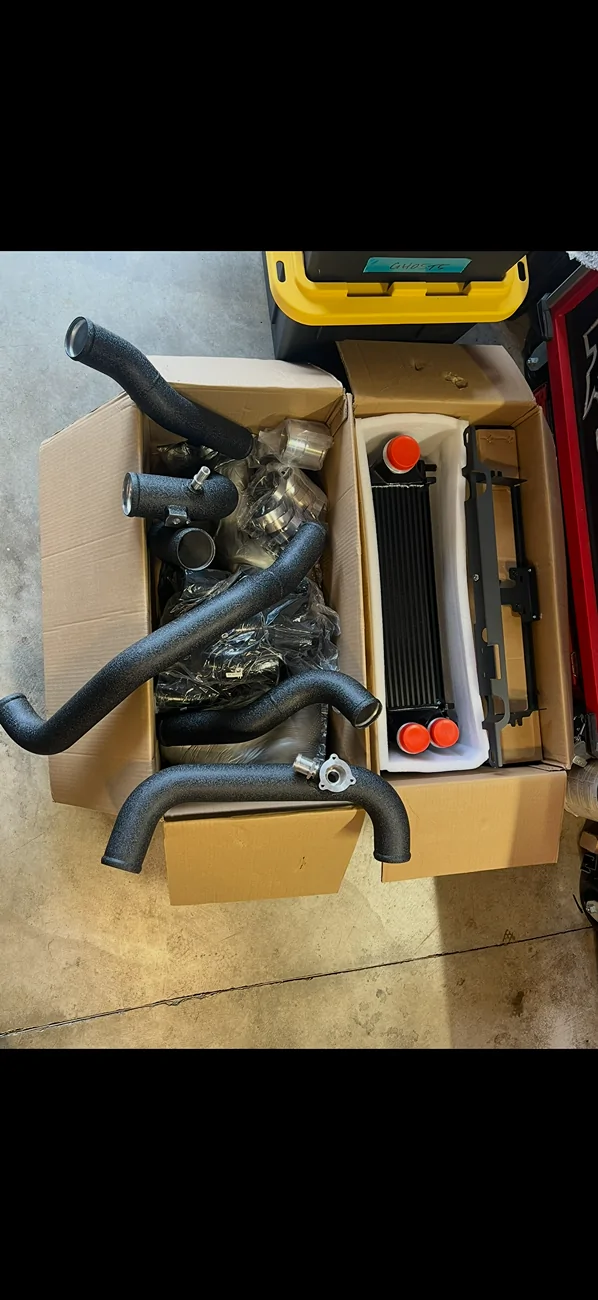
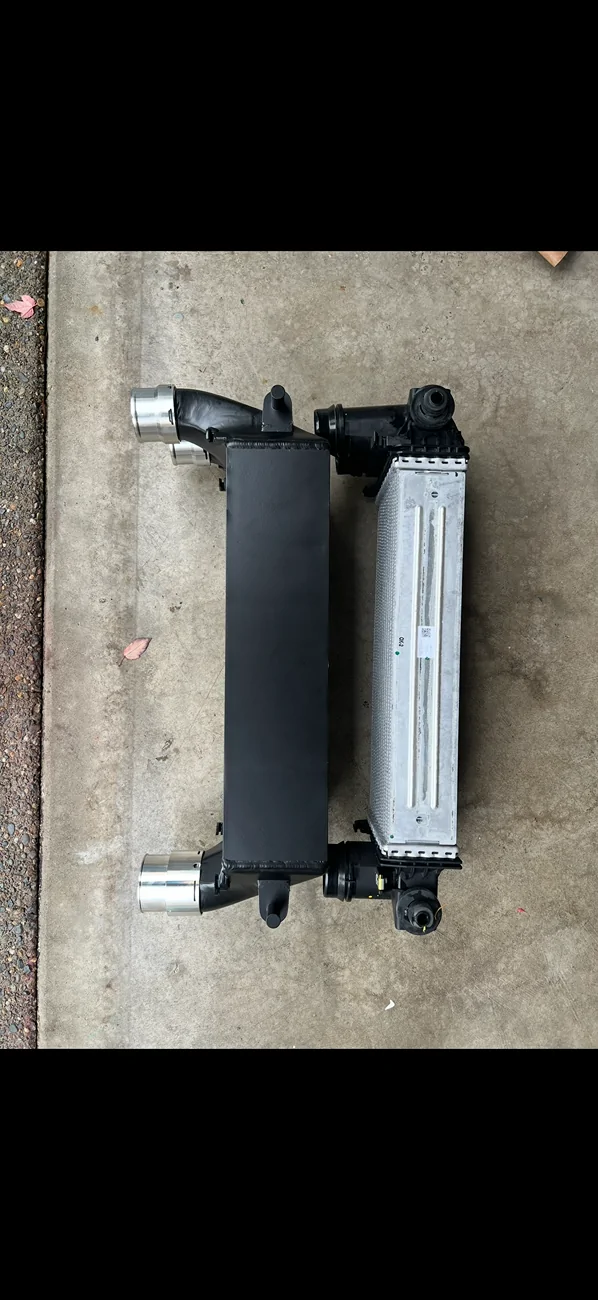
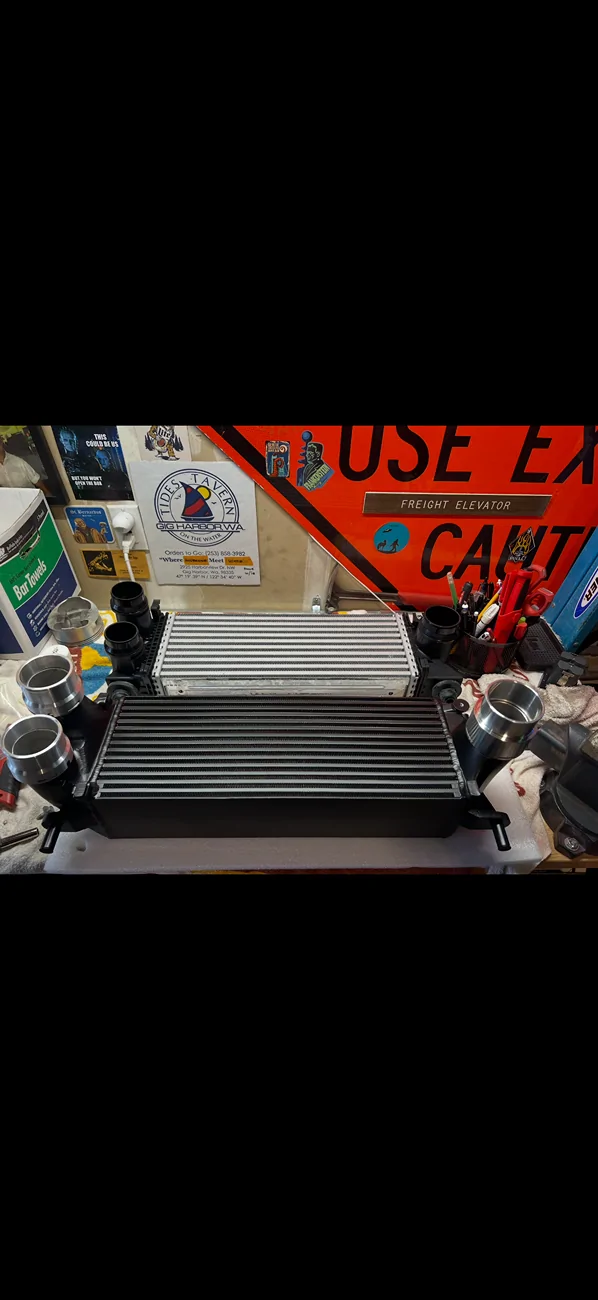
Intercooler comparison - stock spot vs big chungus

ericwmedic

Member
First Name
Eric
Joined
Jun 16, 2026
Threads
1
Messages
11
Reaction score
9
Location
SE MI
Vehicle(s)
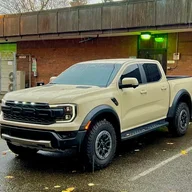
2026 Ranger Raptor
Occupation
Engineer
I'm looking to eventually max out my credit card take the next step performance wise and really piss off my wife upgrade my intercooler. The US manufacturers seem to be behind the curve compared to the Aussies and Kiwis, and they've only released stock location version. If I wanted to go with the big "stage 2" unit, it's a choice between DSR or Process West.

I'm not planning on changing the front bumper or installing a winch, so it's not a matter of having an air path for the intercooler. Flabberdoopin did a good explanation on how the backside ducting on the stock location (at least with the Wagner unit) can help pull air through at low speeds. My use-case is about 90% on-road/ spirited daily driving, 5% mild forest trails, 5% sand dunes.

I'm not entirely sold on either setup, so I'm hoping that someone with more smarts on these trucks can help with my decision. My only performance mods as of now are a 93/ E30 tune from EMS Motorsports and a K&N intake/ crossover.

Pros/cons?
Sponsored

 

pablo94sc

Well-Known Member
Joined
Oct 27, 2023
Threads
42
Messages
1,222
Reaction score
1,250
Location
TN
Vehicle(s)
Focus
I'm leaning towards the DSR intercooler, but I also want the ability to add a winch tucked into the bumper. I've been trying to find similar universal ICs that'll fit as well, even if that requires custom hot side pipes (easy enough).

What I really want, though, is having enough room behind the core to install IC fans. I'm a big fan (no pun intended) of keeping heat soak at bay.
 

Buellsox

Well-Known Member
First Name
Scott
Joined
Oct 22, 2025
Threads
4
Messages
288
Reaction score
437
Location
Tacoma, WA
Vehicle(s)
2025 Ranger Raptor
Occupation
Local 26 Union Plumber
If you’re dead set on the massive Stage 2 then some of this won’t pertain to you. But here’s the setup I went with and it’s been bulletproof for 7.5K miles and makes this truck RIP!

* Check out CVF (out of FL I believe - could be wrong) I went with their Stage 1 I.C. and turbo pipe kit. The whole system went in smooth and my I.C. install retained the factory scoop in the rear as well and bolted in using all factory points = super easy. I opted for the black to darken out the grill area. The turbo pipe kit takes some fussing with to get them from leaning on anything that’s moving or in revolution (pulleys, etc) but I had it perfect after 2 short rides around the neighborhood. None of them have moved since.
* Ford Pro-Cal Tune
* AFE pro DRY s air filter in the stock air box / no oily a/f right at starting point of the turbos.
* Process West crossover pipe
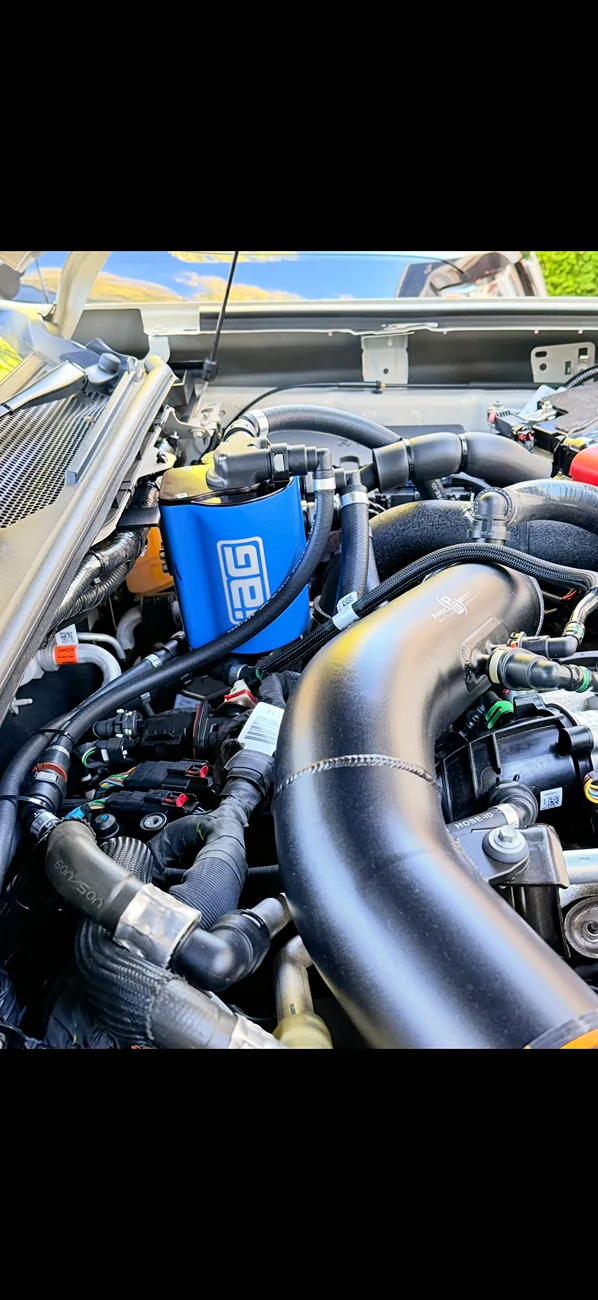
* IAG dual side heated catch can (catches BOTH valve covers)
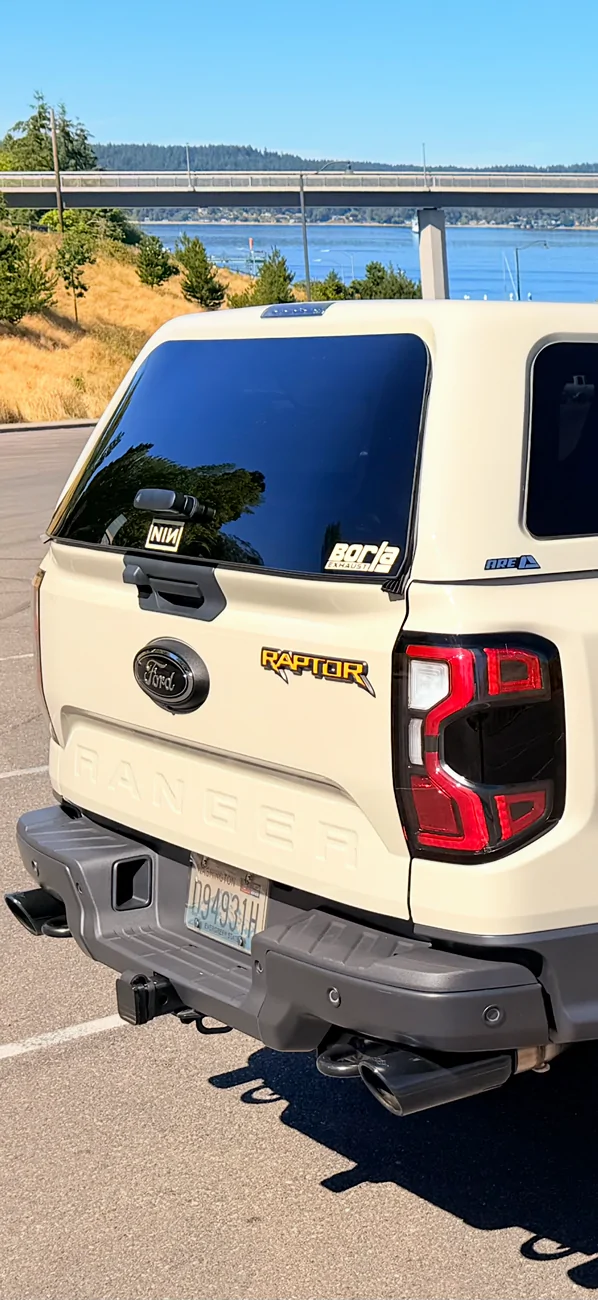
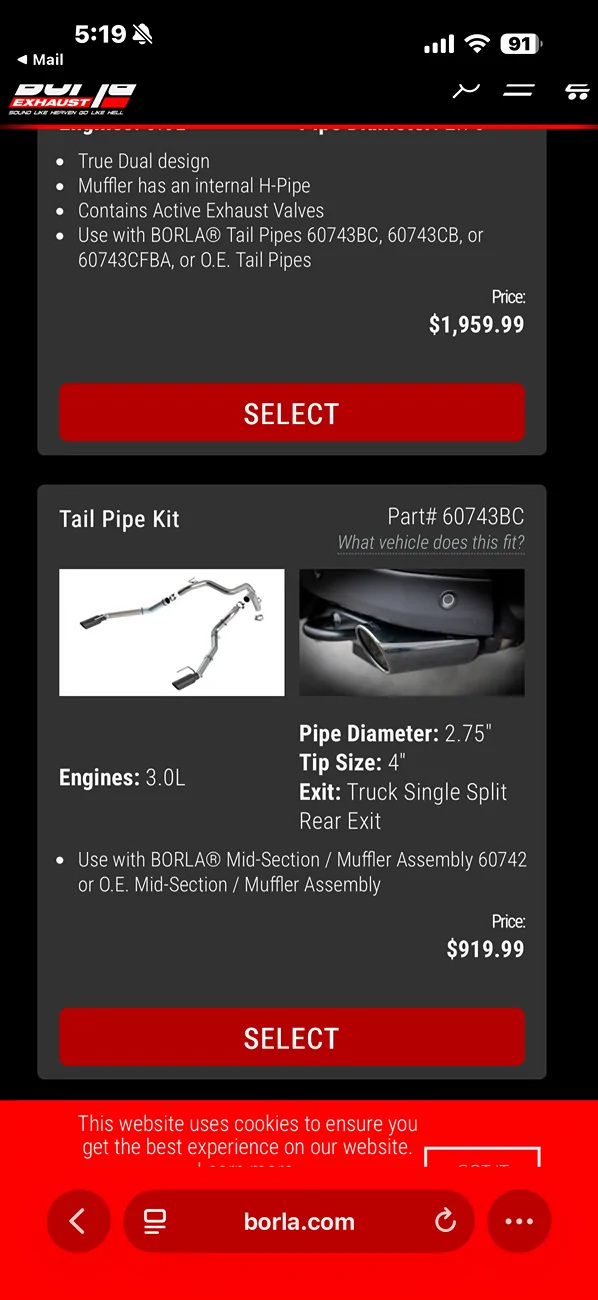
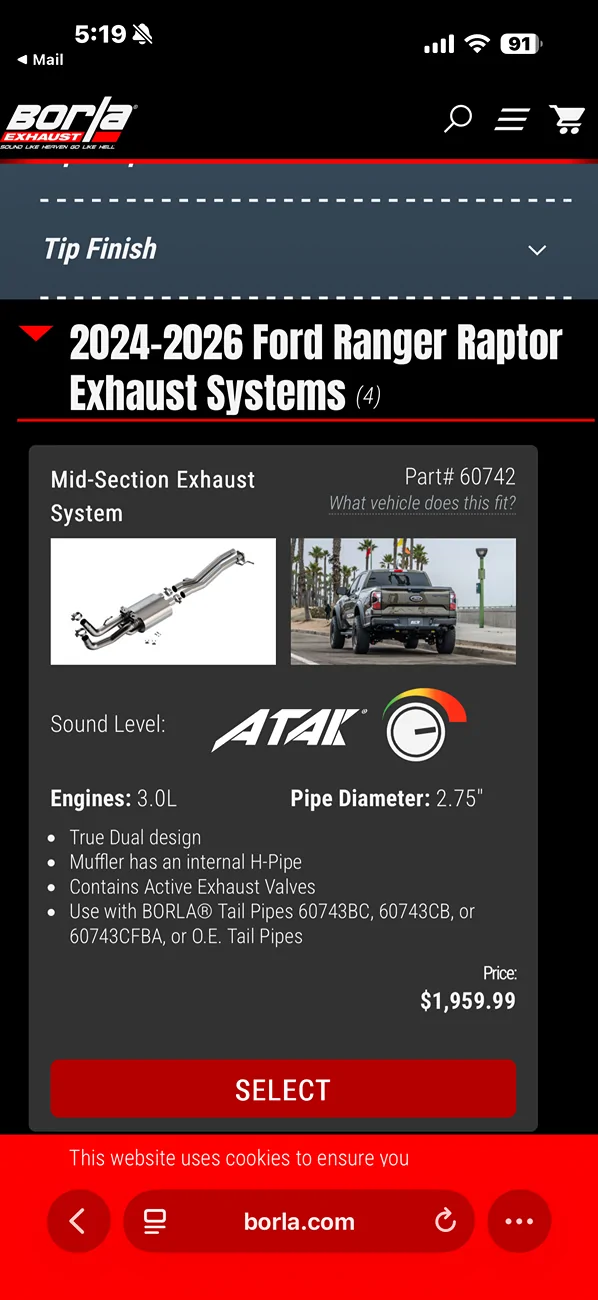
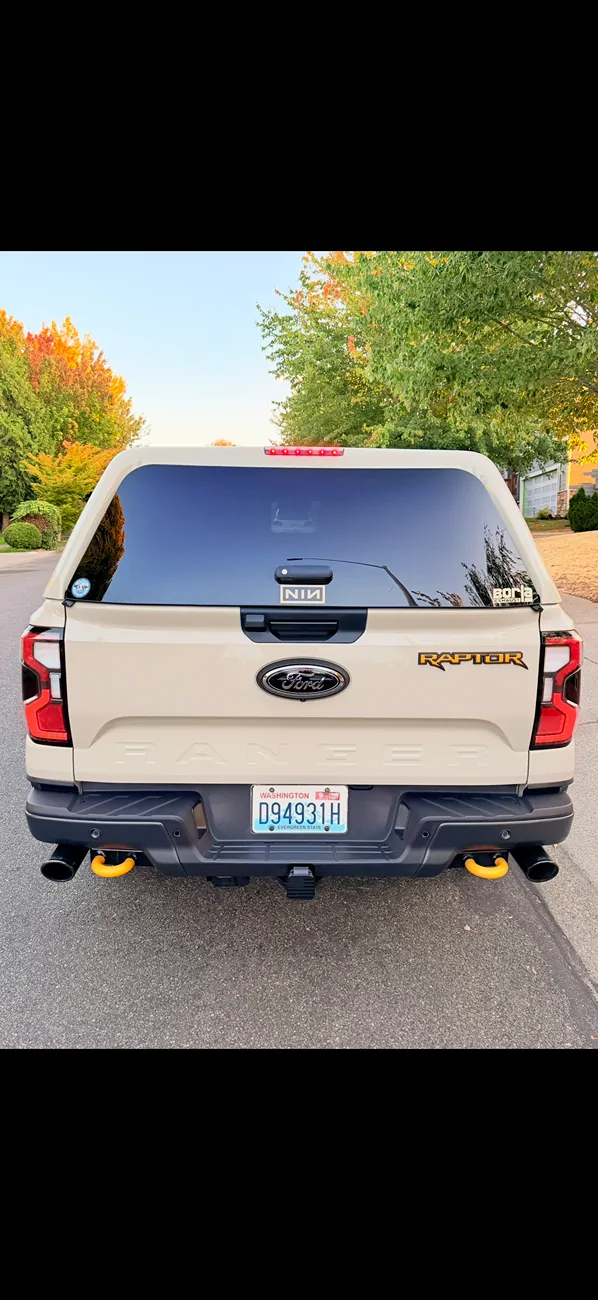
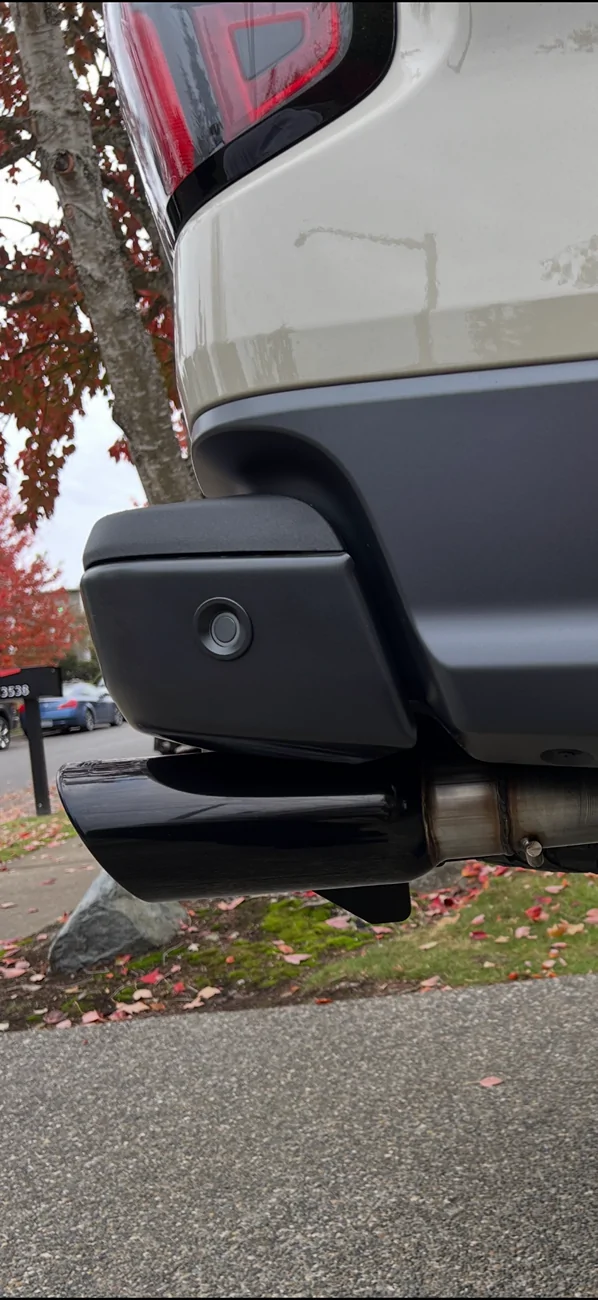
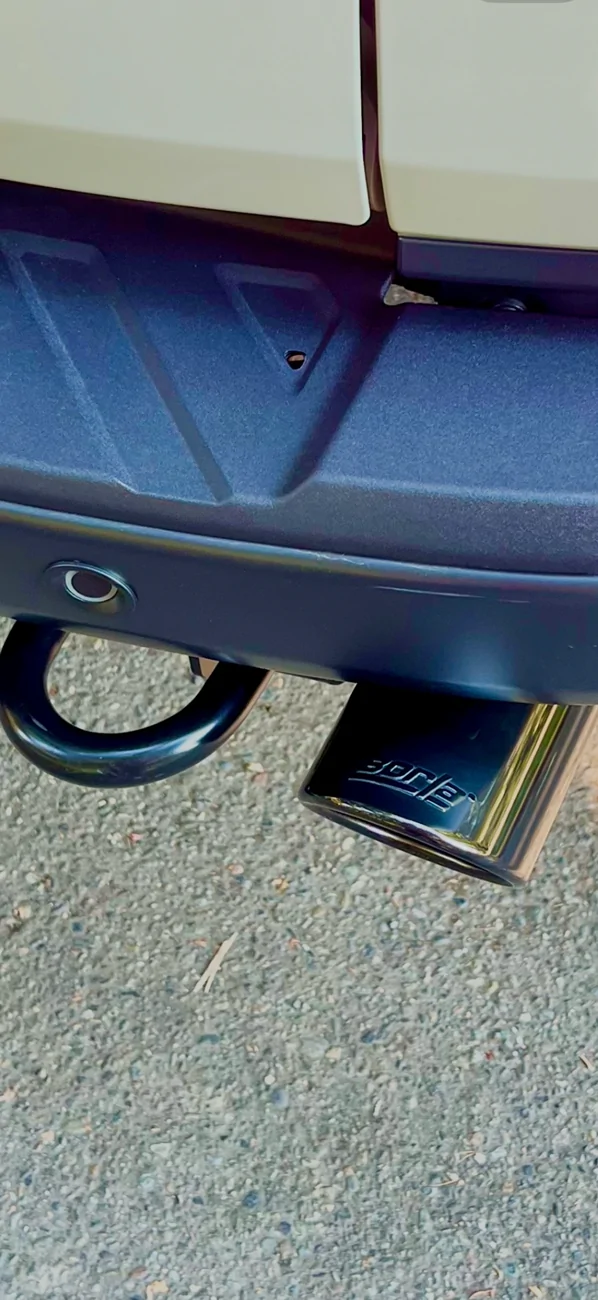
* Borla ATAK series stainless exhaust system from the cats back - not just the tips. With black outlets and yes it retains the 4 factory sound options. You just need to swap the muffler servos over to the new Borla assy.

Truck RIPS! How much……can’t quite tell ya as I started doing this stuff the moment it came home new. And every piece of this, minus loading the software tune, I did myself in the driveway with the truck on 4 ramps or hovering into the engine bay with good ol’ USA forged Craftsman (the Sears stuff) hand tools - no air.
Setup hasn’t given me any grief or heartache. And I too run 95+% city. Love it! Hope this helps!
Ford Ranger Intercooler comparison - stock spot vs big chungus IMG_0960
Ford Ranger Intercooler comparison - stock spot vs big chungus IMG_0961
Ford Ranger Intercooler comparison - stock spot vs big chungus IMG_0963
Ford Ranger Intercooler comparison - stock spot vs big chungus IMG_0964
Ford Ranger Intercooler comparison - stock spot vs big chungus IMG_0965
 

Raptor Family

Well-Known Member
First Name
Jeff
Joined
Apr 2, 2025
Threads
6
Messages
178
Reaction score
286
Location
Dallas, Texas
Vehicle(s)
‘25 Ranger Raptor, ‘97 Jeep Cherokee, ‘24 Lexus NX450h+
Occupation
retired
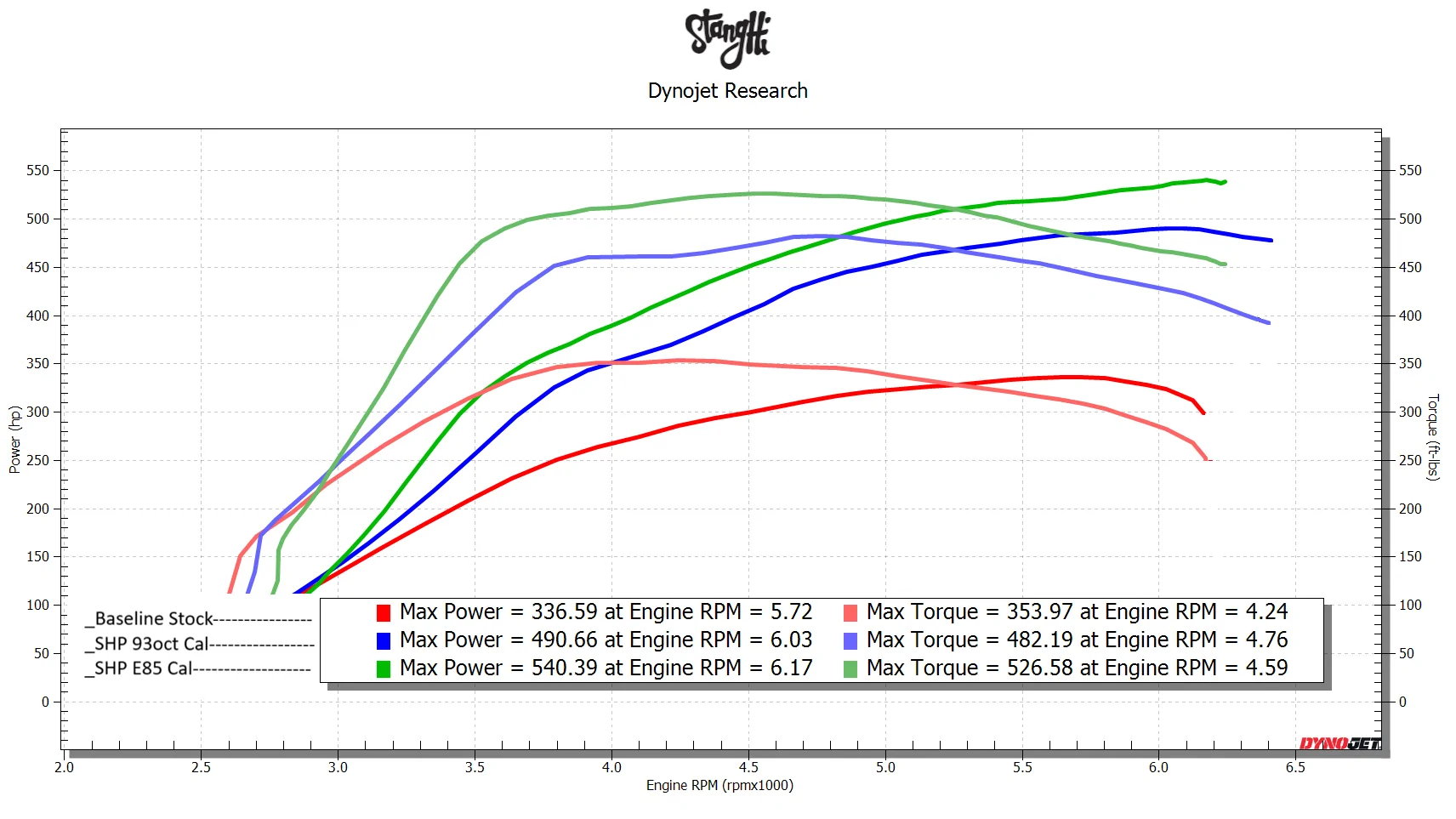
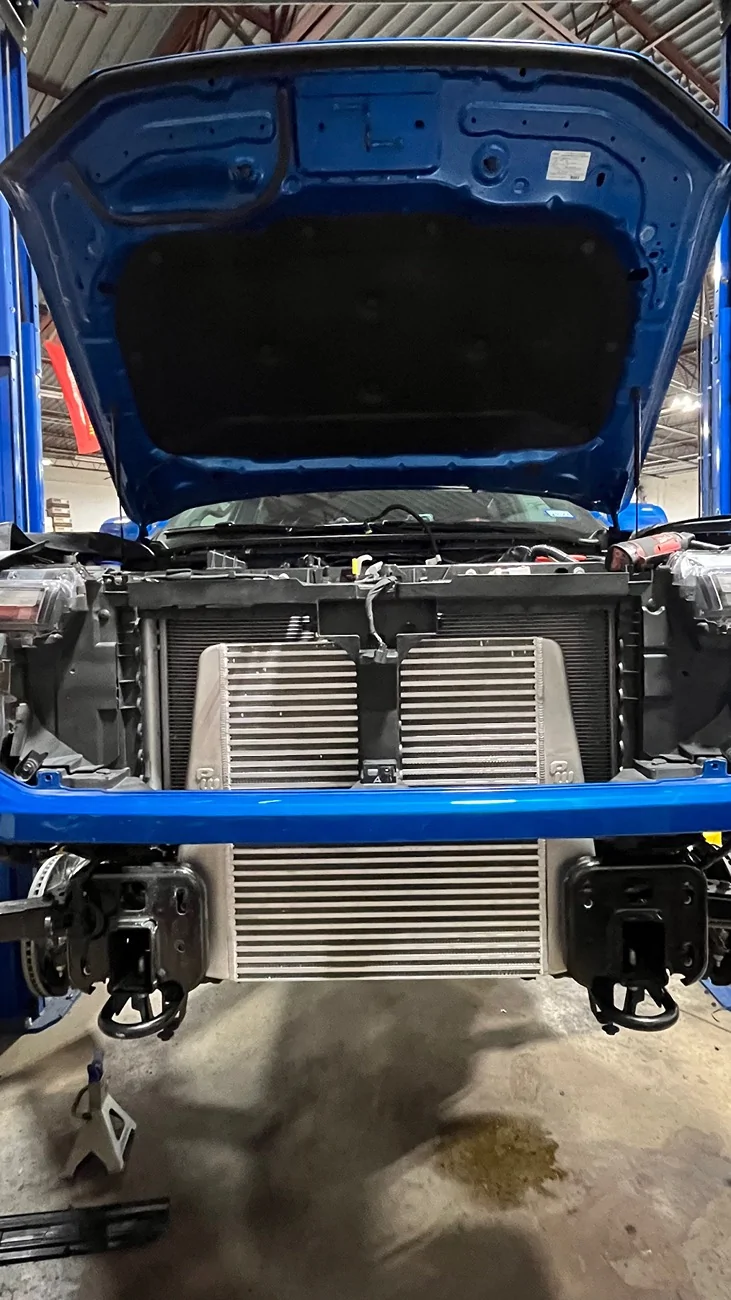
I can say this—if you change your mind and have to buy a conversion charge pipe set to change your PW stage 1 to Stage 2, it costs $280 shipped from PW in Australia. And then the $1600 for the IC. I think “buy once, cry once”, applies. A lot of people have claimed the stage 2 causes turbo lag—which my Dyno charts do not show—in fact—they show the opposite. The PW stage 2 is about 2 3/4” thick (which is thinner that the factory 3.12” thick one). Most stage 1 aftermarket ICs are about 5” or more thick. The stage 2 is huge in area and almost as large as the radiator.

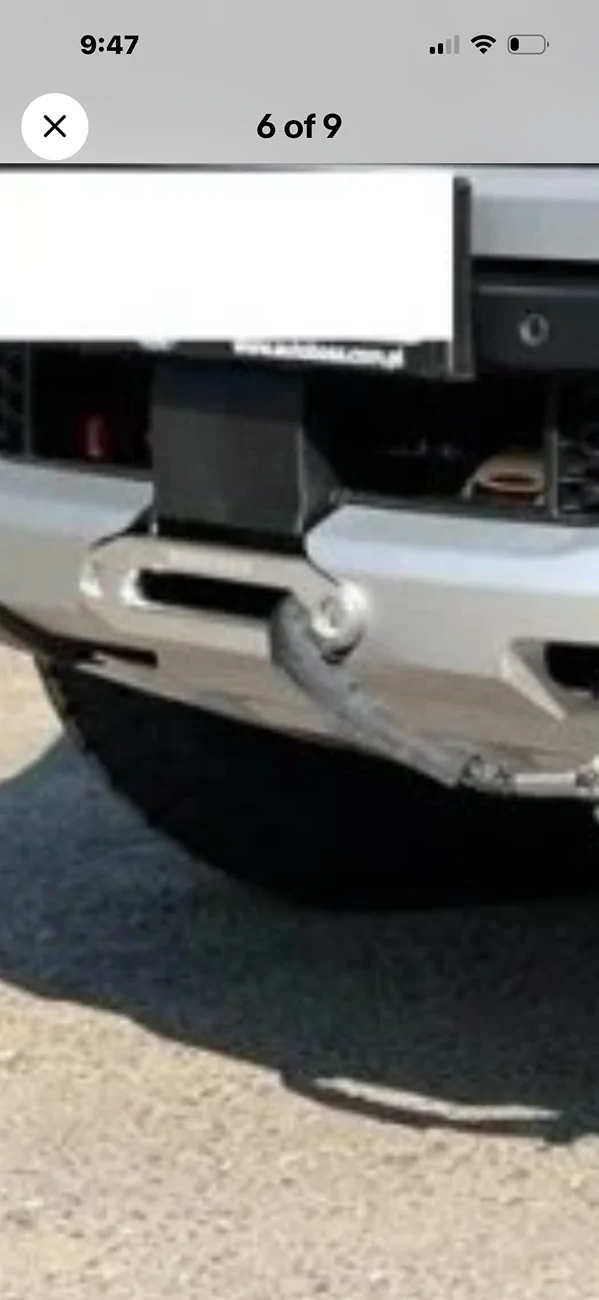
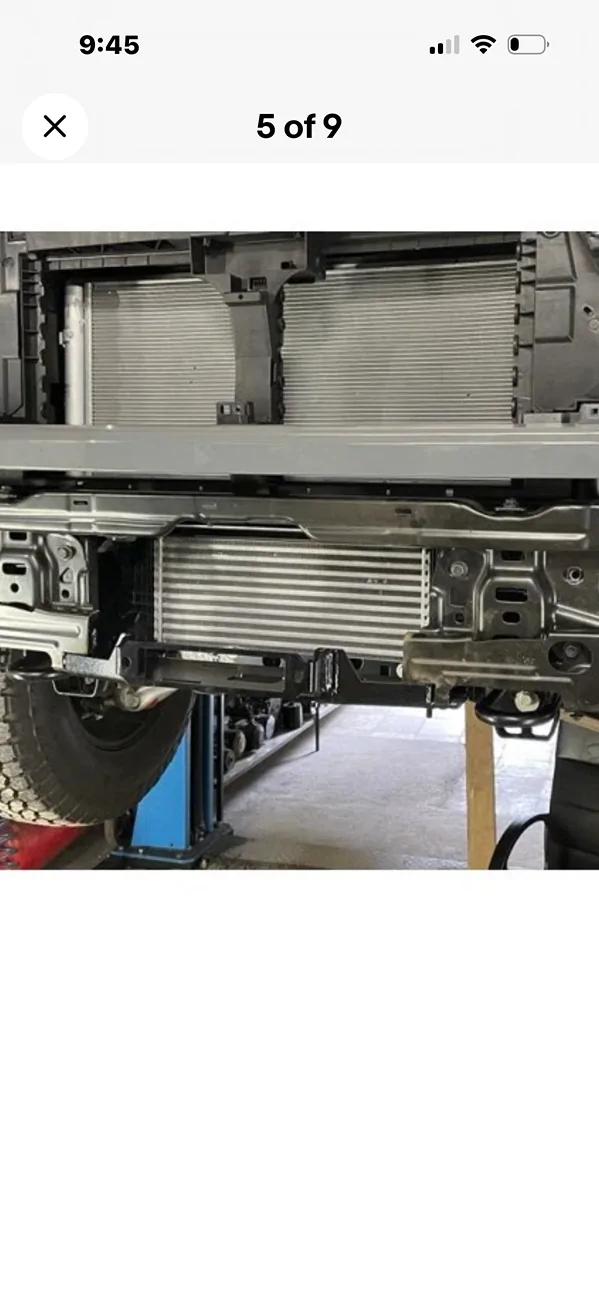
I know you said you were not considering a winch, but maybe some other viewers might. I was considering a hidden winch mount behind the stock bumper. With the stage 2 (at almost half the thickness 2.75” to 5”) the stage 1 thickness encroaches on the space a winch would be located. Stage 2 required removing the IC shutters which opened up room on North American models—Aussie versions don’t have. When I measured it, there was plenty of room in all directions with the stage 2 and a flat-top (relocated relay box) hiding the winch behind stock bumper.
Pics if Dyno sheet shows no real turbo lag-the 250rpm difference is not due to the stage 2 as much as it is the larger Powermax turbos used on both the blue and green runs in the Dyno below—that larger intercooler does not heat soak in the 100-105 degree Texas heat. It really shows the inadequacy of the factory IC

The blue truck with the entire front end removed, shows just how big the stage 2 actually is. The other pics, though not really asked for, show how much room there is with a stock intercooler—almost all stage 1 ICs are twice as wide as the stage 2, and at least 2” wider than factory IC.
Remember the rules: For every 10 degrees you can reduce the intake charge temperature, you can increase horsepower by 1%. I have seen at least 40-50 degree minimum difference between intake charge temps between stage 2 with Powermax and stock —with complete heat soak (I wish I would have recorded better numbers and with the stock intercooler and Larger turbos—but logistics just didn’t allow it). That is free power (15-20hp and with ethanol as much as 35) gained from efficiency and allowing more timing advance and more boost. My fuel mileage increased almost 1mpg after modification.

Ford Ranger Intercooler comparison - stock spot vs big chungus IMG_1273
Ford Ranger Intercooler comparison - stock spot vs big chungus IMG_3685
Ford Ranger Intercooler comparison - stock spot vs big chungus IMG_1273
Ford Ranger Intercooler comparison - stock spot vs big chungus 136D685E-1CA9-41FF-8A68-778836DE48D8
Ford Ranger Intercooler comparison - stock spot vs big chungus IMG_3685
Ford Ranger Intercooler comparison - stock spot vs big chungus IMG_3682
 

Lion77

Well-Known Member
Joined
Feb 27, 2025
Threads
38
Messages
1,163
Reaction score
1,736
Location
United States
Vehicle(s)
2024 Ranger Raptor
Occupation
Electrical Engineer
If your planning on upgrading to big turbo's and your after maximum sustained power, then a race style stage 2 makes sense. Outside of a completely built engine + hot lapping it, I see ZERO benefit from Stage 2 IC's, especially on stock turbos.

Pressure drop / cooling ratio is really important for turbocharger durability. Increasing pressure drop, even if your lower charge temps, will create more back pressure on the exhaust side and run the turbos outside of their efficiency island more frequently which is going to shorten their lifespan. Really big IC's have a LOT of internal turbulence which causes higher pressure drop.

Then there's drivability issues, you'll have more lag on-throttle with really big stage 2 IC's. Even the Ranger Raptor Race truck didn't use a stage 2 size (note that was on a stock calibration per class rules), they used a PWR "drop in" style, basically slightly bigger than OE for better sustained cooling, but not massive.

Don't overthink it, more bigger better is not always actually better. There's a balance. For stock turbo's, even with a cal, I highly suggest the CP-E Delta core, it focuses on maximum efficiency to use the core more effectively, they have internal turbulence fins to even out the air flow across the core that others don't and a very good fine density, internal volume is bigger than stock, but not as big as some of the others because it doesn't need to be to achieve similar pressure drop and charge temps.

That preserves stock-like response. I've driven laggy turbo cars, and it gets old fast if you daily drive them, but maybe if you do a lot of highway, it's not a big issue or it's a weekend toy. Stage 2's make sense for build bottom ends (rods, pistons, injectors, custom cal, big turbos etc.), but not for stock engines / turbos.
 

Sponsored
OP
OP
ericwmedic

ericwmedic

Member
First Name
Eric
Joined
Jun 16, 2026
Threads
1
Messages
11
Reaction score
9
Location
SE MI
Vehicle(s)
2026 Ranger Raptor
Occupation
Engineer
@Raptor Family
I think that was my biggest concern was the overall size of the Stage 2 (internal volume) vs the stage 1 style. The stage 2s seem better at getting more area out from behind structures like the bumper, potentially a winch/ lightbar, etc. and bringing that area into airflow.

I'm likely never going to throw on a "big turbo" setup. The numbers from a Garrett FBO truck are impressive, but I'd reach the bottom of my wallet long before I reach the top of the dyno charts. In my use-case, the stage 1 sounds fine.
But then... there's always room to upgrade if I just get the stage 2. And if the stock turbos happen to burn up, it'll give me an excuse to tell the wifey why I need to drop another $4k on the truck.
 

Buellsox

Well-Known Member
First Name
Scott
Joined
Oct 22, 2025
Threads
4
Messages
288
Reaction score
437
Location
Tacoma, WA
Vehicle(s)
2025 Ranger Raptor
Occupation
Local 26 Union Plumber
Did you change out your exhaust tips? To what?
Yes! I went with the Borla ATAK series complete cat back system which consists of both the kits listed. But you can opt just for doing the rear tail pipe kit with black outlets. I did the complete system myself with the truck on 4 ramps in just 2-3 hours. The Borla system is top tier and utilizes every factory hanger exactly as the stock did. Truly a remove & replace and a crawl back under and re-tighten the clamps a couple of times as it broke in over a couple weeks.
Ford Ranger Intercooler comparison - stock spot vs big chungus IMG_0971
Ford Ranger Intercooler comparison - stock spot vs big chungus IMG_0970
Ford Ranger Intercooler comparison - stock spot vs big chungus IMG_0859
Ford Ranger Intercooler comparison - stock spot vs big chungus IMG_0855
Ford Ranger Intercooler comparison - stock spot vs big chungus IMG_0856
 

RangerGrif43

Well-Known Member
First Name
Robert
Joined
Oct 11, 2025
Threads
2
Messages
48
Reaction score
47
Location
Arizona
Vehicle(s)
Ranger Raptor
I can say this—if you change your mind and have to buy a conversion charge pipe set to change your PW stage 1 to Stage 2, it costs $280 shipped from PW in Australia. And then the $1600 for the IC. I think “buy once, cry once”, applies. A lot of people have claimed the stage 2 causes turbo lag—which my Dyno charts do not show—in fact—they show the opposite. The PW stage 2 is about 2 3/4” thick (which is thinner that the factory 3.12” thick one). Most stage 1 aftermarket ICs are about 5” or more thick. The stage 2 is huge in area and almost as large as the radiator.

I know you said you were not considering a winch, but maybe some other viewers might. I was considering a hidden winch mount behind the stock bumper. With the stage 2 (at almost half the thickness 2.75” to 5”) the stage 1 thickness encroaches on the space a winch would be located. Stage 2 required removing the IC shutters which opened up room on North American models—Aussie versions don’t have. When I measured it, there was plenty of room in all directions with the stage 2 and a flat-top (relocated relay box) hiding the winch behind stock bumper.
Pics if Dyno sheet shows no real turbo lag-the 250rpm difference is not due to the stage 2 as much as it is the larger Powermax turbos used on both the blue and green runs in the Dyno below—that larger intercooler does not heat soak in the 100-105 degree Texas heat. It really shows the inadequacy of the factory IC

The blue truck with the entire front end removed, shows just how big the stage 2 actually is. The other pics, though not really asked for, show how much room there is with a stock intercooler—almost all stage 1 ICs are twice as wide as the stage 2, and at least 2” wider than factory IC.
Remember the rules: For every 10 degrees you can reduce the intake charge temperature, you can increase horsepower by 1%. I have seen at least 40-50 degree minimum difference between intake charge temps between stage 2 with Powermax and stock —with complete heat soak (I wish I would have recorded better numbers and with the stock intercooler and Larger turbos—but logistics just didn’t allow it). That is free power (15-20hp and with ethanol as much as 35) gained from efficiency and allowing more timing advance and more boost. My fuel mileage increased almost 1mpg after modification.

IMG_1273.webp
IMG_3685.webp
IMG_1273.webp
136D685E-1CA9-41FF-8A68-778836DE48D8.webp
IMG_3685.webp
IMG_3682.webp
So do you have to buy the PW IC and then the PW piping kit? So $2500 total?
 

Raptor Family

Well-Known Member
First Name
Jeff
Joined
Apr 2, 2025
Threads
6
Messages
178
Reaction score
286
Location
Dallas, Texas
Vehicle(s)
‘25 Ranger Raptor, ‘97 Jeep Cherokee, ‘24 Lexus NX450h+
Occupation
retired
If your planning on upgrading to big turbo's and your after maximum sustained power, then a race style stage 2 makes sense. Outside of a completely built engine + hot lapping it, I see ZERO benefit from Stage 2 IC's, especially on stock turbos.

Pressure drop / cooling ratio is really important for turbocharger durability. Increasing pressure drop, even if your lower charge temps, will create more back pressure on the exhaust side and run the turbos outside of their efficiency island more frequently which is going to shorten their lifespan. Really big IC's have a LOT of internal turbulence which causes higher pressure drop.

Then there's drivability issues, you'll have more lag on-throttle with really big stage 2 IC's. Even the Ranger Raptor Race truck didn't use a stage 2 size (note that was on a stock calibration per class rules), they used a PWR "drop in" style, basically slightly bigger than OE for better sustained cooling, but not massive.

Don't overthink it, more bigger better is not always actually better. There's a balance. For stock turbo's, even with a cal, I highly suggest the CP-E Delta core, it focuses on maximum efficiency to use the core more effectively, they have internal turbulence fins to even out the air flow across the core that others don't and a very good fine density, internal volume is bigger than stock, but not as big as some of the others because it doesn't need to be to achieve similar pressure drop and charge temps.

That preserves stock-like response. I've driven laggy turbo cars, and it gets old fast if you daily drive them, but maybe if you do a lot of highway, it's not a big issue or it's a weekend toy. Stage 2's make sense for build bottom ends (rods, pistons, injectors, custom cal, big turbos etc.), but not for stock engines / turbos.
The argument that a Stage 2 intercooler creates noticeable turbo lag or shouldn't be used unless you have a big-turbo/track setup relies on "old-school" turbo logic from 20 years ago. It completely ignores how high-efficiency core design works, as well as the advanced engineering of the Next-Gen 3.0L EcoBoost.
My own dyno charts show absolutely zero added turbo lag and massive power gains. Here is the actual data and physics of why the Stage 2 works exceptionally well on a daily driver with factory turbos:

1. The Timeline Fact: It Was Designed For Stock Turbos
The Process West Stage 2 kit was designed, tested, and released in early 2024 specifically for the factory turbos. Upgraded options like the Garrett Powermax or CRP turbos weren't even on the market yet. Process West engineered this kit to maximize the factory twin-turbos by eliminating the massive heat soak and restrictive factory shutter system. While it happens to work exceptionally well with big turbos now, its original purpose was to uncork the stock setup.

2. The Math Myth: External vs. Internal Volume
Looking at the massive external dimensions of a Stage 2 and assuming it takes "twice as long to fill" is a fundamental misunderstanding of intercooler construction:
  • Tube & Fin (Factory): Factory coolers use mostly hollow, empty tubes.
  • Bar & Plate (Process West Stage 2): High-end bar and plate cores are densely packed with internal turbulator fins to maximize surface area contact.
  • Because it is so dense internally, the actual air volume (the literal space the air occupies) is nowhere near double the factory unit. Combined with an optimized, straight-line flow path, it minimizes pressure drop, allowing the turbos to reach target boost instantly.

3. Modern Engine Architecture Has Killed "Lag"
A modern twin-turbo platform does not behave like a platform from 20 years ago. The 3.0L EcoBoost utilizes multiple factory advancements specifically engineered to eliminate lag and maximize low-end response:
  • Active Variable Camshaft Timing (Ti-VCT): The camshafts adjust on the fly to continuously optimize valve timing. At low RPMs, the ECU commands precise valve overlap to maximize exhaust scavenging, forcing exhaust gas energy into the turbines immediately to eliminate spool-up lag and maximize low-end torque.
  • Integrated Exhaust Manifolds (IEM): The turbos bolt directly to the cylinder head. Exhaust gas has virtually zero distance to travel, resulting in near-instant turbine spool.
  • Low-Inertia Twin Turbos: Instead of one massive single turbo, two small, smart-actuated turbos spin up effortlessly at incredibly low RPMs.
  • 10.5:1 Compression Ratio & 3,000 PSI Direct Injection: Twenty years ago, running 10.5:1 compression on a high-boost engine would result in melted pistons and blown ring lands. Today, with precise Direct Injection vaporizing fuel sequentially at about 3,000 PSI roughly 50° before TDC, the engine maintains incredible off-boost thermal efficiency.
  • Advanced Piston Metallurgy & Cooling: The pistons feature specialized steel inserts in the aluminum for the top ring land, making them incredibly resistant to sticking rings or blowing out under high cylinder pressures. To back this up, piston oil squirters pull a massive amount of heat directly out of the pistons and transfer it into the engine oil coolers. This advanced thermal management keeps the engine making great low-end torque safely before the turbos even fully spool.

4. The Physics of the Cooling Stack
Spreading the cooling over a larger frontal surface area is significantly more efficient than making the intercooler thicker in the factory location.
  • A 5-inch thick Stage 1 intercooler is a packaging compromise. Shoving ambient air through 5 inches of dense core is like hitting a brick wall. By the time that air stalls out and fights its way through, it's hot and useless for the A/C condenser and radiator sitting behind it.
  • The Stage 2 increases the frontal surface area while keeping the core profile optimized. By removing the restrictive factory radiator and intercooler shutters, it completely opens up the grille.

5. The Bottom Line: Free Power
The data doesn't lie. The Stage 2 isn't just for "hot laps"—it’s how you keep your intake air temperatures flat, reduce pressure drop, and maintain consistent, massive power on the street or trail without choking your cooling stack.
Think of it as free power. Remember the temperature rule of thumb: every 10 degrees you can drop the charge air temperature increases air density and efficiency so much that you net a 1% increase in horsepower. When you're keeping temps down under heavy load, that math adds up fast. Overall, that’s a free 20-25hp increase on a stock 405 hp engine—possibly more with FP or aftermarket tune. In addition, it gave me almost 1 MPG better mileage.

In the end, you must make your decision—Don’t believe me. Don’t believe the OP-research yourself—like I did over a year ago. Start with a Google AI search asking the question “Does a Process West stage 2 Intercooler cause turbo lag on a Ranger Raptor 3.0 twin turbo?” Back then, Google flat said “No” and listed over 20 professionals with their results testing, tuning, and documenting performance gains on dynos-most of which had the same conclusion.
 

Sponsored

Raptor Family

Well-Known Member
First Name
Jeff
Joined
Apr 2, 2025
Threads
6
Messages
178
Reaction score
286
Location
Dallas, Texas
Vehicle(s)
‘25 Ranger Raptor, ‘97 Jeep Cherokee, ‘24 Lexus NX450h+
Occupation
retired
So do you have to buy the PW IC and then the PW piping kit? So $2500 total?
Yes, unfortunately that is the cost. Is it worth it—well, everybody has to answer that themselves. For me, the company, Process West, was a no-brainer. I had a lot of experience in the past with several Subi WRXs that used their parts—and were high quality, and flawless. Where I made the mistake was buying a complete Stage 1 set-up and then having to convert parts of the piping kit, and getting a new stage 2 Intercooler—when I should have just bought the stage 2 the first time.
 

Redun

Member
Joined
Feb 17, 2026
Threads
0
Messages
14
Reaction score
7
Location
Oxford, UK
Vehicle(s)
Ranger Raptor
The argument that a Stage 2 intercooler creates noticeable turbo lag or shouldn't be used unless you have a big-turbo/track setup relies on "old-school" turbo logic from 20 years ago. It completely ignores how high-efficiency core design works, as well as the advanced engineering of the Next-Gen 3.0L EcoBoost.
My own dyno charts show absolutely zero added turbo lag and massive power gains. Here is the actual data and physics of why the Stage 2 works exceptionally well on a daily driver with factory turbos:

1. The Timeline Fact: It Was Designed For Stock Turbos
The Process West Stage 2 kit was designed, tested, and released in early 2024 specifically for the factory turbos. Upgraded options like the Garrett Powermax or CRP turbos weren't even on the market yet. Process West engineered this kit to maximize the factory twin-turbos by eliminating the massive heat soak and restrictive factory shutter system. While it happens to work exceptionally well with big turbos now, its original purpose was to uncork the stock setup.

2. The Math Myth: External vs. Internal Volume
Looking at the massive external dimensions of a Stage 2 and assuming it takes "twice as long to fill" is a fundamental misunderstanding of intercooler construction:
  • Tube & Fin (Factory): Factory coolers use mostly hollow, empty tubes.
  • Bar & Plate (Process West Stage 2): High-end bar and plate cores are densely packed with internal turbulator fins to maximize surface area contact.
  • Because it is so dense internally, the actual air volume (the literal space the air occupies) is nowhere near double the factory unit. Combined with an optimized, straight-line flow path, it minimizes pressure drop, allowing the turbos to reach target boost instantly.

3. Modern Engine Architecture Has Killed "Lag"
A modern twin-turbo platform does not behave like a platform from 20 years ago. The 3.0L EcoBoost utilizes multiple factory advancements specifically engineered to eliminate lag and maximize low-end response:
  • Active Variable Camshaft Timing (Ti-VCT): The camshafts adjust on the fly to continuously optimize valve timing. At low RPMs, the ECU commands precise valve overlap to maximize exhaust scavenging, forcing exhaust gas energy into the turbines immediately to eliminate spool-up lag and maximize low-end torque.
  • Integrated Exhaust Manifolds (IEM): The turbos bolt directly to the cylinder head. Exhaust gas has virtually zero distance to travel, resulting in near-instant turbine spool.
  • Low-Inertia Twin Turbos: Instead of one massive single turbo, two small, smart-actuated turbos spin up effortlessly at incredibly low RPMs.
  • 10.5:1 Compression Ratio & 3,000 PSI Direct Injection: Twenty years ago, running 10.5:1 compression on a high-boost engine would result in melted pistons and blown ring lands. Today, with precise Direct Injection vaporizing fuel sequentially at about 3,000 PSI roughly 50° before TDC, the engine maintains incredible off-boost thermal efficiency.
  • Advanced Piston Metallurgy & Cooling: The pistons feature specialized steel inserts in the aluminum for the top ring land, making them incredibly resistant to sticking rings or blowing out under high cylinder pressures. To back this up, piston oil squirters pull a massive amount of heat directly out of the pistons and transfer it into the engine oil coolers. This advanced thermal management keeps the engine making great low-end torque safely before the turbos even fully spool.

4. The Physics of the Cooling Stack
Spreading the cooling over a larger frontal surface area is significantly more efficient than making the intercooler thicker in the factory location.
  • A 5-inch thick Stage 1 intercooler is a packaging compromise. Shoving ambient air through 5 inches of dense core is like hitting a brick wall. By the time that air stalls out and fights its way through, it's hot and useless for the A/C condenser and radiator sitting behind it.
  • The Stage 2 increases the frontal surface area while keeping the core profile optimized. By removing the restrictive factory radiator and intercooler shutters, it completely opens up the grille.

5. The Bottom Line: Free Power
The data doesn't lie. The Stage 2 isn't just for "hot laps"—it’s how you keep your intake air temperatures flat, reduce pressure drop, and maintain consistent, massive power on the street or trail without choking your cooling stack.
Think of it as free power. Remember the temperature rule of thumb: every 10 degrees you can drop the charge air temperature increases air density and efficiency so much that you net a 1% increase in horsepower. When you're keeping temps down under heavy load, that math adds up fast. Overall, that’s a free 20-25hp increase on a stock 405 hp engine—possibly more with FP or aftermarket tune. In addition, it gave me almost 1 MPG better mileage.

In the end, you must make your decision—Don’t believe me. Don’t believe the OP-research yourself—like I did over a year ago. Start with a Google AI search asking the question “Does a Process West stage 2 Intercooler cause turbo lag on a Ranger Raptor 3.0 twin turbo?” Back then, Google flat said “No” and listed over 20 professionals with their results testing, tuning, and documenting performance gains on dynos-most of which had the same conclusion.
I always thought tube and fin where better, certainly in high end aero applications we also use tube and fin over bar and plate?

Main reason I keep looking at the PWR but haven't made the man maths stack up yet 🤣
Sponsored


Top