Lion77
Well-Known Member
- Joined
- Feb 27, 2025
- Threads
- 36
- Messages
- 1,053
- Reaction score
- 1,604
- Location
- United States
- Vehicle(s)
- 2024 Ranger Raptor
- Occupation
- Electrical Engineer
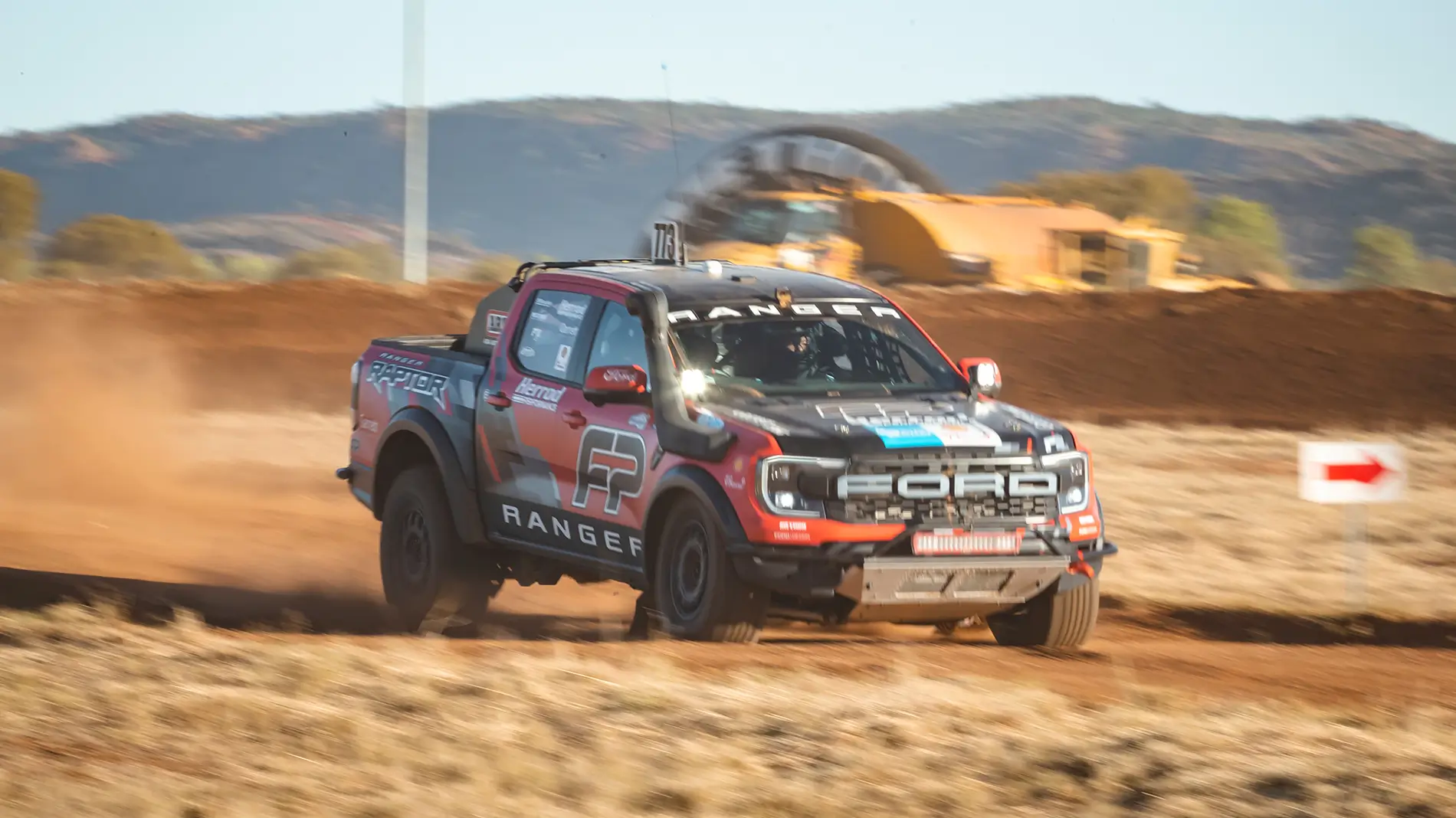
The shocks were factory Fox shocks with an updated custom calibration specifically for Finke and perch collars were custom machined by fox to allow them to compensate for the additional weight. Specifically, the collars were adjustable vs. fixed.So no one knows exactly what shocks they were running, but we know they definitely werent factory. This is proven by the threaded bodies. That class has no restrictions on shocks, as long they can be bolted in with out modifying the chassis.
All they would have need to be is 1-2in longer in overall length to move the stroke range enough to give proper clearance at full compression for 35s. Same concept as fitting strut spacers.
The fact is though, 315/70r17 rub on the uca and the chassis in the rear on factory p55 offset wheels. So you need to have at least a p40 offset for the wider width (i did a whole thread about this.
As you said, trying to emulate a factory race truck is never going to translate, as true specs are hidden.
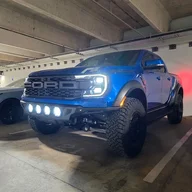
what we have found on production vehicles that to safely fit 35s , you need a 2” front and 1” rear strut spacer.
1. They used factory springs + adjustable collars to compensate for the weight gain of the cage, parts and fuel.
2. We know that by using perch collars there is a loss in overall travel, so the shocks will bottom out sooner. The adjustable perch collars also acted to limit travel up into the wheel well, so they didn't have to increase ride height (thus a higher CG) aside from the small increase from tire size, thus serving a dual purpose of limiting travel to accommodate the 35" KO2's and allowing for proper ride height with increased weight.
3. In 2025 they used a custom shock cal just for Finke along with their adjustable collars.
4. Perch collars also prevented as much increase in CG as strut spacers + 35" tire (you're talking almost 3 inches in added CG, that's not necessarily good for racing applications as you have to balance CG and clearance, it's not a crawler), so their use of perch collars makes sense for its very specific application.
I think it's safe to say that if you want to copy the RR race truck, use perch collars with FP spec K02's in 315/70R17 and wheels with a +35mm to +25mm offset, but know you're losing some travel and a bit less articulation, so you'll bottom out a bit sooner on travel.
The stock setup has the lowest CG for road / smoother-faster terrain, maximum travel and minimizes rotating mass and final drive. It's actually a very good general-purpose setup.
I would say per collars + 315/70R17's is more of a "race / baja / track" specific setup where 2" strut spacer lift + 35s is more of a 4x4 optimized setup. Stock ride height and 33" K03's is a good all-around setup with the best road handling and 95% of the race setup capability.
In fact, they said in the FP videos covering the pre-running of the race team that the stock RR chase trucks and pre-runners were just as fast, the driver even like the stock pre-runners on the woops BETTER than his race truck and couldn't get it dialed quite like the stock pre-runners, so the settled for "as close as you can get and i'll adjust).
My guess is the combination of weight and LESS overall travel due to their use of perch collars, it was likely bottoming out much more frequently but given their need for adjustability and probably what was available to them, they worked with what they had.
The ONLY reason for running 35"s on the race truck was primarily ground clearance on the Baja 1000, not so much Finke, since Baja can get pretty rutted and rocky, but it's also much slower average speed than Finke, so there was more of an emphasis on clearance than travel and handling.
Seems to me that it was actually working against them at Finke since the driver liked the stock pre-runners better! Just goes to show, you can make a truck do a lot of stuff, but when it comes to racing, it's always optimized for a specific task. Jack of tall trades, master of none, or master of one trade, but useless elsewhere.
So, figure out what YOU want to use your truck for the most. If it's mostly 4x4 optimization, 2" GOAT spacers + 35's is the WAY TO GO. If it's mostly dirt fire roads, gravel roads, highway and sand dunes, STOCK is actually the best. If it's a hybrid use case where you do a wide mixture of things, maybe the race setup might be a good option, just know it's limitations in travel.
Sponsored
Last edited: