Sponsored

Took the Raptor to the Trails - First Time. Tire PSI and clearance?

25BlackRaptor

Well-Known Member
First Name
Chris
Joined
Oct 21, 2025
Threads
8
Messages
79
Reaction score
103
Location
Charlotte, NC
Vehicle(s)
25 RR
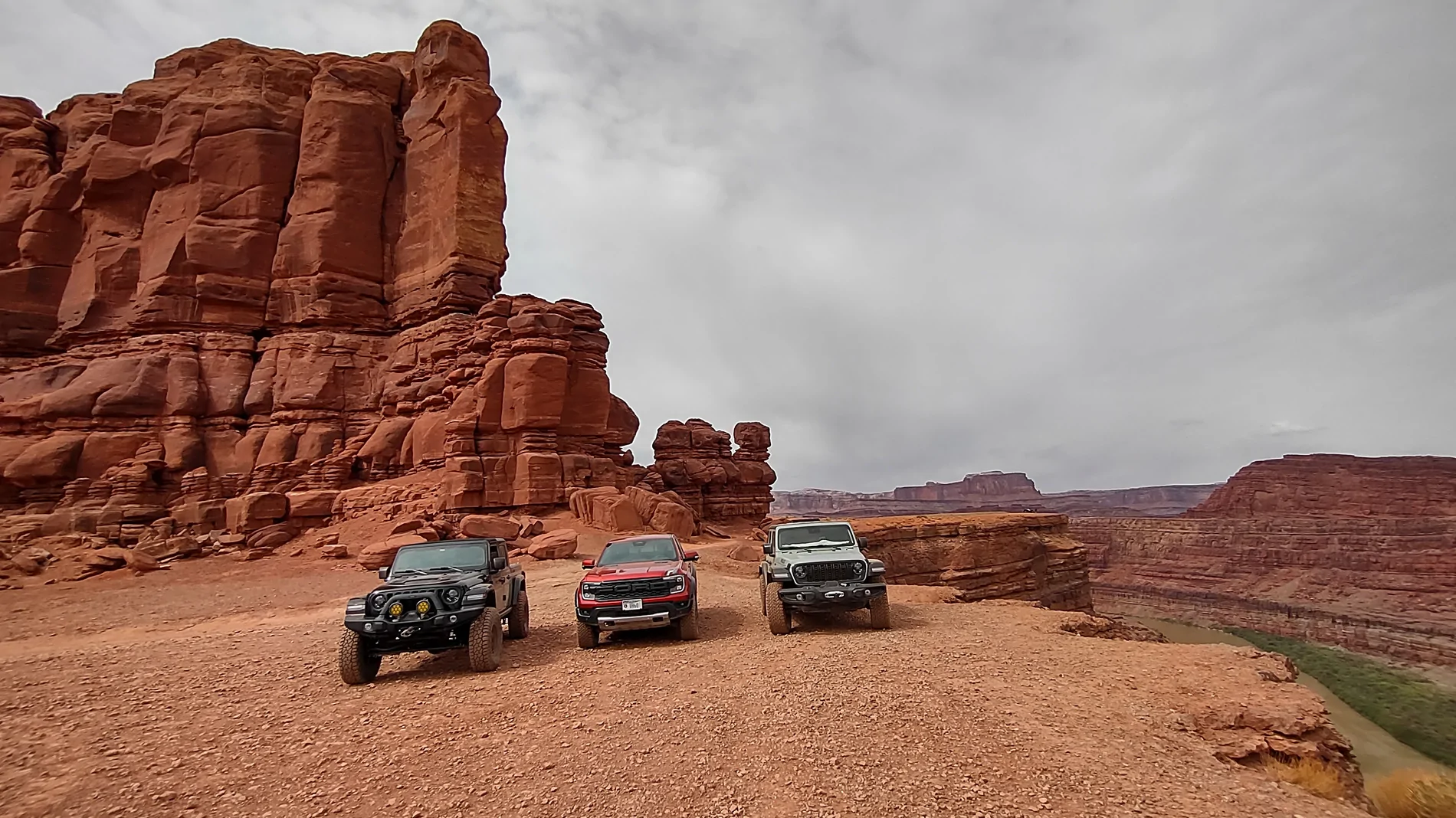
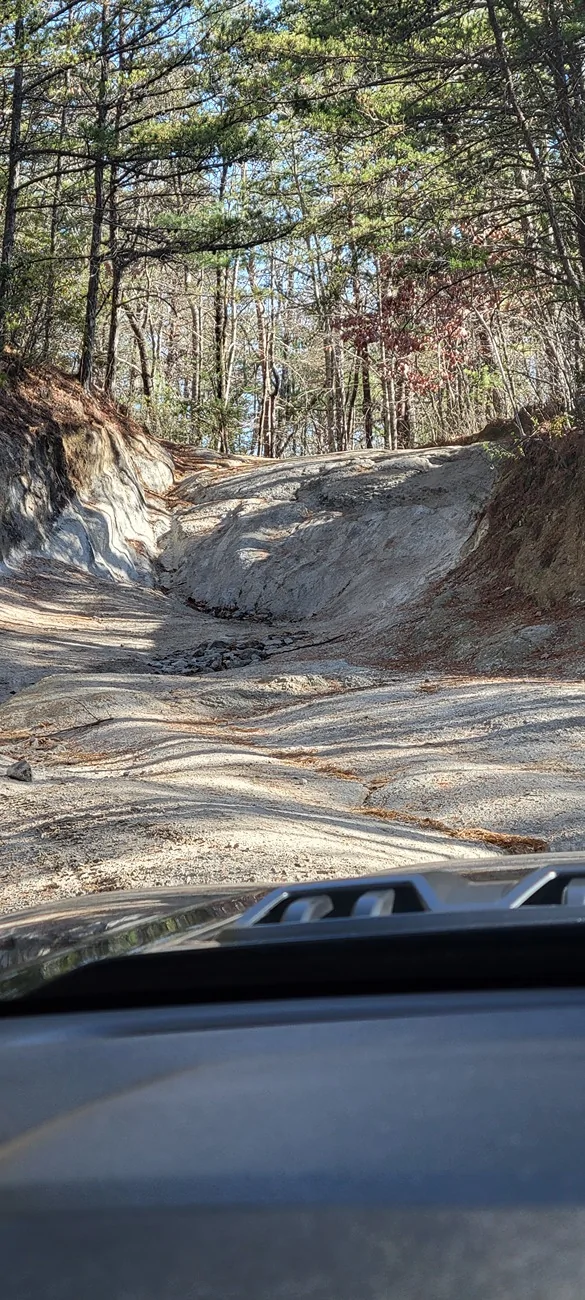
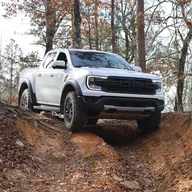
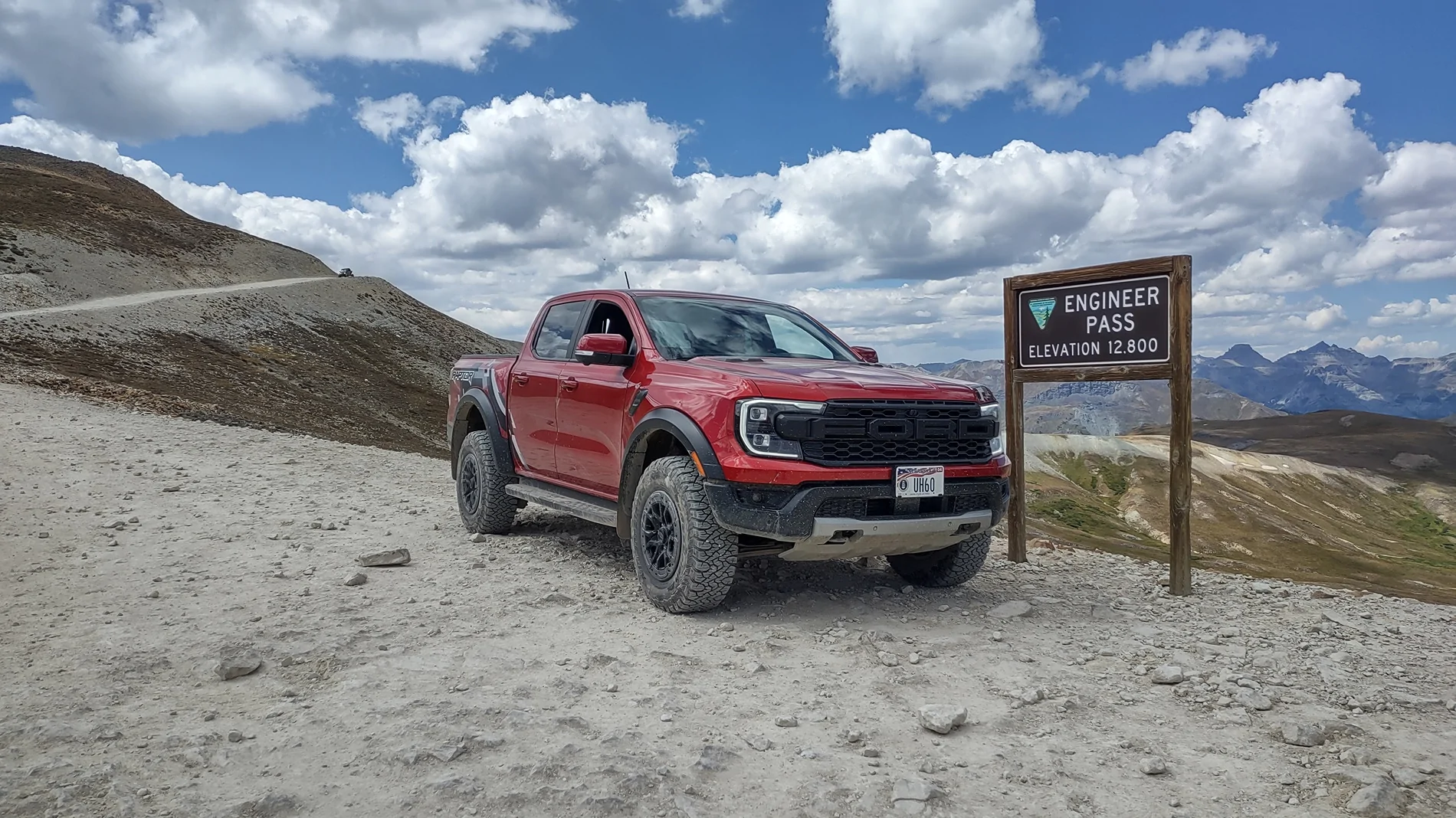
Month and half in and I took the truck to what I'd rate a moderate trail. Looking for feedback, what PSI do you lower tires to for a trail with plenty of rocks? 2nd thing I am curious about... everything was going great until I hit a rock face I didn't have clearance for... so with the Ranger Raptor, what options are there to get the extra clearance? With those options, how do I retain the ride and stock feeling of the truck as it is? Overall, the truck did great and I wish I could of took it longer on the trail.
Sponsored
 

ColeTrainsRR

Well-Known Member
First Name
Cole
Joined
Apr 14, 2025
Threads
1
Messages
226
Reaction score
228
Location
Minnesota
Vehicle(s)
'25 Ranger Raptor(toy), '22 Bronco Badlands(Traded In), 2013 Regal GS(Daily)
Occupation
E-Tec 3
Lift, bigger tires or both.
 

embedded rock

Well-Known Member
Joined
May 6, 2023
Threads
15
Messages
638
Reaction score
672
Location
Earth
Vehicle(s)
One truck, two motorcycles
This past September I was out in Colorado and Utah (in my former JLUWX) with an ol' Army buddy who brought his RR. He did not air down initially, and it did not take long and he was at roughly 25psi for the rocks.

Stock RR. The front skid, side steps, three wheel rings, one wheel, and one exhaust tip took rock hits. It's happens.

Ford Ranger Took the Raptor to the Trails - First Time. Tire PSI and clearance? IMG_20250902_124414936_HDR


Ford Ranger Took the Raptor to the Trails - First Time. Tire PSI and clearance? IMG_20250904_110740004_HDR


Last edited:

stuartmunto

Well-Known Member
First Name
Stuart
Joined
Aug 25, 2024
Threads
20
Messages
527
Reaction score
855
Location
Perth, Western Australia
Vehicle(s)
2023 Ford Ranger Raptor
Occupation
Engineer
IMO it’s not worth modifying the RR just for the occasional offroad trail. Rock hits are going to happen, try to avoid larger rocks when possible. Otherwise bumps and scraps are expected when off-roading and is why you have underbody protection.

Wear the scraps and dents with pride
 

Sponsored
OP
OP
25BlackRaptor

25BlackRaptor

Well-Known Member
First Name
Chris
Joined
Oct 21, 2025
Threads
8
Messages
79
Reaction score
103
Location
Charlotte, NC
Vehicle(s)
25 RR
Thats what my buddy said... give a few months or a year.. you'll try it again.. I really dont think I could of came back down the rock face... I was betting I was gonna trash the front end on the way back
Ford Ranger Took the Raptor to the Trails - First Time. Tire PSI and clearance? 1000015197
 
OP
OP
25BlackRaptor

25BlackRaptor

Well-Known Member
First Name
Chris
Joined
Oct 21, 2025
Threads
8
Messages
79
Reaction score
103
Location
Charlotte, NC
Vehicle(s)
25 RR
Does our stock suspension offer anymore room for bigger tires? Id do that before messing with the suspension.
 

RJRanger

Well-Known Member
First Name
Ray
Joined
Oct 5, 2025
Threads
6
Messages
113
Reaction score
140
Location
08310
Vehicle(s)
2025 Ranger Lariat 2.7
Occupation
Retired
Does our stock suspension offer anymore room for bigger tires? Id do that before messing with the suspension.
Every time you add an inch to a tire you only gain 1/2 inch of clearance. Takes a lot of tire to gain significant clearance and you are going to see a hit on performance ang mpg. Run over smaller rocks!
 

Lion77

Well-Known Member
Joined
Feb 27, 2025
Threads
28
Messages
786
Reaction score
1,150
Location
United States
Vehicle(s)
2024 Ranger Raptor
Occupation
Electrical Engineer
The best place to start with enhancing the 4x4 capabilities WITHOUT screwing up the Rally / Baja dynamics of the RR stock is high clearance front bumper and angled rock sliders like GOAT's or something similar.

You can go body or frame mount, don't let the "nothing but frame mount" crowd sway you, just pick what works for your needs, both are well tested. What I personally like about the GOAT angled slides (20-degree angle) is they add about 4" of total clearance at the rocker over the factory side steps.

That won't help with break over angle (24.2 degrees for the RR), but it will help a lot with rolling over large rocks on one side of the truck. Stock side steps are one of the few things most people say are a bit of a hinderance on a stock RR.

High clearance front bumper will give you a better approach, neither the bumper nor the sliders will affect any of the handling dynamics of the truck to a meaningful degree (slight increase in weight, evenly distributed).

You DON'T NEED 35's, but if you want to make your RR into the Ford equivalent of a Colorado ZR2 Bison, the 2" front and 1" rear GOAT strut spacers + ride height recalibration with 35" tires will get you + 0.8in more minimum ground clearance and + 2.8" overall increase in average clearance up front, with a bit more approach, departure and breakover, but 35's will kill your fuel economy and slow the truck down, also increase the CG.

Basically with 35's, you'll need the Ford Performance Pro Cal tune's +50 HP / 106 lb-ft to compensate for the added weight to get the truck's acceleration back to about what it was stock with 33's due to the additional rotating mass / increased tire diameter that reduces final drive.

Some have done a mid-setup with OE width's 34's (33.8 in, 285/75R17's) and a 1" lift with wider off-set wheels (ET35), so you gain. If I ever go with bigger tires, I'll probably go for 34's as it's very mild increase in diameter / weight, so I would expect to only loose 2-3 / 10ths at most on the 1/4 mile but still gain some meaningful clearance overall. If your run ET35 wheels, your track width increases by 40mm (20mm per side), so it mostly off sets the added ride height from 34" tires + 1" lift.

I got some Method 705's coming in Jan of 2026 (on order from Tire Track), ET35, but for now, I'm sticking with stock 33's. My goal is to INCREASE high speed performance, not degrade it with heavier tires, lifts etc. just for an occasional trail which is like 5% of my actual use cases.

I bought a Muscle Rally Truck, not a slow a** Jeep...lol. Pro Cal + lighter wheels + intercooler is a very reliable setup to get a mid 13 second RR without ruining fuel economy for family trips or long-term reliability.

So this year it's lightweight Method 705's (25~26 lbs) + L-track in the bed, last year it was the Pro Cal + TribTEX for the powertrain and a Tonneau cover to reduce drag forces / cover cargo. Once the powertrain warranty is up, an intercooler, but that's my only other planned power mod. My decades of engineering have taught me the biggest results are usually the sum of many small changes working in tandem vs. one big change and that last 5% of performance is usually NOT worth the squeeze, so be satisfied with the 95%.
 
Last edited:

Sponsored

Tpage

Active Member
First Name
Tayler
Joined
Oct 23, 2025
Threads
6
Messages
38
Reaction score
109
Location
Louisiana
Vehicle(s)
2025 Ranger Raptor
Occupation
Lead Residential/Commercial Standby Generator Tech
The best place to start with enhancing the 4x4 capabilities WITHOUT screwing up the Rally / Baja dynamics of the RR stock is high clearance front bumper and angled rock sliders like GOAT's or something similar.

You can go body or frame mount, don't let the "nothing but frame mount" crowd sway you, just pick what works for your needs, both are well tested. What I personally like about the GOAT angled slides (20-degree angle) is they add about 4" of total clearance at the rocker over the factory side steps.

That won't help with break over angle (24.2 degrees for the RR), but it will help a lot with rolling over large rocks on one side of the truck. Stock side steps are one of the few things most people say are a bit of a hinderance on a stock RR.

High clearance front bumper will give you a better approach, neither the bumper nor the sliders will affect any of the handling dynamics of the truck to a meaningful degree (slight increase in weight, evenly distributed).

You DON'T NEED 35's, but if you want to make your RR into the Ford equivalent of a Colorado ZR2 Bison, the 2" front and 1" rear GOAT strut spacers + ride height recalibration with 35" tires will get you + 0.8in more minimum ground clearance and + 2.8" overall increase in average clearance up front, with a bit more approach, departure and breakover, but 35's will kill your fuel economy and slow the truck down, also increase the CG.

Basically with 35's, you'll need the Ford Performance Pro Cal tune's +50 HP / 106 lb-ft to compensate for the added weight to get the truck's acceleration back to about what it was stock with 33's due to the additional rotating mass / increased tire diameter that reduces final drive.

Some have done a mid-setup with OE width's 34's (33.8 in, 285/75R17's) and a 1" lift with wider off-set wheels (ET35), so you gain. If I ever go with bigger tires, I'll probably go for 34's as it's very mild increase in diameter / weight, so I would expect to only loose 2-3 / 10ths at most on the 1/4 mile but still gain some meaningful clearance overall. If your run ET35 wheels, your track width increases by 40mm (20mm per side), so it mostly off sets the added ride height from 34" tires + 1" lift.

I got some Method 705's coming in Jan of 2026 (on order from Tire Track), ET35, but for now, I'm sticking with stock 33's. My goal is to INCREASE high speed performance, not degrade it with heavier tires, lifts etc. just for an occasional trail which is like 5% of my actual use cases.

I bought a Muscle Rally Truck, not a slow a** Jeep...lol. Pro Cal + lighter wheels + intercooler is a very reliable setup to get a mid 13 second RR without ruining fuel economy for family trips or long-term reliability.

So this year it's lightweight Method 705's (25~26 lbs) + L-track in the bed, last year it was the Pro Cal + TribTEX for the powertrain and a Tonneau cover to reduce drag forces / cover cargo. Once the powertrain warranty is up, an intercooler, but that's my only other planned power mod. My decades of engineering have taught me the biggest results are usually the sum of many small changes working in tandem vs. one big change and that last 5% of performance is usually NOT worth the squeeze, so be satisfied with the 95%.
Can you give me your thoughts on the TribTEX(I’m assuming you meant TriboTEX) Purpose,performance, justification of cost,etc. I’ve just never seen this stuff until now so I’m curious as to what you think about it.
 

Lion77

Well-Known Member
Joined
Feb 27, 2025
Threads
28
Messages
786
Reaction score
1,150
Location
United States
Vehicle(s)
2024 Ranger Raptor
Occupation
Electrical Engineer
Informational - Science / History Behind In Situ DLC Coatings for ICE and Transmission / Gearbox Applications | Ranger6G - 2024+ Ranger & Raptor Forum, News, Owners, Community (6th Gen)

Motor oils or any lubricating oil contains EP additive (Extreme Pressure) which are designed to mitigate wear in boundary layer, mixed mode and electrohydrodynamic lubrication regimes.

Suppose you have sufficient velocity between two rubbing pairs, then a hydrodynamic wedge of fluid will form, assuming the oil viscosity, bearing surface and velocity are sufficient for the given load force, there is no metal-on-metal contact (completely formed hydrodynamic wedge).

ZDDP is an EP additive in motor oils most are somewhat familiar with, it is a chemical friction modifier. If forms within seconds at locations of heat and pressure prone to wear and is why engines went from a 30k~50k service life prior to the 1950's to several hundred thousand miles in modern engines (60's to present day).

However, ZDDP also rapidly decays, it only lasts for a few seconds before it's tribofilm collapses, so it gets used up over each oil service interval. It also can only form very thin films, a few microns, actually increases friction slightly (friction and wear are not necessarily uniform, some EP additives reduce wear but increase friction). It also has limitations of the max load it can support (force per sq inch) before collapsing and certain concentrations are optimal (too much can actually increase wear, just as too little).

Rod bearings during normal operation mostly form a fully functional hydrodynamic wedge. But on start-up, shut-down, cold operation, idling they do not and generally operate in Mixed mode (partial metal on metal, partial fluid wedge).

Cam lobes mostly operated in mixed mode and piston rings operate in all three depending on what stage of the stroke they are in. They also see the LEAST amount of lubricating oil if any engine component and hence why they have the highest susceptibility to wear over time (leading to compression loss).

Suppliers have been using DLC (Diamond-like carbon) films as anti-wear films on components for decades, like valve stems for example. Traditional DLC films extend the service life of the part, BUT they cannot be re-applied once worn out unless you take the part out of the engine, which as you know is HIGHLY impractical.

TriboTEX was developed with funding from the DoD, NASA and Argonne National Labs in an effort to develop and self-applying version of traditional DLC films. That is HUGE in terms of long-term wear, since it can be re-applied without disassembling the engine, gearbox or other machinery.

The biggest benefit in my opinion is on piston rings, because it preserves the seal in newer engines, in older engines it can rebuild film thickness up to about 40 microns (0.0016in) to restore compression loss from worn away material.

It works by heat and pressure, so it does not form on any non-load bearing surfaces. It is considered permanent, in that after formation, it will remain until it wears away like any other factory applied coating. It takes about 40 motor hours (~500 miles) to form. We're talking sub-micron particle size; it has no effect on the oil filter (imagine throwing a ping pong ball through a hoola hoop). It only uses the oil as a carrier to locations of heat and pressure where it forms In Situ, it does not chemically alter the oils formulation.

It's not going to fix a bent rod or cracked piston land, it won't fix a bad cam phasor or anything like that, but it will considerably extend the service life of at-risk components due to normal wear and can restore functionality to worn parts on high mileage vehicles (to a point).

NEVER use it on a brand-new engine, it needs to be worn in first, at least 5k to 10k miles, particularly the rings, which need to seat.

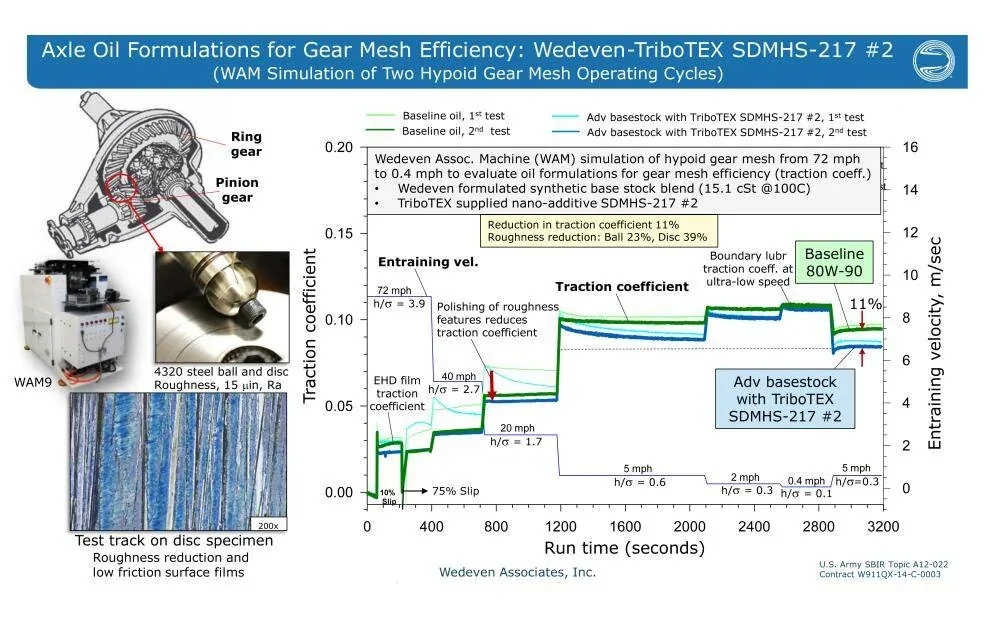
These two really capture the capabilities (the Wedeven test is very difficult test to pass for lubricating oils due to the extremely high torque loads, it was developed by MIT for the Auto industry and is the go to test for heavy duty lubricating oil performance testing):

Ford Ranger Took the Raptor to the Trails - First Time. Tire PSI and clearance? 1767020106245-a


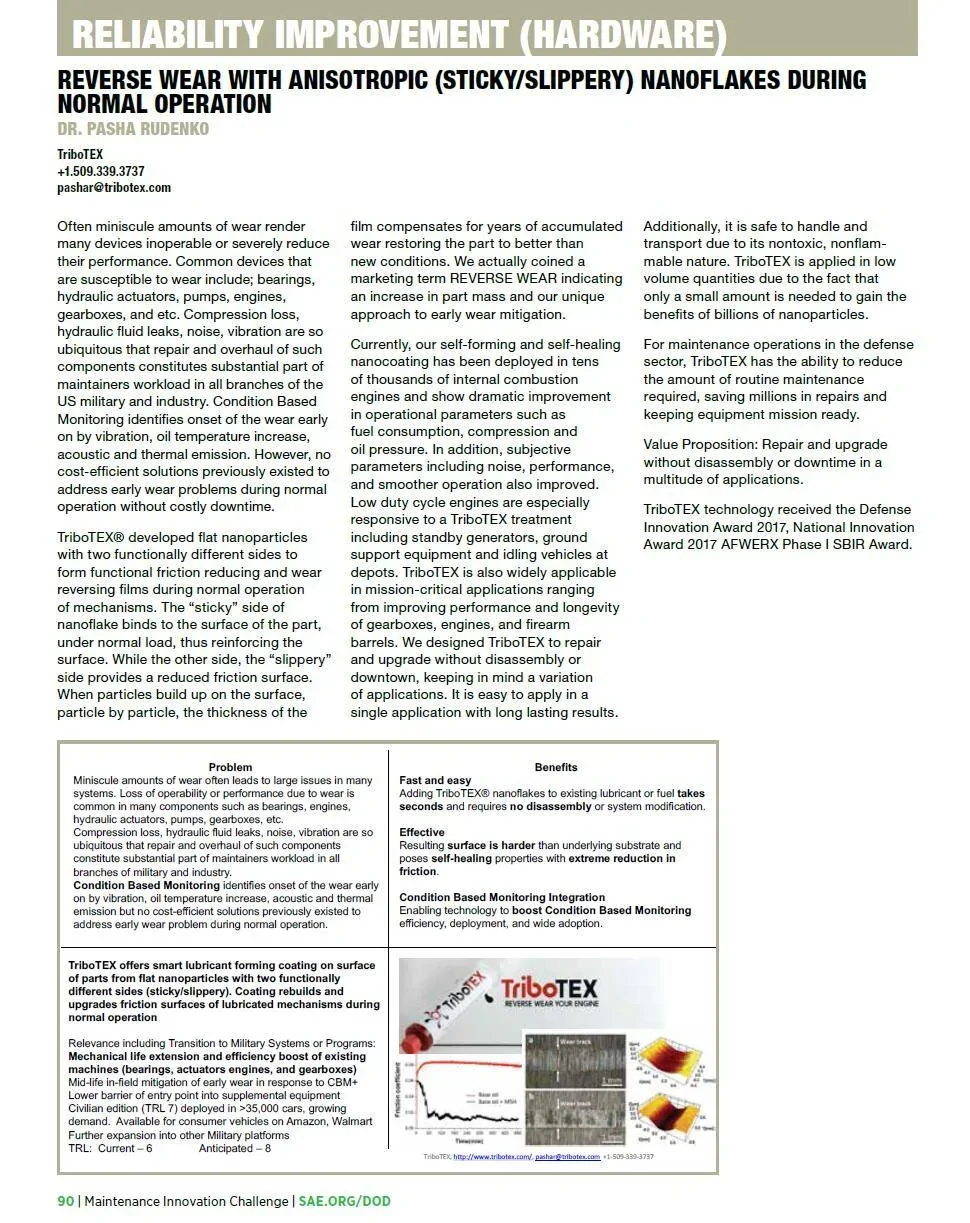
Here's another one to "wet your whistle":


Ford Ranger Took the Raptor to the Trails - First Time. Tire PSI and clearance? 1767020166649-bf


The link above has the bulk of the information, you can decide if you think it's beneficial. It's not going to magically transform your powertrain, but it will enhance its operation (even newer vehicles), if you decide to use it, you're using it with long term in mind which is where its greatest benefit comes from.

DLC films aren't new, but In Situ (self-forming, in process of) DLC films are and this is the only legitimate tech in the industry currently for In Situ DLC films. It's VERY WELL documented and tested, so take the time to read all the material I provided in the link and ignore the morons claiming "snake oil" who don't know how to read or comprehend the test reports :LOL:.

Benefits:
1. Mitigate wear through formation of DLC film on components that experience high wear, thus extending their service life considerably.
2. Reduce friction losses by achieving a traction coefficient of 0.01 or less, which is the theoretical limit of friction (i.e., super lubricity).
3. Enhance oil film strength as it promotes oil adhesion of the film, increasing the oil's ability to support load by around 30% (but without the added pumping losses associated with thicker oils).
4. Higher power output and better fuel economy (1~3% typ. in newer vehicles).
5. Lower emissions and extended life of the catalyst (ZDDP in motor oil poisons your catalytic converter, by enhancing ring seal and reducing oil blow by, you're reducing the oil contamination of the catalyst).
6. Can reduce idle fuel consumption by up to 25% where most of the fuel consumption is due to friction losses. Excellent for applications of service vehicles that see long idle periods (i.e., Police Cruisers, EMS vehicles, Utility Vehicles etc.).

Cons:
1. Cost, it's added cost of periodic re-application above your normal maintenance.

Sorry OP, I don't want to hijack the thread, so if anyone has any questions, take a look at the link + material or PM me.
Sponsored

 
Last edited:


Top