Administrator
Administrator
- Thread starter
- #1
Here's How Long We Torture Test Our Trucks Before We Hand You the Keys
by Ford (Sharyn Ghacham, communications manager for quality and safety at Ford Motor Company)
May 29, 2026
“I don’t think people understand what we put our vehicles through,” said Susan Regalia, who leads durability testing for some of Ford’s most iconic trucks as operations supervisor at Michigan Proving Grounds (MPG) in Romeo, Michigan.
“Most people in the general public would be really surprised to see everything we do to test them.”
Built Ford Tough is a well-known tagline, in use since 1979. But it’s not just catchy advertising.
It’s an inspiration for the teams running Ford’s durability testing: a marathon of severe trials designed to condense the wear and tear of ten years or 150,000 miles into just four months.

“You’re taking out all the easy stuff,” Regalia said. “We are trying to use these vehicles as our most demanding customers would.”
During those four months, a test vehicle is in almost constant use.
Dyno tests measure engine performance by power, torque, and RPMs. Road surfaces are riddled with potholes and rumble strips. Trucks take on challenges from stair steps to rock crawls to water pits.
Previous generations of field testers used to take vehicles out west and drive them down actual creek beds, and MPG has built its own version in Silver Creek. It offers the same challenges — with a bit more predictability than a living stream — for more consistent test results.
And on Power Hop Hill, vehicles grind up an incline loaded with severe bumps all the way up.
Vehicles aren’t just tested on multiple surfaces. They do it under extreme loads, tested at curb weight (what you'd expect with just a driver and passenger) and at gross vehicle weight.
They are also tested at top safe load, which can be placed in the rear or the front of the truck to simulate activities like snow plowing.
Drivers run the vehicles 24 hours a day, through vibration and shocks, the clanking of weights chained to the vehicles, and the noise of the road.
Along the way, they observe everything from the feel of the steering wheel to unusual noises to the way the vehicle handles.
Robots bring precision to the test track. Unlike humans, they can run the same test at exactly the same speed, time after time.
But humans introduce the variability of real life into the tests, and each test driver brings a different valuable perspective to the mix. That's why the testing process includes a blend of robotic consistency and human perception.
Throughout Ford’s durability testing, data loggers in the vehicle send information back to operators on everything from shock temperatures to wheel speeds.
“Whenever a new issue comes up, we celebrate it, because it means that we found the issue before a customer did," said Andrew Kernahan, vehicle programs director for heavy duty truck and platforms.
"Then we work the issue through a set of rigorous and standardized problem-solving techniques to identify root causes, take robust corrective actions, and implement them as quickly as possible.”
And the process isn’t one-and-done. Built Ford Tough vehicles undergo durability testing not just at the prototype stage, but also as production begins, when improvements to the design based on earlier durability testing are validated.
“There really is no substitute for putting a vehicle through its paces,” Kernahan said. “Real-world testing designed to validate Ford truck quality for our customers.
by Ford (Sharyn Ghacham, communications manager for quality and safety at Ford Motor Company)
May 29, 2026
“I don’t think people understand what we put our vehicles through,” said Susan Regalia, who leads durability testing for some of Ford’s most iconic trucks as operations supervisor at Michigan Proving Grounds (MPG) in Romeo, Michigan.
“Most people in the general public would be really surprised to see everything we do to test them.”
Built Ford Tough is a well-known tagline, in use since 1979. But it’s not just catchy advertising.
It’s an inspiration for the teams running Ford’s durability testing: a marathon of severe trials designed to condense the wear and tear of ten years or 150,000 miles into just four months.
“You’re taking out all the easy stuff,” Regalia said. “We are trying to use these vehicles as our most demanding customers would.”
During those four months, a test vehicle is in almost constant use.
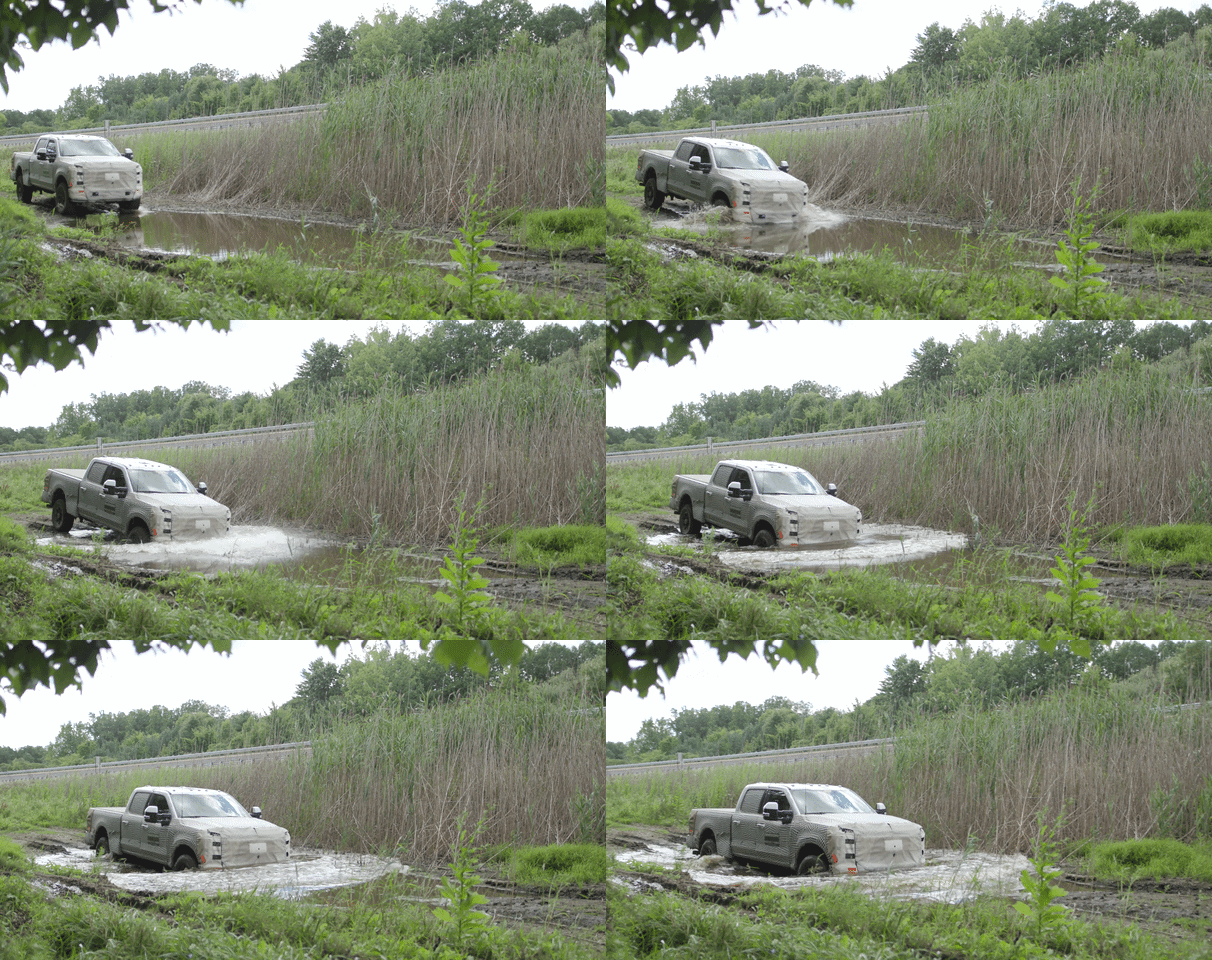
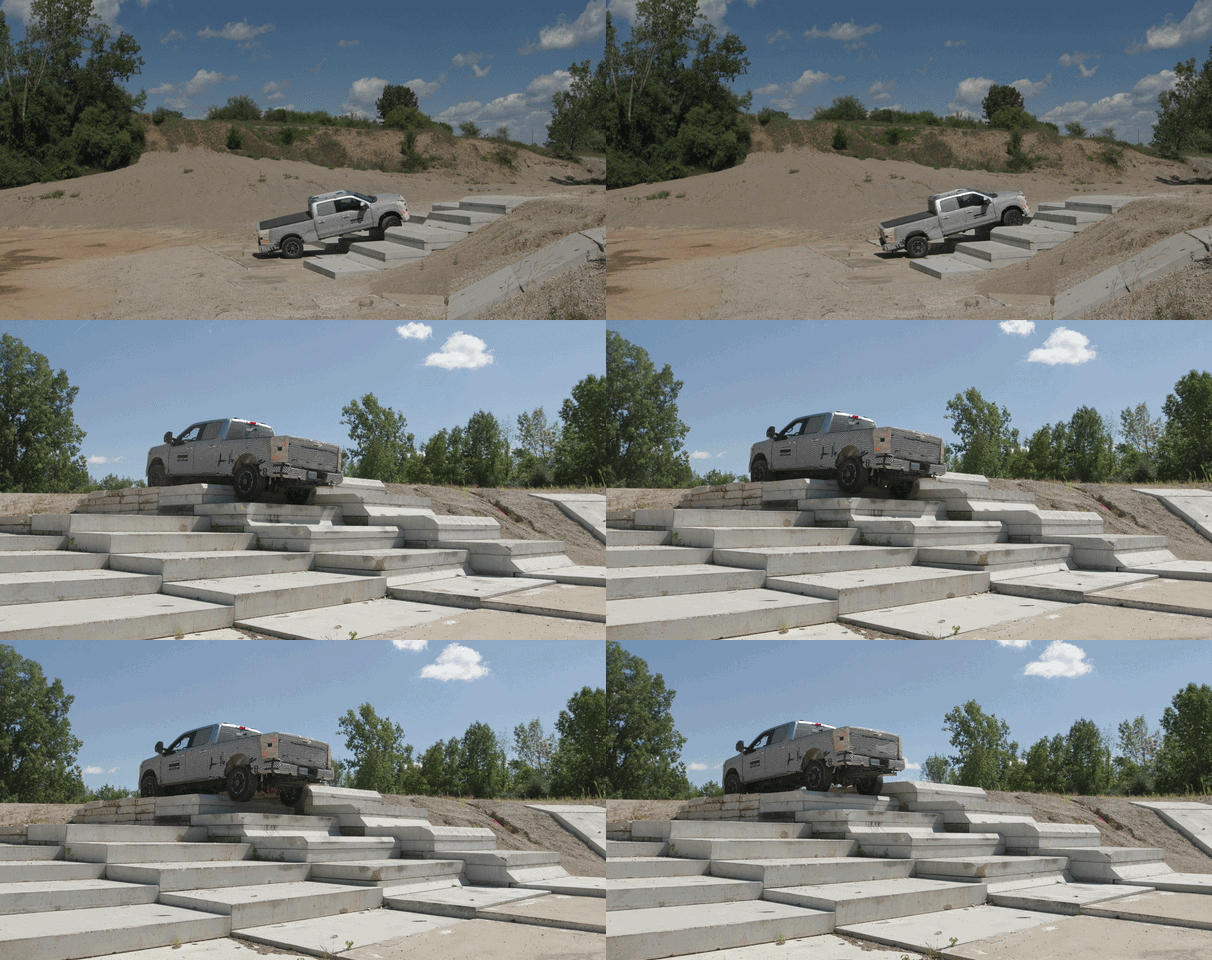
Dyno tests measure engine performance by power, torque, and RPMs. Road surfaces are riddled with potholes and rumble strips. Trucks take on challenges from stair steps to rock crawls to water pits.
Previous generations of field testers used to take vehicles out west and drive them down actual creek beds, and MPG has built its own version in Silver Creek. It offers the same challenges — with a bit more predictability than a living stream — for more consistent test results.
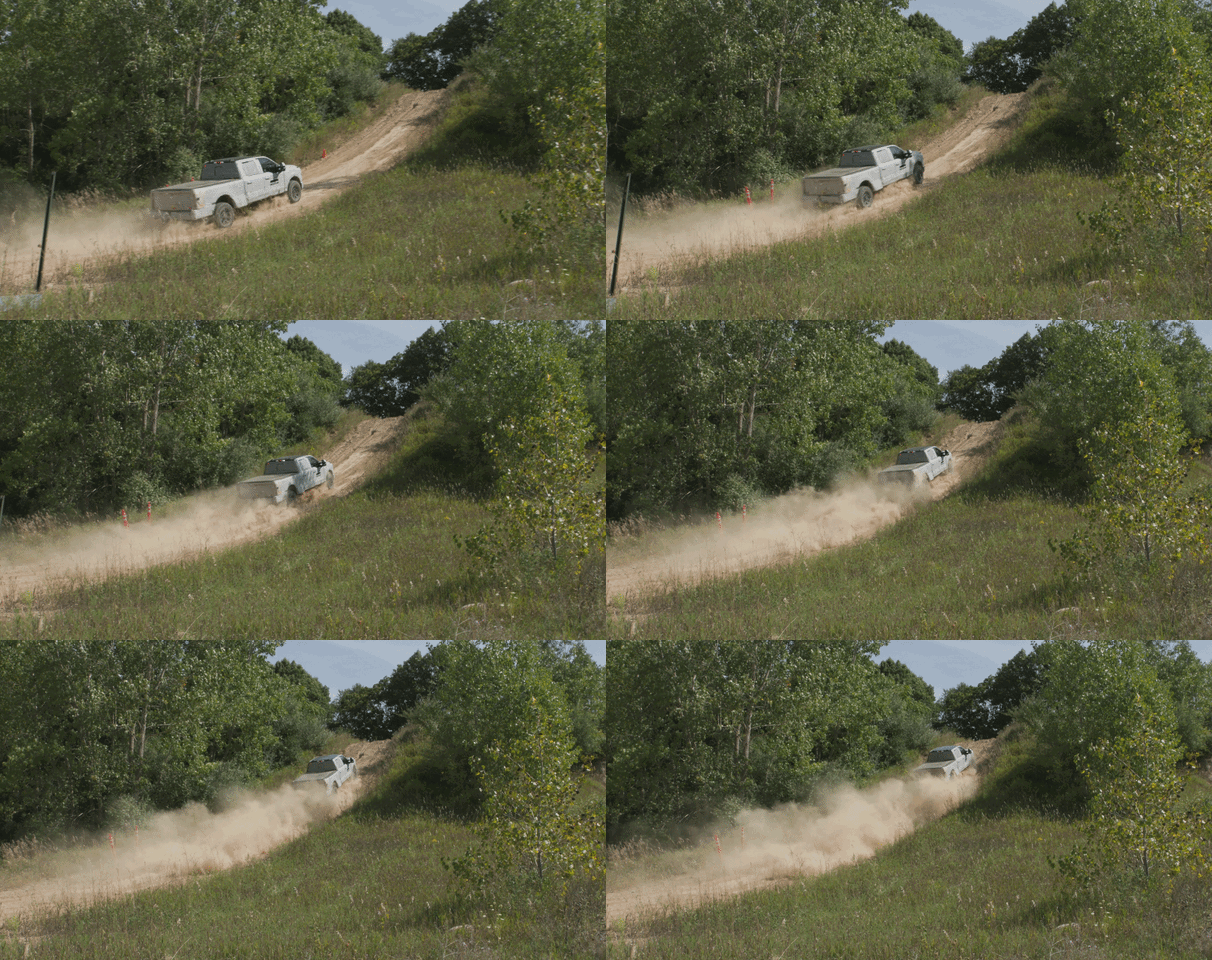
And on Power Hop Hill, vehicles grind up an incline loaded with severe bumps all the way up.
Vehicles aren’t just tested on multiple surfaces. They do it under extreme loads, tested at curb weight (what you'd expect with just a driver and passenger) and at gross vehicle weight.
They are also tested at top safe load, which can be placed in the rear or the front of the truck to simulate activities like snow plowing.
Drivers run the vehicles 24 hours a day, through vibration and shocks, the clanking of weights chained to the vehicles, and the noise of the road.
Along the way, they observe everything from the feel of the steering wheel to unusual noises to the way the vehicle handles.
All this can be demanding for humans to drive repeatedly, so robots have now been recruited to run some of the toughest surfaces. And the robots have recently graduated to the racetrack: 20 of them at a time can sometimes be seen driving paths around the high speed track."We are trying to use these vehicles as our most demanding customers would.” - Susan Regalia, operations supervisor at MPG
Robots bring precision to the test track. Unlike humans, they can run the same test at exactly the same speed, time after time.
But humans introduce the variability of real life into the tests, and each test driver brings a different valuable perspective to the mix. That's why the testing process includes a blend of robotic consistency and human perception.
Throughout Ford’s durability testing, data loggers in the vehicle send information back to operators on everything from shock temperatures to wheel speeds.
“Whenever a new issue comes up, we celebrate it, because it means that we found the issue before a customer did," said Andrew Kernahan, vehicle programs director for heavy duty truck and platforms.
"Then we work the issue through a set of rigorous and standardized problem-solving techniques to identify root causes, take robust corrective actions, and implement them as quickly as possible.”
Teams also stay in touch with customer-facing teams, gathering data to constantly update standards so current durability testing reflects the way customers are actually using their vehicles.“There really is no substitute for putting a vehicle through its paces.” - Andrew Kernahan, vehicle programs director for heavy duty truck and platforms
And the process isn’t one-and-done. Built Ford Tough vehicles undergo durability testing not just at the prototype stage, but also as production begins, when improvements to the design based on earlier durability testing are validated.
“There really is no substitute for putting a vehicle through its paces,” Kernahan said. “Real-world testing designed to validate Ford truck quality for our customers.
Sponsored
Last edited: