Sponsored

MasterCylinder

Well-Known Member
First Name
Jay
Joined
Aug 2, 2025
Threads
20
Messages
294
Reaction score
452
Location
Texas
Vehicle(s)
2025 XLT FX4, 1991 1st Gen Ranger
Occupation
Retired, FF, CET, Mechanic
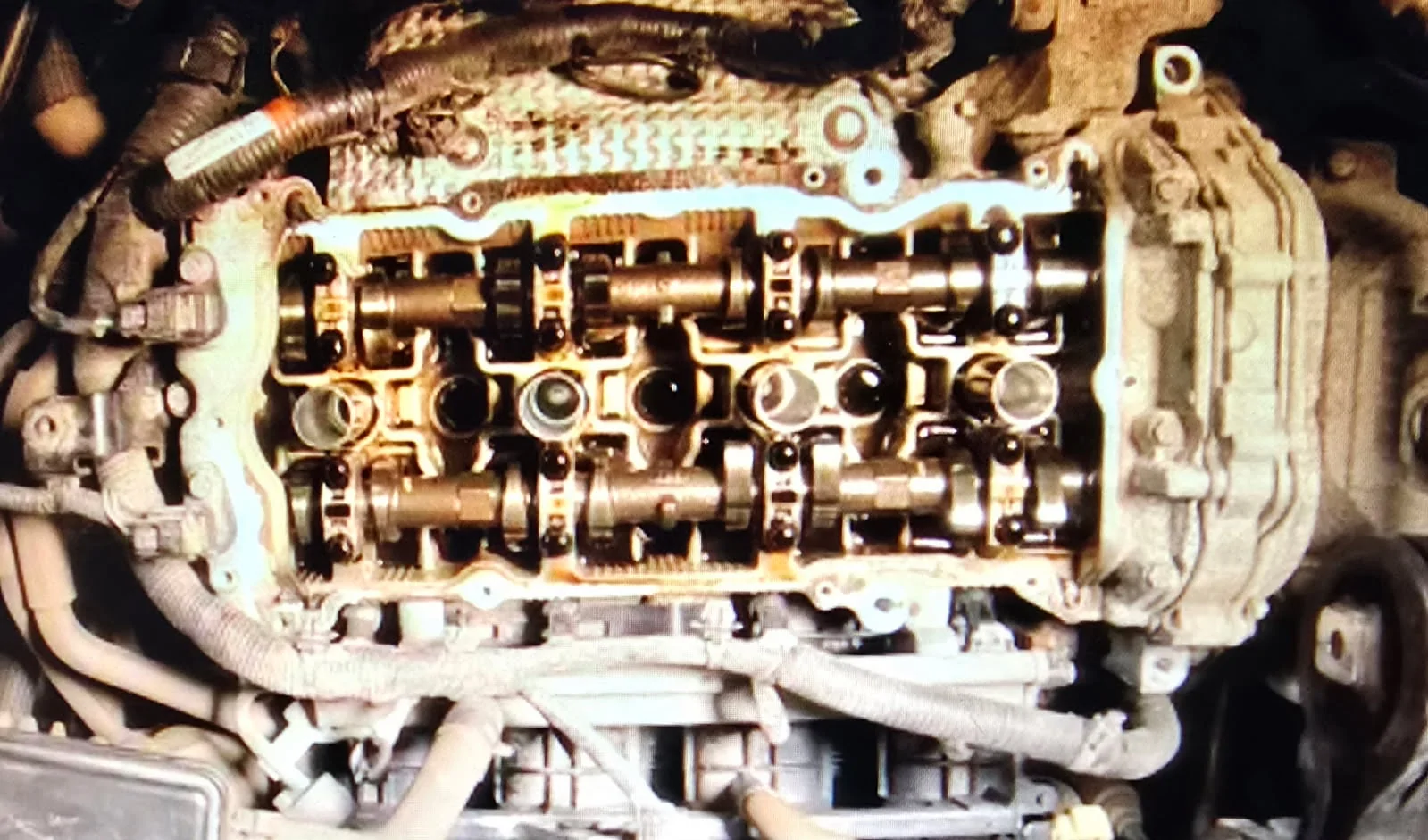
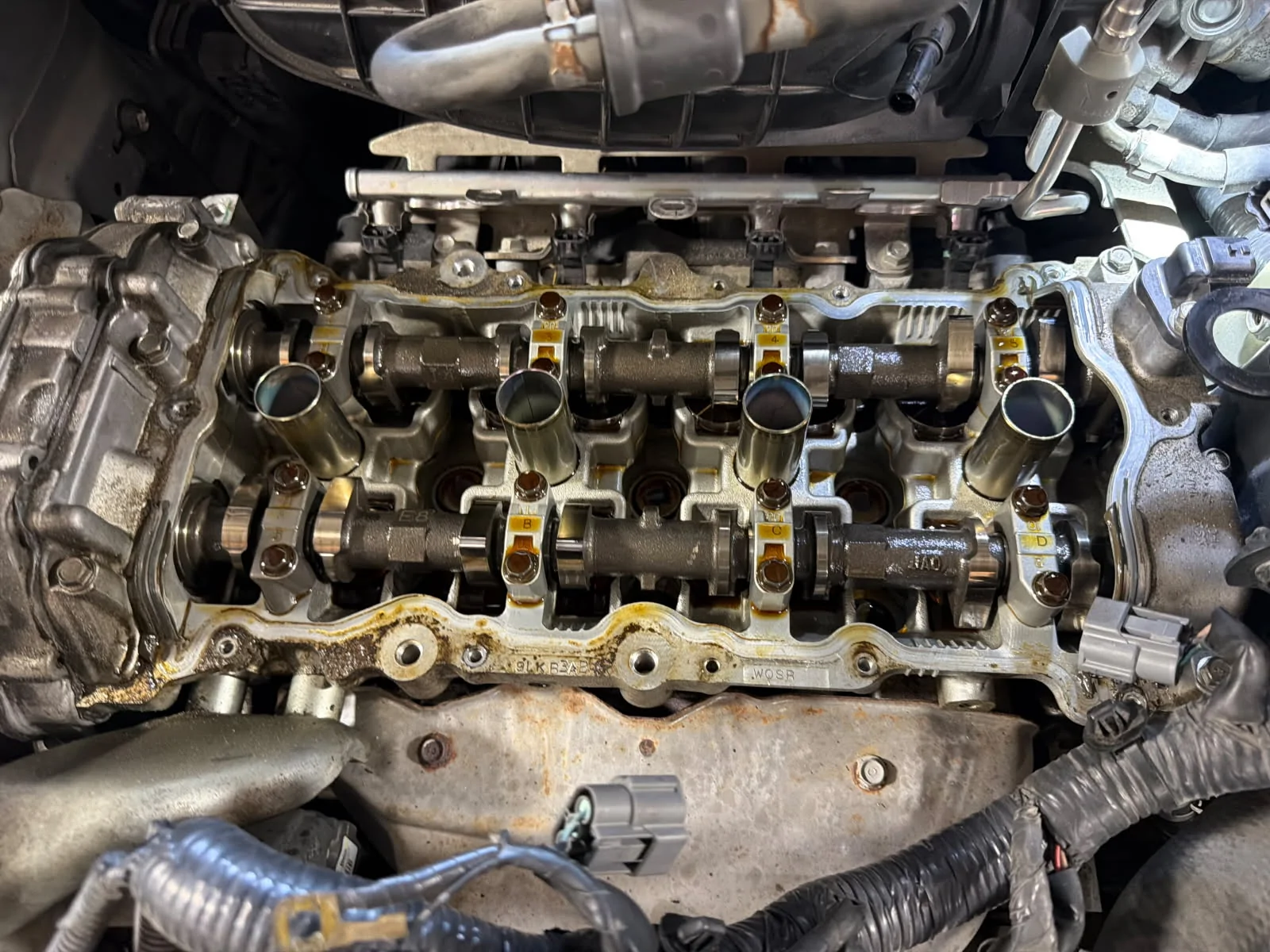
I just wanted to post/pass this this on so others can actually see proof that your oil change intervals matter. These are 2.5l engines, not Fords but just personnel picture proof of the difference. The clean engine is after 126,000 miles. I personally took care of that cars maintenance for 10 years and then it was sold by the owner to my granddaughter. The car had three oil changes by the original dealer then I took over. I changed to synthetic at that time. I won't mention the brand because I'm not trying to sell anyone on an oil or filter. I will say it's available even at Walmart for 25-35 a 5 quart bottle these days. The oil/filter was always changed before the 5000 mile mark except once, we went over a tad. My Son in law noticed the valve cover starting to seep so waited for the cars oil change to do the valve cover gasket. He sent me the picture because he was amazed at how clean the motor was inside, he's been inside many now and said it was the cleanest he'd ever seen especially for the miles on it.

Ford Ranger Why Oil / Filter change intervals matter - visual proof Clean126K


This is what I consider a properly maintained oil/filter change engine. Oil has 4723 miles on it and at it's change time. Note the oil is starting to get a caramel color to, indicative of time to change.

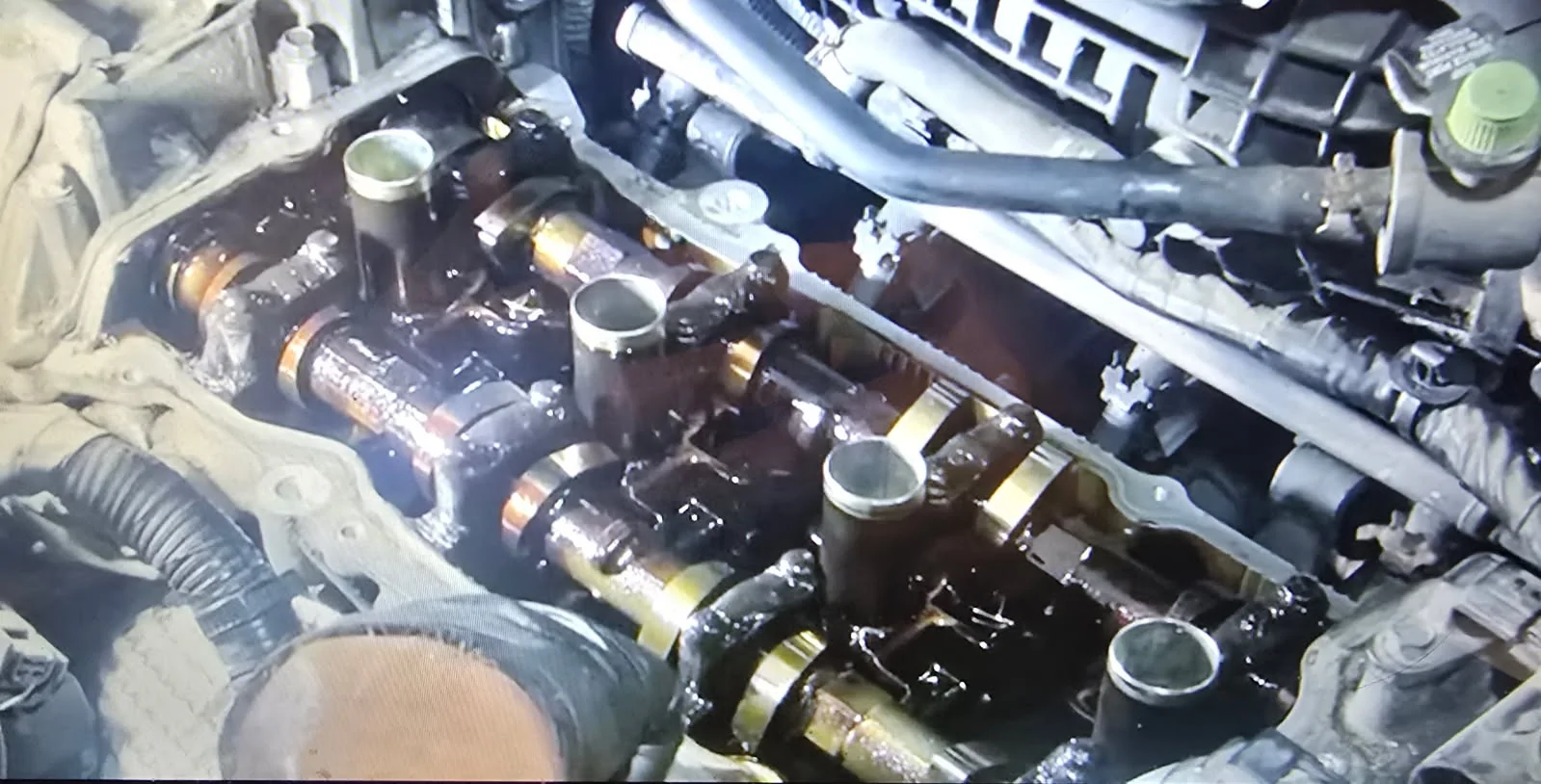
Ford Ranger Why Oil / Filter change intervals matter - visual proof Varnishedu


This is what most refer to as a varnished up engine. This happens when the oil is breaking down, not being changed often enough and the additives in the oil are no longer working. It is a hard layer of varnish caused by oxidation/heat and it gets cooked on. No amount of super oil changes will remove it, only manual cleaning.

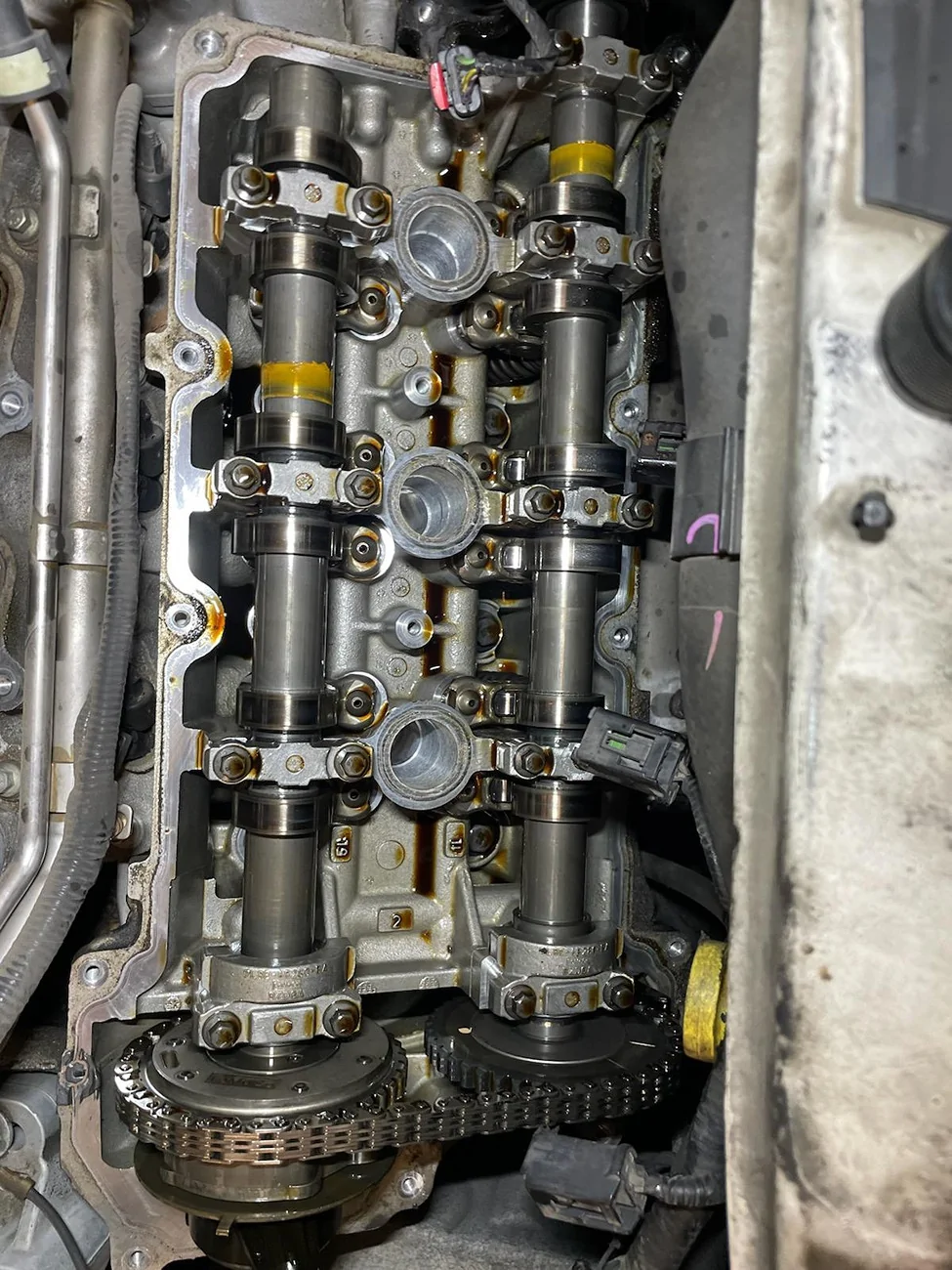
Ford Ranger Why Oil / Filter change intervals matter - visual proof Sluggedu


This poor engine is nasty and has sludge and varnish but not as much varnish as the varnished up engine. This point is you can have a varnished up engine or a sludged up engine on their on/separately and sometimes together. You don't want this!

Use your best judgement but if you run oil too long no matter if conventional or synthetic the additives breakdown before the oil ever does! Synthetics do last longer but no oil is exempt from the additives getting used up! Ranger On! :like:
Sponsored


natkill

Member
First Name
Nate
Joined
Apr 11, 2026
Threads
1
Messages
13
Reaction score
9
Location
Oklahoma
Vehicle(s)
2.7L Ranger Lariat (on order)
Would you say there is a big difference between 5,000 and 7,500 miles between changes?

My nearest dealer is 30 miles away, and sometimes I have gone closer to 7,500 miles between changes just because it's hard to make it out there right on time when life interferes.
 

RonM_TX

Well-Known Member
First Name
Ron
Joined
Feb 7, 2025
Threads
3
Messages
260
Reaction score
296
Location
Conroe Tx
Vehicle(s)
25 Ranger Raptor, desert sand, 21 Toyota 4Runner Limited, 10 Ford Escape V6
Occupation
Retired, Field Service Engineer
Regular oil changes is the key to long engine life. I routinely keep my vehicles way past 200K miles without major engine issues.
My Ford Escape has 230K on it, only issue I had was an injector failed at 220K. Had the shop send me photos of the engine during a valve cover gasket replacement at 210K. Engine had no build up or sludge.
Ford Ranger Why Oil / Filter change intervals matter - visual proof -5620706712080942022
 

Houcat

Well-Known Member
First Name
Kevin
Joined
Jul 7, 2024
Threads
6
Messages
58
Reaction score
96
Location
Houston America
Vehicle(s)
2025 Ranger Lariat
Also, does it make a difference in the amount of time between changes? I put less than 10,000 miles on my Ranger each year so the calendar says "change it" but the mileage says "we got 3,000 miles until 5,000".
 
OP
OP
MasterCylinder

MasterCylinder

Well-Known Member
First Name
Jay
Joined
Aug 2, 2025
Threads
20
Messages
294
Reaction score
452
Location
Texas
Vehicle(s)
2025 XLT FX4, 1991 1st Gen Ranger
Occupation
Retired, FF, CET, Mechanic
Would you say there is a big difference between 5,000 and 7,500 miles between changes?

My nearest dealer is 30 miles away, and sometimes I have gone closer to 7,500 miles between changes just because it's hard to make it out there right on time when life interferes.
Depends on many factors. Look in the valve cover if possible through oil fill. If you see the metals starting to gain a Carmel coloring any where you can see in my humble opinion change it more often than not. Oil is cheap insurance verses a motor or problems with it! :)
 

Sponsored
OP
OP
MasterCylinder

MasterCylinder

Well-Known Member
First Name
Jay
Joined
Aug 2, 2025
Threads
20
Messages
294
Reaction score
452
Location
Texas
Vehicle(s)
2025 XLT FX4, 1991 1st Gen Ranger
Occupation
Retired, FF, CET, Mechanic
Also, does it make a difference in the amount of time between changes? I put less than 10,000 miles on my Ranger each year so the calendar says "change it" but the mileage says "we got 3,000 miles until 5,000".
Chemically speaking, yes. Oxidation starts the minute you crank that engine after an oil change. Heat from the engine only exasperates the process. I myself change oil once a year even if mileage is under change intervals. My motorcycle, show car etc.... I'd rather play it safe then end up sorry. Just my opinion! :)
 
OP
OP
MasterCylinder

MasterCylinder

Well-Known Member
First Name
Jay
Joined
Aug 2, 2025
Threads
20
Messages
294
Reaction score
452
Location
Texas
Vehicle(s)
2025 XLT FX4, 1991 1st Gen Ranger
Occupation
Retired, FF, CET, Mechanic
Regular oil changes is the key to long engine life. I routinely keep my vehicles way past 200K miles without major engine issues.
My Ford Escape has 230K on it, only issue I had was an injector failed at 220K. Had the shop send me photos of the engine during a valve cover gasket replacement at 210K. Engine had no build up or sludge.
-5620706712080942022.webp
Gotta love a clean engine. My Son still driving my old Explorer 5.0l 288000+ and just now replaced valver cover gaskets. He said looked great inside and has only had conventional oil but of course more frequent oil changes. Pictures are worth a thousand words! 👍
 

Morningpride

Well-Known Member
First Name
Jeff
Joined
Nov 11, 2024
Threads
5
Messages
108
Reaction score
104
Location
Philadelphia
Vehicle(s)
2024 Ranger LT STX
Don’t forget that turbo engines definitely need their oil changed every 5000 miles. That turbo heats the oil up way more than a typical NA engine. It also cooks it once the hot engine is shut off.
 

Buellsox

Well-Known Member
First Name
Scott
Joined
Oct 22, 2025
Threads
2
Messages
185
Reaction score
283
Location
Tacoma, WA
Vehicle(s)
2025 Ranger Raptor
Occupation
Local 26 Union Plumber
Also, does it make a difference in the amount of time between changes? I put less than 10,000 miles on my Ranger each year so the calendar says "change it" but the mileage says "we got 3,000 miles until 5,000".
Similar to you I log low yearly miles due to being in construction with a company truck.

Not saying this is what to do this is just what I’ve done for decades. I do a twice a year service - spring & fall about 6 months apart irregardless of mileage. Done & forget about it and it’s cheap & easy insurance. Never had engine issues as a result of it either.
Some may think it’s overkill and that’s fine. That’s just how I choose to address it.
 

JustNick

Well-Known Member
First Name
Nick
Joined
May 28, 2024
Threads
7
Messages
179
Reaction score
200
Location
BatonRouge
Vehicle(s)
Shelter Green Ranger Raptor
Occupation
SOLA Motorsports
Don’t forget that turbo engines definitely need their oil changed every 5000 miles. That turbo heats the oil up way more than a typical NA engine. It also cooks it once the hot engine is shut off.
The turbos on these trucks actually don't cook the oil after shut off, the coolant passages keep flowing through convection and will keep the oil from baking in the journals. Just fyi.

Thats true on non-actively cooled turbos though
 

Sponsored

RonM_TX

Well-Known Member
First Name
Ron
Joined
Feb 7, 2025
Threads
3
Messages
260
Reaction score
296
Location
Conroe Tx
Vehicle(s)
25 Ranger Raptor, desert sand, 21 Toyota 4Runner Limited, 10 Ford Escape V6
Occupation
Retired, Field Service Engineer
Also, does it make a difference in the amount of time between changes? I put less than 10,000 miles on my Ranger each year so the calendar says "change it" but the mileage says "we got 3,000 miles until 5,000".
I do oil changes every 3-5000 miles or 6 months which ever comes first.
 

Morningpride

Well-Known Member
First Name
Jeff
Joined
Nov 11, 2024
Threads
5
Messages
108
Reaction score
104
Location
Philadelphia
Vehicle(s)
2024 Ranger LT STX
The turbos on these trucks actually don't cook the oil after shut off, the coolant passages keep flowing through convection and will keep the oil from baking in the journals. Just fyi.

Thats true on non-actively cooled turbos though
Really? I did not know that.
 

stemplar

Well-Known Member
Joined
Sep 7, 2023
Threads
19
Messages
680
Reaction score
959
Location
Pennsylvania
Vehicle(s)
2025 Ranger Lariat 2.7
Would you say there is a big difference between 5,000 and 7,500 miles between changes?

My nearest dealer is 30 miles away, and sometimes I have gone closer to 7,500 miles between changes just because it's hard to make it out there right on time when life interferes.
The only way to tell is to send a sample of your used oil for analysis (labs like Blackstone or amsoil do well, as do others). You simply cannot tell how oil is doing by looking at the oil.
 
OP
OP
MasterCylinder

MasterCylinder

Well-Known Member
First Name
Jay
Joined
Aug 2, 2025
Threads
20
Messages
294
Reaction score
452
Location
Texas
Vehicle(s)
2025 XLT FX4, 1991 1st Gen Ranger
Occupation
Retired, FF, CET, Mechanic
The turbos on these trucks actually don't cook the oil after shut off, the coolant passages keep flowing through convection and will keep the oil from baking in the journals. Just fyi.

Thats true on non-actively cooled turbos though
FYI. Science/Physics says: " Considering fluid flow over a hot surface, conductive heat flows from the surface into a laminar fluid layer, then proceeds into the neighboring fluid that is moving. Therefore, heat convection is the superposition of heat conduction and thermal transport into the flowing fluid. " Convection requires the gas or liquid to flow . :)
 
OP
OP
MasterCylinder

MasterCylinder

Well-Known Member
First Name
Jay
Joined
Aug 2, 2025
Threads
20
Messages
294
Reaction score
452
Location
Texas
Vehicle(s)
2025 XLT FX4, 1991 1st Gen Ranger
Occupation
Retired, FF, CET, Mechanic
The only way to tell is to send a sample of your used oil for analysis (labs like Blackstone or amsoil do well, as do others). You simply cannot tell how oil is doing by looking at the oil.
I been staring at motor oils since the 60's. No commercial labs were around like today. There were very few but very expensive. Our eyes were what we used by experience. A typical analysis does not tell you varnish potential which one can clearly see, like the photos. It requires a special test. Specifics, yes, oil analysis is handy. Specialized testing gets expensive to know what can be seen or recognizeable. :):like:
Sponsored


Top