Sponsored

Intercontinental_Ranger

Well-Known Member
Joined
Oct 27, 2025
Threads
5
Messages
101
Reaction score
197
Location
Cambridge
Vehicle(s)
2025 Ford Ranger XLT FX4
Occupation
Crisis Cowboy
I been staring at motor oils since the 60's. No commercial labs were around like today. There were very few but very expensive. Our eyes were what we used by experience. A typical analysis does not tell you varnish potential which one can clearly see, like the photos. It requires a special test. Specifics, yes, oil analysis is handy. Specialized testing gets expensive to know what can be seen or recognizeable. :):like:
Ford Ranger Why Oil / Filter change intervals matter - visual proof IMG_4698
Sponsored


stemplar

Well-Known Member
Joined
Sep 7, 2023
Threads
19
Messages
680
Reaction score
959
Location
Pennsylvania
Vehicle(s)
2025 Ranger Lariat 2.7
I been staring at motor oils since the 60's. No commercial labs were around like today. There were very few but very expensive. Our eyes were what we used by experience. A typical analysis does not tell you varnish potential which one can clearly see, like the photos. It requires a special test. Specifics, yes, oil analysis is handy. Specialized testing gets expensive to know what can be seen or recognizeable. :):like:
lol you’d be discarding the fresh oil in my diesels and my BMW’s before I got to the end of my driveway after an oil change. A few $40 tests to determine how long the tbn is good is less than one would pay for over- or under-changing their oil.
 

Boosted6G

Well-Known Member
Joined
Aug 27, 2024
Threads
9
Messages
221
Reaction score
309
Location
PNW
Vehicle(s)
2025 Vel Blue Raptor
Occupation
Retired Hardware Design Engineer
I don't need visual proof to know that changing your oil regularly (regardless of what type of oil you use) is the single most important thing you can do for ANY vehicle.
 
OP
OP
MasterCylinder

MasterCylinder

Well-Known Member
First Name
Jay
Joined
Aug 2, 2025
Threads
20
Messages
293
Reaction score
452
Location
Texas
Vehicle(s)
2025 XLT FX4, 1991 1st Gen Ranger
Occupation
Retired, FF, CET, Mechanic
lol you’d be discarding the fresh oil in my diesels and my BMW’s before I got to the end of my driveway after an oil change. A few $40 tests to determine how long the tbn is good is less than one would pay for over- or under-changing their oil.
Not hardly, I cut my teeth working on Detroit, Catapillers and Cummins! :sunglasses:
 
OP
OP
MasterCylinder

MasterCylinder

Well-Known Member
First Name
Jay
Joined
Aug 2, 2025
Threads
20
Messages
293
Reaction score
452
Location
Texas
Vehicle(s)
2025 XLT FX4, 1991 1st Gen Ranger
Occupation
Retired, FF, CET, Mechanic
I don't need visual proof to know that changing your oil regularly (regardless of what type of oil you use) is the single most important thing you can do for ANY vehicle.
A lot of people are not as fortunate as you in understanding that point. Like I said earlier, a pictures worth a thousand words. 👍
 

Sponsored

Bill W

Well-Known Member
Joined
Feb 28, 2026
Threads
4
Messages
69
Reaction score
86
Location
SoCal
Vehicle(s)
2025 XLT Ranger 2.7
Occupation
Retired
Short trips, cold oil is your main factor. Only a used oil analysis will give you the right information.
It is how you drive. Taxi engines last a very long time because the engine oil stays hot. Additives like moly that are bonded with sulphur and are activated at running oil temperature.
From my understanding bearing wear happens at cold start up. (around 75%) And overall engine wear is 20 times more with cold oil.
 

Johnny 5

Well-Known Member
First Name
John C
Joined
Mar 20, 2024
Threads
8
Messages
449
Reaction score
243
Location
Michigan
Vehicle(s)
2024 Ranger Raptor
Occupation
Mold maker
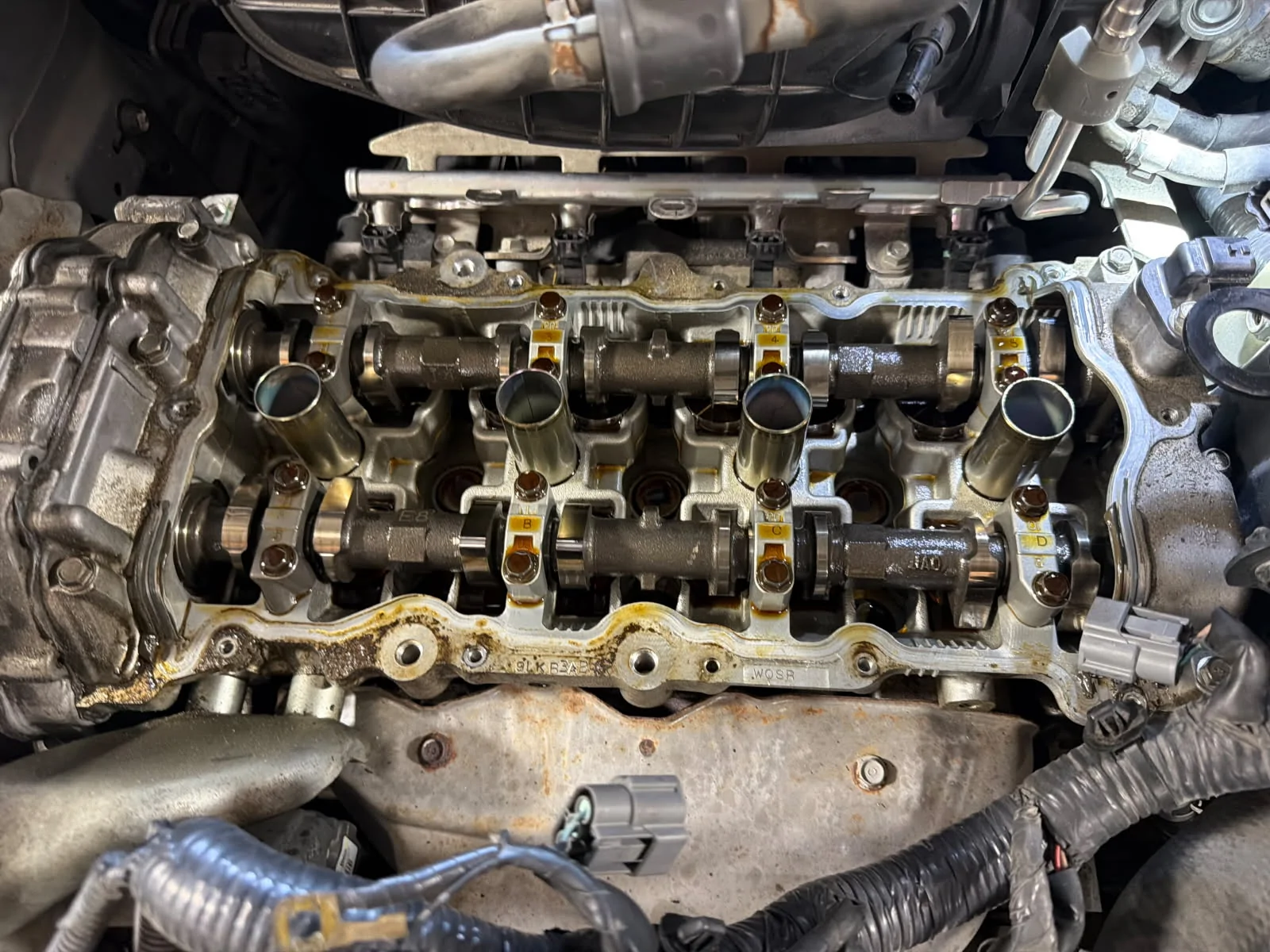
I just wanted to post/pass this this on so others can actually see proof that your oil change intervals matter. These are 2.5l engines, not Fords but just personnel picture proof of the difference. The clean engine is after 126,000 miles. I personally took care of that cars maintenance for 10 years and then it was sold by the owner to my granddaughter. The car had three oil changes by the original dealer then I took over. I changed to synthetic at that time. I won't mention the brand because I'm not trying to sell anyone on an oil or filter. I will say it's available even at Walmart for 25-35 a 5 quart bottle these days. The oil/filter was always changed before the 5000 mile mark except once, we went over a tad. My Son in law noticed the valve cover starting to seep so waited for the cars oil change to do the valve cover gasket. He sent me the picture because he was amazed at how clean the motor was inside, he's been inside many now and said it was the cleanest he'd ever seen especially for the miles on it.

Clean126K.webp


This is what I consider a properly maintained oil/filter change engine. Oil has 4723 miles on it and at it's change time. Note the oil is starting to get a caramel color to, indicative of time to change.

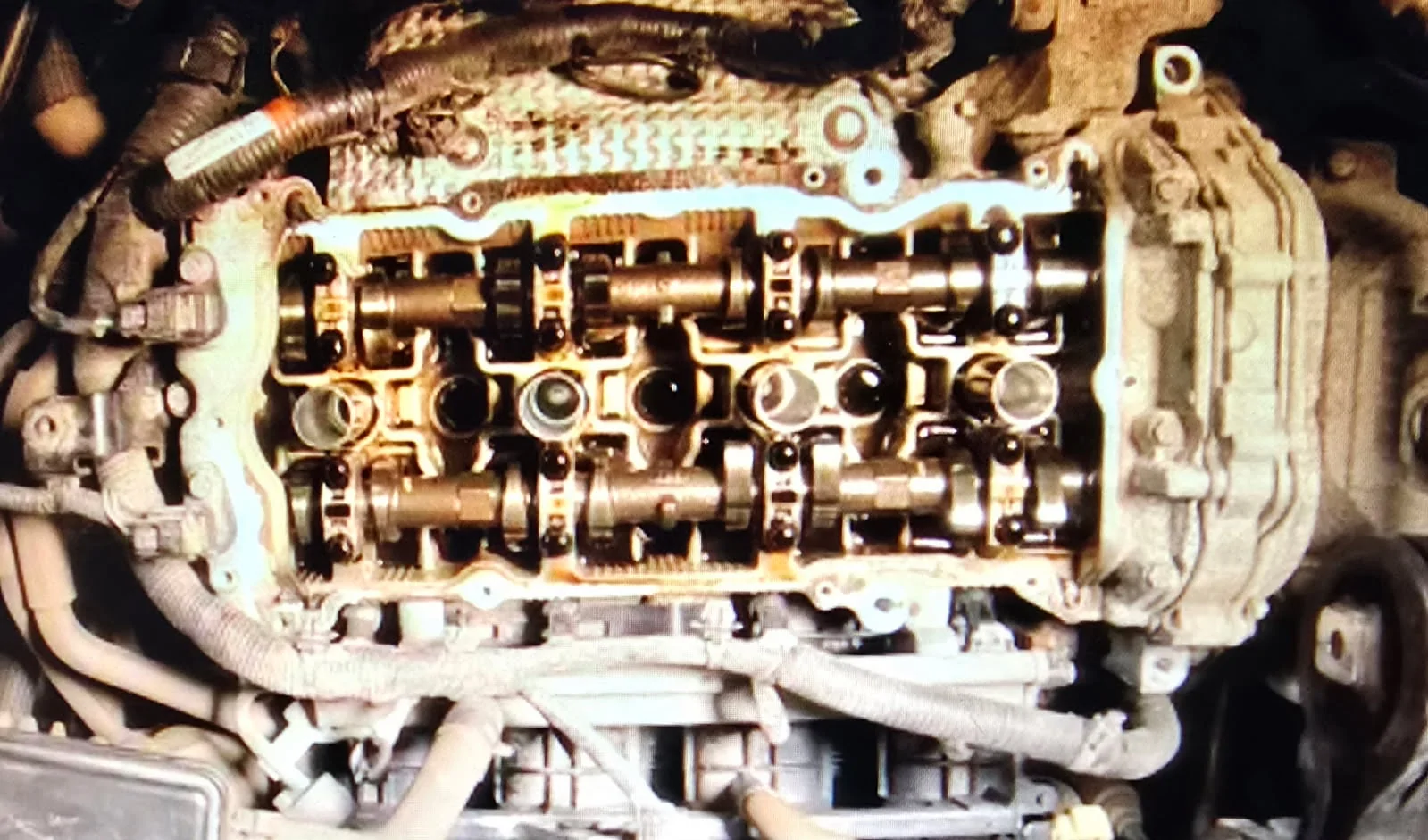
Varnishedup.webp


This is what most refer to as a varnished up engine. This happens when the oil is breaking down, not being changed often enough and the additives in the oil are no longer working. It is a hard layer of varnish caused by oxidation/heat and it gets cooked on. No amount of super oil changes will remove it, only manual cleaning.

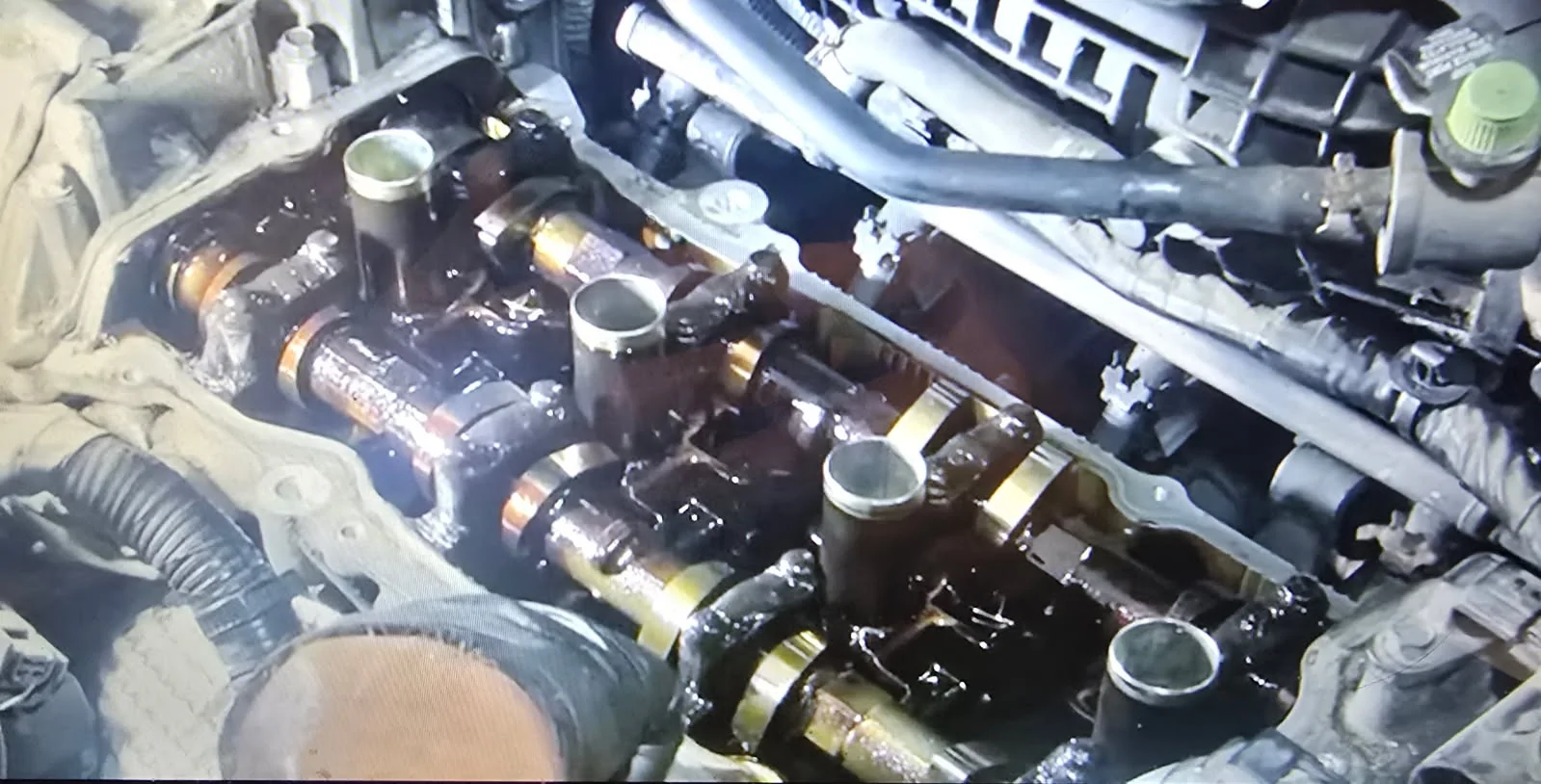
Sluggedup.webp


This poor engine is nasty and has sludge and varnish but not as much varnish as the varnished up engine. This point is you can have a varnished up engine or a sludged up engine on their on/separately and sometimes together. You don't want this!

Use your best judgement but if you run oil too long no matter if conventional or synthetic the additives breakdown before the oil ever does! Synthetics do last longer but no oil is exempt from the additives getting used up! Ranger On! :like:
Absolutely đź’Ż %...!!! Every 5,000 miles. I've been using synthetic since it first came out (so you know the brand) and my engines were the same. My vehicles fall apart and my engines are still that clean and running strong with great compresssion when everything else is gone.

 
OP
OP
MasterCylinder

MasterCylinder

Well-Known Member
First Name
Jay
Joined
Aug 2, 2025
Threads
20
Messages
293
Reaction score
452
Location
Texas
Vehicle(s)
2025 XLT FX4, 1991 1st Gen Ranger
Occupation
Retired, FF, CET, Mechanic
Absolutely đź’Ż %...!!! Every 5,000 miles. I've been using synthetic since it first came out (so you know the brand) and my engines were the same. My vehicles fall apart and my engines are still that clean and running strong with great compresssion when everything else is gone.
Short trips, cold oil is your main factor. Only a used oil analysis will give you the right information.
It is how you drive. Taxi engines last a very long time because the engine oil stays hot. Additives like moly that are bonded with sulphur and are activated at running oil temperature.
From my understanding bearing wear happens at cold start up. (around 75%) And overall engine wear is 20 times more with cold oil.
Gool
Short trips, cold oil is your main factor. Only a used oil analysis will give you the right information.
It is how you drive. Taxi engines last a very long time because the engine oil stays hot. Additives like moly that are bonded with sulphur and are activated at running oil temperature.
From my understanding bearing wear happens at cold start up. (around 75%) And overall engine wear is 20 times more with cold oil.
Good points, FYI I'll be posting something in the future about those percentages they've been floating around a very long time, they simply have no factual basis of proof. Not even sure how it got started, 60 %, 70%, 80%, 90% seen someone use them all. :like:
 

Sponsored

Bill W

Well-Known Member
Joined
Feb 28, 2026
Threads
4
Messages
69
Reaction score
86
Location
SoCal
Vehicle(s)
2025 XLT Ranger 2.7
Occupation
Retired
Gool

Good points, FYI I'll be posting something in the future about those percentages they've been floating around a very long time, they simply have no factual basis of proof. Not even sure how it got started, 60 %, 70%, 80%, 90% seen someone use them all. :like:
Stribeck curve. I have seen 90% at boundary lubrication but thought that was high. Take your choice and make it your own reality.
https://www.youtube.com/@themotoroilgeek/search?query=Stribeck
Engine bearings are just one part of the boundary lubrication, piston rings are constantly going into that boundary lube.
 
Last edited:
OP
OP
MasterCylinder

MasterCylinder

Well-Known Member
First Name
Jay
Joined
Aug 2, 2025
Threads
20
Messages
293
Reaction score
452
Location
Texas
Vehicle(s)
2025 XLT FX4, 1991 1st Gen Ranger
Occupation
Retired, FF, CET, Mechanic
Stribeck curve. I have seen 90% at boundary lubrication but thought that was high. Take your choice and make it your own reality.
https://www.youtube.com/@themotoroilgeek/search?query=Stribeck
Engine bearings are just one part of the boundary lubrication, piston rings are constantly going into that boundary lube.
I'm not disagreeing with the existence/science of friction. This has been studied in the race world since I started driving. We could, way back when, gain close to 100hp on a dyno by using friction reducing tricks (actually many of which are used in today's engines as they caught on). The technology since the days of increased emissions, manufacturers have incorporated not only different materials but different size piston rings, different starting pressure to cylinder contact etc... (to meet emissions standards and make up for the horsepower loss) which is where they concentrate their study. I will add they are using a diesel engine (sometimes twice the compression of gas) for that test which runs on compression not spark and fire to help prove the point but does not apply nearly as much especially with today's technology. They also never discuss the importance of pressure differential which is how piston type rings, even when used as a seal work. I could go on and on but will leave it at that but still stick to a much, much lower %. :):sunglasses:
 

Alaska_Wolf

Well-Known Member
First Name
Gary
Joined
Feb 20, 2023
Threads
2
Messages
75
Reaction score
109
Location
From Eagle River, AK.
Vehicle(s)
2025 Ford Ranger Lariat FX4 2.7L; 2025 King Ranch F150 Powerboost FX4
Occupation
USAF Retired
I always used Mobil 1 in our 1996 EB Bronco 351. Ran all around the country and up and down the ALCAN several times. At 180,000 miles our mechanic opened the engine to replace some leaking gaskets and was absolutely amazed how clean the interior was, valves guides showed no wear, cylinder walls showed negligible ridge, and the whole interior had absolutely minimal varnish. The whole engine looked almost as good as the day it was assembled. Still run Mobil 1 in all our vehicles today, true non-mineral oil based synthetics are definitely more expensive over the life of the engine, but they are so worth it..
 

JustNick

Well-Known Member
First Name
Nick
Joined
May 28, 2024
Threads
7
Messages
179
Reaction score
200
Location
BatonRouge
Vehicle(s)
Shelter Green Ranger Raptor
Occupation
SOLA Motorsports
FYI. Science/Physics says: " Considering fluid flow over a hot surface, conductive heat flows from the surface into a laminar fluid layer, then proceeds into the neighboring fluid that is moving. Therefore, heat convection is the superposition of heat conduction and thermal transport into the flowing fluid. " Convection requires the gas or liquid to flow . :)
Hi yes, I'm a mechanical engineer that deals with industrial heat exchangers regularly and am well aware of what heat transfer mechanisms exist and flow regime behaviors. With the engine off and no water pump spinning, the coolant will still flow because of exactly what you put. The coolant sits against the hot cartridge of the turbo, flows up, and cooler coolant from below comes up to takes it's place. We're not talking about huge flow amounts, but it's significantly more cooling than air doing the same thing in an engine bay
 
OP
OP
MasterCylinder

MasterCylinder

Well-Known Member
First Name
Jay
Joined
Aug 2, 2025
Threads
20
Messages
293
Reaction score
452
Location
Texas
Vehicle(s)
2025 XLT FX4, 1991 1st Gen Ranger
Occupation
Retired, FF, CET, Mechanic
Hi yes, I'm a mechanical engineer that deals with industrial heat exchangers regularly and am well aware of what heat transfer mechanisms exist and flow regime behaviors. With the engine off and no water pump spinning, the coolant will still flow because of exactly what you put. The coolant sits against the hot cartridge of the turbo, flows up, and cooler coolant from below comes up to takes it's place. We're not talking about huge flow amounts, but it's significantly more cooling than air doing the same thing in an engine bay
The short explanation. As a engineer, you should be able to apply/understand that the so called movement, if it exist at all cannot serve the purpose of cooling. When you shut that engine off, zero oil flow, zero water flow, no pumping. The engine and components go into a Heat Soak condition (physics) and conduction and radiation of the heat take over. I've seen water temperatures rise as much as 40+ degrees after shut down. So if any water movement exist, it's making things hotter not cooler. Then you have the (equilibrium of pressure, both inlet and outlet hose) set by the radiators cap pressure and why the overflow container gets fuller when engine is at running temperatures and lower as it cools down, so again any water movement is hotter not cooler. :):sunglasses:
Sponsored


Top