Sponsored

cc1999

Well-Known Member
Joined
Mar 7, 2024
Threads
50
Messages
2,253
Reaction score
3,001
Location
Kansas
Vehicle(s)
2025 & 2024 Ranger Raptors
Thanks RacerX. Good info in that link.
Sort of confirmed what I had thought, that the system can adapt to lower octane fuels when needed. Around here it seems 87 or 91 are the two options. I recently was on the interstate and running very low and stopped at a clean newer looking station out near the highway. They only had 87 with 10% ethanol or 87 pure gas.

It can and does happen at times where higher-octane fuel might not be available. Turns out a tuned truck still runs perfectly fine with 87, which I really thought it would, but nice to see more details on how it actually works, and what it was designed to do.

Honesty I could not tell an any difference in the seat of the pants feel with that full tank of 87 vs the prior full tanks of 91 that I had been running after tunning it.
I imagine there is some differences, or there should be some performance difference.
Sponsored

 
Last edited:

Johnny 5

Well-Known Member
First Name
John C
Joined
Mar 20, 2024
Threads
8
Messages
449
Reaction score
243
Location
Michigan
Vehicle(s)
2024 Ranger Raptor
Occupation
Mold maker
Thanks RacerX. Good info in that link.
Sort of confirmed what I had thought, that the system can adapt to lower octane fuels when needed. Around here it seems 87 or 91 are the two options. I recently was on the interstate and running very low and stop at a clean newer looking station out near the highway. They only had 87 with 10% ethanol or 87 pure gas.

It can and does happen at times where higher-octane fuel might not be available. Turns out a tuned truck still runs perfectly fine with 87, which I really thought it would, but nice to see more details on how it actually works, and what it was designed to do.

Honesty I could not tell an any difference in the seat of the pants feel with that full tank of 87 vs the prior full tanks of 91 that I had been running after tunning it.
I imagine there is some differences, or there should be some performance difference.
I always carry some octane boost with me just in case. Some gas stations sell it inside as well. Just trying to be helpful.
 

Deleted member 9086

Adaptation and adjustment not learning. An ECU is incapable of learning.???

  • All supported EcoBoost vehicles 2013-16
When fuel and sensor feedback are optimal the OAR will adjust towards -1.0. When the feedback is less than optimal the OAR will trend towards +1.0. It's likely that you're now wondering why it is that the multiplier is negative when it's happy and positive when it isn't, the reasoning is that the value is not a multiplier and not an offset, thus the ECU code can be simplified and use just a single table comprised entirely of negative values to cover the entire spectrum of operating conditions. With an entire table of negative values it will be multiplied against, the negative multiplier from the optimal correction get's cancelled out into a positive timing correction, whereas the positive OAR value which is asking for things to get dialed back becomes negative and lowers the aggression of timing.
As per your provided link, which confirms what I’ve stated before. Otherwise, it adjusts timing based upon octane utilization to prevent knock. Doesn’t adapt or adjust beyond its programmed parameters. The ECU cannot re-write its software parameters, only adjust within them.

Also the OAR doesn’t take in account altitude conditions, beyond those programmed parameters within the ECU. Even COBB states this al well. It’s important to read and fully comprehend what is quoted. Fancy words for timing adjustments, based upon octane usage, sensor input, to prevent knock.

Additionally, as already commented; the FPT requires 91 octane as a minimum according to the programmed parameters of the tune. There is no exception.???
 
Last edited by a moderator:

81stfacp

Well-Known Member
Joined
Sep 17, 2023
Threads
12
Messages
193
Reaction score
196
Location
78750
Vehicle(s)
CTS
Occupation
Retired
Mobile Ford visited yesterday to address Window Recall and installed my tune. It was the first time they had done it, so I had my WinPC laptop on hand and helped them read/follow the instructions. Took about 30mins.

After a short drive the truck feels a little more responsive, I need to drive it more as my primary focus was the transmission improvement.
How much did they charge to install the tune? I was quoted locally that it is a 2 hour flat rate. That's over 400 bucks with their hourly rate.
 

unixadm

Well-Known Member
Joined
Feb 3, 2019
Threads
4
Messages
121
Reaction score
101
Location
Sacramento, CA
Vehicle(s)
2024 Ranger Raptor
Adaptation and adjustment not learning. An ECU is incapable of lesrning.???


As per your provided link, which confirms what I’ve stated before. Otherwise, it adjusts timing based upon octane utilization to prevent knock. Doesn’t adapt or adjust beyond its programmed parameters. The ECU cannot re-write its software parameters, only adjust within them.

Also the OAR doesn’t take in account altitude conditions, beyond those programmed parameters within the ECU. Even COBB states this al well. It’s important to read and fully comprehend what is quoted. Fancy words for timing adjustments, based upon octane usage, sensor input, to prevent knock.

Additionally, as already commented; the FPT requires 91 octane as a minimum according to the programmed parameters of the tune. There is no exception.???
Do you have a lot of close friends? Asking for a friend. :)
 

Sponsored

wtsheff

Member
First Name
wayne
Joined
Oct 4, 2024
Threads
2
Messages
12
Reaction score
2
Location
30327
Vehicle(s)
chevy silverado
Occupation
retired
I read this statement from a post 45 days ago about the tunes effect on the powertrain warranty. Can anyone confirm that this is official? I have talked to several Ford dealers and they were not familiar with this policy:
"If the tune is applied to the vehicle prior to delivery original warranty stays. I talked to my service manager he confirmed that is how it works. Otherwise 3yr 36,000 if tuned after delivery"
I will be picking my new RR up soon and would be willing to pay the dealer their price for the tune if this was in fact true and I will still be covered with the 5yr/50,000 mile powertrain warranty.
 
Last edited:

RacerX

Well-Known Member
Joined
Feb 10, 2024
Threads
1
Messages
71
Reaction score
93
Location
USA
Vehicle(s)
Bronco
Adaptation and adjustment not learning. An ECU is incapable of learning.???


As per your provided link, which confirms what I’ve stated before. Otherwise, it adjusts timing based upon octane utilization to prevent knock. Doesn’t adapt or adjust beyond its programmed parameters. The ECU cannot re-write its software parameters, only adjust within them.

Also the OAR doesn’t take in account altitude conditions, beyond those programmed parameters within the ECU. Even COBB states this al well. It’s important to read and fully comprehend what is quoted. Fancy words for timing adjustments, based upon octane usage, sensor input, to prevent knock.

Additionally, as already commented; the FPT requires 91 octane as a minimum according to the programmed parameters of the tune. There is no exception.???
  • OAR is an example of what they refer to as learning.
  • It is a "slow changing" parameter that does not fit in your (paraphrase) "everything is available in milliseconds"
  • The physics around octane requirements changing with altitude is real
 

Deleted member 9086

  • OAR is an example of what they refer to as learning.
  • It is a "slow changing" parameter that does not fit in your (paraphrase) "everything is available in milliseconds"
  • The physics around octane requirements changing with altitude is real
First off the reference/link provided, firmly established this is only inclusive of eco boost engines from 2012-2016. So, in fact the reference is inaccurate for any eco boost engines manufactured beyond 2016.

OAR (Octane Adjust Ratio) simply refers to the ability to “adjust “ to a given octane rating, Does not infer or reference any learning capacity or capability of the ECU.

There is no “learning” as you perceive and have commented too. It is further defined in the provided reference and previous articles, as adjusting and adapting, I’ve already provided a quick synopsis demonstrated in; italics, bold print and underlined in the last post. This has already been previously defined and established; the ECU is, adjusting and adapting, within its programmed software parameters, not outside those software parameters. Read the factual information again in the two original links.

It is not a “slow change,” show us where it is a designated a “slow change and factually define the time period? Changes of timing are nearly instantaneous. Thru the reference you’ve provided, it does not infer a “slow change,” nor has a specific define time period or gives a reference to a specific time period.

The specific reference provide; its sensory input, within the established ECU software parameters.

Your speculation; “the physics” as you commented (undefined) are not defined, prevalent or present in this article or discussion. Neither are they inline with the provided text reference. The individual who wrote the referenced commentary, is not an expert in this field and without determined qualifications or specified, technical, qualifications.

What “ physics” are you referring to directly regarding the Ford RR? Are you a physicist? Are you an expert on fuel engineering production, fuel composition, ECU proprietary software engineer/programmer or the physics of the same?

Note direct example; Aviation Fuel/Gas for reciprocating engines; requires no less than 101 octane fuel for optimal operation at an aircraft’s minimum/maximum altitudes. This is primarily based upon the engine configuration, operational altitudes and well beyond capable automobile operations at altitude.

Thus, proving a higher octane fuel, is required at maximum operational altitudes for optimal flight performance, not lower octane. You may ask; am I an expert in reciprocating aviation; yes trained technically and operationally.

I suggest you return to the references supplied. Read and use them as a direct factual reference to this discussion.???
 
Last edited by a moderator:

RRaptor 405

Well-Known Member
First Name
omar
Joined
Aug 31, 2024
Threads
5
Messages
54
Reaction score
26
Location
12Padilla!!
Vehicle(s)
2024 Ranger Raptor
Occupation
goverment agent
Tuned it myself after going to ford dealer talked to a tech also nowhere does it say in the instructions or warnings this has to be installed by ford or a ASE tech ive tuned cars many times and if you by a tune that doesn’t warn the buyer that it has to be installed by ford to each his own but this is way to easy to be paying so much just be installed by a person in a dealer thats going to follow the same instructions that come in the box just from buying the thing from ford should a fre installation or just 15 to 20 minutes of labor and if you pretune the box all you have to do is tell a ford dealer or ASE tech to press the custom tune thats it and that takes 5 minutes come on people dont let people steel your moneythis tune practically doesn’t let you do anything wrong its a step by step process open the box
1. Register with ford performance
2. You go to your acount and press procal
3. Download the software then open it
4. Conect the tuner to the pc with provided cable
5. Wait for it to connect it will tell you to update once its updated you wont see anything it with just say updated
6. Remove the box and go to the RR put it in on without starting it
7. Box will tell you step by step you. Will only touch the first programming always after its finsished it will tell you 3 sec que off
8.go to the pc and conect the box it will walk you through everything it will tell you if you want to conect to ford performance YES
THATS TO PUT YOUR OEM CALIBRATION TO FOR CLOUD
9. After that it will download your custom tune after that you will see 2 tunes a custom and a oem those will be your 2 tunes oem and custom
10. Go to the RR and put it on without engine runnig and conect the box to the OBD AGAIN
AND GOR TO FIRST BUTTON AS SAID AND IT WILL SHOW YOU THE CUSTOM TUNE PRESS AND WAIT IT WILL MAKE THE DASH TURN LIGGTS THEN GO BLANK THIS WILL BE LIKE THAT TILL ITS FINISHED ONCE ITS FINISHED IT WILL SAY AGAIN KEY 3 sec
11. Walaaaa your tuned . Drive the car lightly while it calibrates driving habits and then try the new HP/TQ
 

2017Raptor

Active Member
First Name
Mike
Joined
Sep 28, 2024
Threads
3
Messages
34
Reaction score
52
Location
Wethersfield
Vehicle(s)
2024 Ford Ranger Raptor
Tuned it myself after going to ford dealer talked to a tech also nowhere does it say in the instructions or warnings this has to be installed by ford or a ASE tech ive tuned cars many times and if you by a tune that doesn’t warn the buyer that it has to be installed by ford to each his own but this is way to easy to be paying so much just be installed by a person in a dealer thats going to follow the same instructions that come in the box just from buying the thing from ford should a fre installation or just 15 to 20 minutes of labor and if you pretune the box all you have to do is tell a ford dealer or ASE tech to press the custom tune thats it and that takes 5 minutes come on people dont let people steel your moneythis tune practically doesn’t let you do anything wrong its a step by step process open the box
1. Register with ford performance
2. You go to your acount and press procal
3. Download the software then open it
4. Conect the tuner to the pc with provided cable
5. Wait for it to connect it will tell you to update once its updated you wont see anything it with just say updated
6. Remove the box and go to the RR put it in on without starting it
7. Box will tell you step by step you. Will only touch the first programming always after its finsished it will tell you 3 sec que off
8.go to the pc and conect the box it will walk you through everything it will tell you if you want to conect to ford performance YES
THATS TO PUT YOUR OEM CALIBRATION TO FOR CLOUD
9. After that it will download your custom tune after that you will see 2 tunes a custom and a oem those will be your 2 tunes oem and custom
10. Go to the RR and put it on without engine runnig and conect the box to the OBD AGAIN
AND GOR TO FIRST BUTTON AS SAID AND IT WILL SHOW YOU THE CUSTOM TUNE PRESS AND WAIT IT WILL MAKE THE DASH TURN LIGGTS THEN GO BLANK THIS WILL BE LIKE THAT TILL ITS FINISHED ONCE ITS FINISHED IT WILL SAY AGAIN KEY 3 sec
11. Walaaaa your tuned . Drive the car lightly while it calibrates driving habits and then try the new HP/TQ
Uh oh, your going to incite rage by stating number 11..glad all is good. I think this is a great product for the $$$.
 

Sponsored

RRaptor 405

Well-Known Member
First Name
omar
Joined
Aug 31, 2024
Threads
5
Messages
54
Reaction score
26
Location
12Padilla!!
Vehicle(s)
2024 Ranger Raptor
Occupation
goverment agent
Truck needs to learn parameters, but even then you feel the diference
 

HyperM3

Well-Known Member
First Name
Alex
Joined
Jan 11, 2024
Threads
39
Messages
626
Reaction score
570
Location
Lawrenceville, NJ
Vehicle(s)
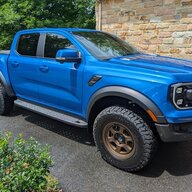
2024 Ranger Raptor Velocity Blue
Finally filled up today after my first full tank with the tune installed. Not sure what happened but the MPG avg on the center screen was way off from the actual after fillup. All the previous fills were pretty much bang on accurate. Maybe the tune changed something but it was awful.

Screen was showing an avg of 15.5 when I filled up. Actual was 14.92 when calculated. So, in reality, driving around my normal commuting conditions are nearly 2mpg worse with the tune. I was hoping it would have stayed the same or gotten better since Im hardly on the turbos in traffic.
 

RacerX

Well-Known Member
Joined
Feb 10, 2024
Threads
1
Messages
71
Reaction score
93
Location
USA
Vehicle(s)
Bronco
First off the reference/link provided, firmly established this is only inclusive of eco boost engines from 2012-2016. So, in fact the reference is inaccurate for any eco boost engines manufactured beyond 2016.

OAR (Octane Adjust Ratio) simply refers to the ability to “adjust “ to a given octane rating, Does not infer or reference any learning capacity or capability of the ECU.

There is no “learning” as you perceive and have commented too. It is further defined in the provided reference and previous articles, as adjusting and adapting, I’ve already provided a quick synopsis demonstrated in; italics, bold print and underlined in the last post. This has already been previously defined and established; the ECU is, adjusting and adapting, within its programmed software parameters, not outside those software parameters. Read the factual information again in the two original links.

It is not a “slow change,” show us where it is a designated a “slow change and factually define the time period? Changes of timing are nearly instantaneous. Thru the reference you’ve provided, it does not infer a “slow change,” nor has a specific define time period or gives a reference to a specific time period.

The specific reference provide; its sensory input, within the established ECU software parameters.

Your speculation; “the physics” as you commented (undefined) are not defined, prevalent or present in this article or discussion. Neither are they inline with the provided text reference. The individual who wrote the referenced commentary, is not an expert in this field and without determined qualifications or specified, technical, qualifications.

What “ physics” are you referring to directly regarding the Ford RR? Are you a physicist? Are you an expert on fuel engineering production, fuel composition, ECU proprietary software engineer/programmer or the physics of the same?

Note direct example; Aviation Fuel/Gas for reciprocating engines; requires no less than 101 octane fuel for optimal operation at an aircraft’s minimum/maximum altitudes. This is primarily based upon the engine configuration, operational altitudes and well beyond capable automobile operations at altitude.

Thus, proving a higher octane fuel, is required at maximum operational altitudes for optimal flight performance, not lower octane. You may ask; am I an expert in reciprocating aviation; yes trained technically and operationally.

I suggest you return to the references supplied. Read and use them as a direct factual reference to this discussion.???
I'm sorry you didn't understand my previous response.
I briefly skimmed all the words above and see some straw man arguments, e.g. you're reference that the topics are somehow specific to RR and your definition of "Learning" by manufacturers to be equivalent to current LLM AI.
I'm guessing you also know that airplane engines are designed to work at high altitudes, unlike cars.
And you know there is less oxygen concentration at higher altitudes.
For those reasons, I don't feel like putting much effort into this conversation. You can do your own learning.
 

Deleted member 9086

I'm sorry you didn't understand my previous response.
I briefly skimmed all the words above and see some straw man arguments, e.g. you're reference that the topics are somehow specific to RR and your definition of "Learning" by manufacturers to be equivalent to current LLM AI.
I'm guessing you also know that airplane engines are designed to work at high altitudes, unlike cars.
And you know there is less oxygen concentration at higher altitudes.
For those reasons, I don't feel like putting much effort into this conversation. You can do your own learning.
This whole topic is, about the RR with the FPT. Did you just choose to ignore this fact or slip your mind.

“Learning” as you’re continue to insist, is clearly defined by the article you posted and I made note to along with previous references I provided earlier as (adjusting and or adapting) that’s it.

However, the article doesn’t define any of the assertions you previously commented to. Nor does it define the “physics“ as you further asserted.

You still haven’t answered the questions; “what physics “ are you specifically referring to? Sorry nice try, ECU’s software programming doesn’t use LLM AI or generative AI. Not even close.?

So, any additional commentary you provided, along with the inaccurate reference, is merely anecdotal.

No problem understanding as you commented. I responded accordingly.
There was no distortion of your commentary, only questions for factual supporting information, definable references, along with personal qualifying factors, which you’ve declined to respond to obviously, in favor of your ad hominem commentary.

In short; higher octane is required at higher altitude not lower. The OAR is incapable of adjusting or adapting correctly with fuel in the 87 octane range, without causing pre-detonation. This is specifically why RR’s FPT, requires a minimum of 91 octane.???
 
Last edited by a moderator:

MulchBags2

Well-Known Member
Joined
Oct 3, 2024
Threads
19
Messages
177
Reaction score
49
Location
Florida
Vehicle(s)
2024 Raptor Ranger (Shelter Green)
Does the ford extended service plan warranty include the tune? How does that work?
Sponsored


Top