daytoncarter
Well-Known Member
@Lion77 - since we now agree that drivetrain loss and wheel weight only change the magnitude (the vertical offset on a graph) and not the actual shape of the power delivery, we can stop using wheel weights as a diversion. It lowers the final number, but it doesn't change the RPM where peak torque happens or rewrite how the engine breathes.
But let's look at the 30% advantage claim, since I think if it's true, it's probably only true on a dyno.
1. Using the Wrong Engine Specs: The dyno charts you posted are for the old 2.3L from 2019. The current Ranger uses the 2.3L MPC. This is a completely different architecture with port and direct dual injection and a new twin-scroll turbo designed specifically for better low-end response. I previously owned a 2021 Ranger and felt the same way you do—I need a v6. However, the new MPC paired with the revised software in the current truck fixed all of that. It spools nearly instantly compared to the older generation.
2. The Transmission Miss: You claimed these trucks are on the same 10R80 transmission. They aren't. Every current generation Ranger uses the 10R60. This is a lighter gearbox that shifted away from the heavy-duty F-150 variant. You're trying to prove a power deficit by referencing hardware the truck isn’t even using.
3. Displacement vs. The 200 lb Penalty: You are ignoring that the 2.7L hardware adds about 200 lbs of weight. The displacement difference between a 2.3L and a 2.7L is roughly 15%. Any performance gain you’re seeing is much closer to that ~15% displacement gap than the "33%" leap you claim. In fact, most of that gain is offset by the weight penalty of hauling that V6 and its cooling system around.
4. Real-World Performance Stats: If there was truly a 30% power gap in "work done," the performance delta would be huge. It isn't. Instrumented testing shows the 2.7L runs 0-60 in about 5.6–6.2 seconds, while the 2.3L does it in 6.2–6.7 seconds. In the quarter mile, it’s a 14.5 @ 94 mph for the V6 versus a 14.8 @ 93 mph for the four-cylinder.
If a truck has 30% more effective energy, it doesn't fight for a three-tenth-of-a-second lead in the quarter mile. You’re using outdated charts and technical "noise" about wheel weights to inflate an advantage that the actual stopwatch says doesn't exist. The 2.7L is a great motor, but for street performance, the 2.3L MPC is functionally synchronized with it because of its lower weight and more aggressive factory tune.
Now I'm glad you posted the dyno showing a tuned 2.7L, now that's where you could see a major advantage since I think there's way more head room in the twin turbos and 2.7L than the 2.3L.
But let's look at the 30% advantage claim, since I think if it's true, it's probably only true on a dyno.
1. Using the Wrong Engine Specs: The dyno charts you posted are for the old 2.3L from 2019. The current Ranger uses the 2.3L MPC. This is a completely different architecture with port and direct dual injection and a new twin-scroll turbo designed specifically for better low-end response. I previously owned a 2021 Ranger and felt the same way you do—I need a v6. However, the new MPC paired with the revised software in the current truck fixed all of that. It spools nearly instantly compared to the older generation.
2. The Transmission Miss: You claimed these trucks are on the same 10R80 transmission. They aren't. Every current generation Ranger uses the 10R60. This is a lighter gearbox that shifted away from the heavy-duty F-150 variant. You're trying to prove a power deficit by referencing hardware the truck isn’t even using.
3. Displacement vs. The 200 lb Penalty: You are ignoring that the 2.7L hardware adds about 200 lbs of weight. The displacement difference between a 2.3L and a 2.7L is roughly 15%. Any performance gain you’re seeing is much closer to that ~15% displacement gap than the "33%" leap you claim. In fact, most of that gain is offset by the weight penalty of hauling that V6 and its cooling system around.
4. Real-World Performance Stats: If there was truly a 30% power gap in "work done," the performance delta would be huge. It isn't. Instrumented testing shows the 2.7L runs 0-60 in about 5.6–6.2 seconds, while the 2.3L does it in 6.2–6.7 seconds. In the quarter mile, it’s a 14.5 @ 94 mph for the V6 versus a 14.8 @ 93 mph for the four-cylinder.
If a truck has 30% more effective energy, it doesn't fight for a three-tenth-of-a-second lead in the quarter mile. You’re using outdated charts and technical "noise" about wheel weights to inflate an advantage that the actual stopwatch says doesn't exist. The 2.7L is a great motor, but for street performance, the 2.3L MPC is functionally synchronized with it because of its lower weight and more aggressive factory tune.
Now I'm glad you posted the dyno showing a tuned 2.7L, now that's where you could see a major advantage since I think there's way more head room in the twin turbos and 2.7L than the 2.3L.
Sponsored
Last edited:

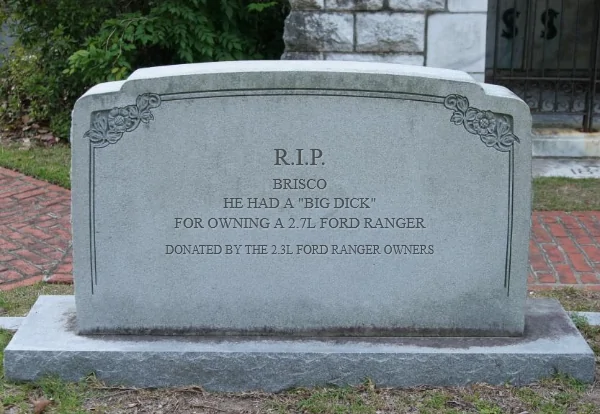

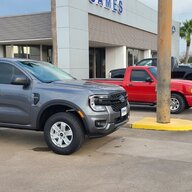
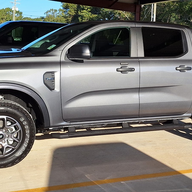
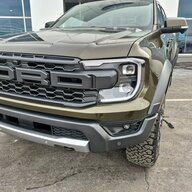
 . But seriously, all the engine options have their pros and cons.