
Lion77
Well-Known Member
- Joined
- Feb 27, 2025
- Threads
- 36
- Messages
- 1,059
- Reaction score
- 1,615
- Location
- United States
- Vehicle(s)
- 2024 Ranger Raptor
- Occupation
- Electrical Engineer
- Thread starter
- #1
Ford Bronco Intercooler Upgrade - COBB Tuning
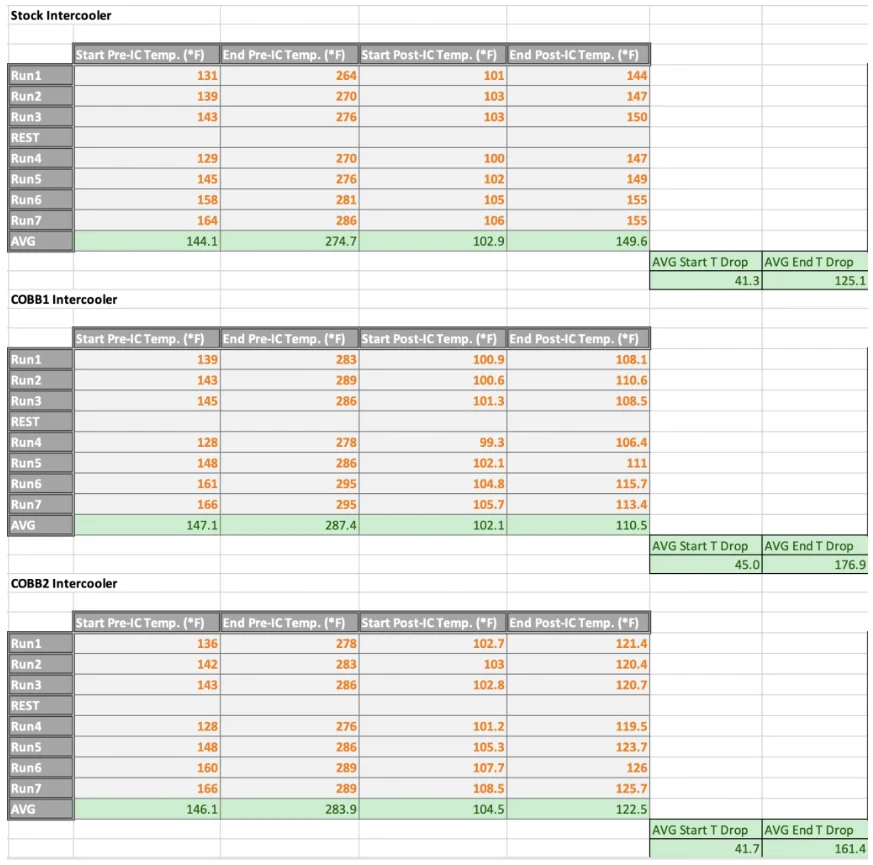
Not sure if anyone has seen this before, but it's more of an FYI to really answer some questions. Their methodology was pretty consistent, and all testing was done of the factory ECU calibration from Ford, with time for octane learn after PCM reset between swapping IC's. For factory turbos and typical street / high reliability calibrations (i.e., Ford Performance), the smaller ICs are a better option. I would not recommend a large "race grade" IC unless running big turbo's, but there are absolutely benefits even on a bone stock Ecoboost engine when using an upgraded intercooler.
Over on the thread with 0-60 times, mostly run by those with a FP Pro Cal, sever reported about 1-2 tenths gain on quarter mile going from stock IC to upgraded, it's always picked up on the back half in the taller gears where the engine is loaded more heavily for longer periods of time. I doubt anyone would see any gains in 0-60, but at higher speeds (passing or highway speeds) is where you will see the benefits, or possibly towing up-hill at max load in constant high boost, especially in hot weather where the factory IC is really pushed to its thermal capacity limits.
If you live in a cold climate that sees low average ambient, like Alaska, upper northern states, it is probably not worthwhile, but anyone in the south or 4-season states that gets to see hot summers, there are some merits to the higher thermal transfer capabilities of an aftermarket IC. But at the same time, its not as massive as some would claim, the below data is pretty compelling. I think that it's likely that the more power the engine is making the more an IC upgrade is going to be of benefit.
On stock vehicles it is of very limited benefit since the calibrations are relative conservative due to the requirement to scale octane, so the engine timing on 91 to 93 is far less aggressive on the Ford factory calibration than Ford Performance is doing with their Pro Cal for example.

Not sure if anyone has seen this before, but it's more of an FYI to really answer some questions. Their methodology was pretty consistent, and all testing was done of the factory ECU calibration from Ford, with time for octane learn after PCM reset between swapping IC's. For factory turbos and typical street / high reliability calibrations (i.e., Ford Performance), the smaller ICs are a better option. I would not recommend a large "race grade" IC unless running big turbo's, but there are absolutely benefits even on a bone stock Ecoboost engine when using an upgraded intercooler.
Over on the thread with 0-60 times, mostly run by those with a FP Pro Cal, sever reported about 1-2 tenths gain on quarter mile going from stock IC to upgraded, it's always picked up on the back half in the taller gears where the engine is loaded more heavily for longer periods of time. I doubt anyone would see any gains in 0-60, but at higher speeds (passing or highway speeds) is where you will see the benefits, or possibly towing up-hill at max load in constant high boost, especially in hot weather where the factory IC is really pushed to its thermal capacity limits.
If you live in a cold climate that sees low average ambient, like Alaska, upper northern states, it is probably not worthwhile, but anyone in the south or 4-season states that gets to see hot summers, there are some merits to the higher thermal transfer capabilities of an aftermarket IC. But at the same time, its not as massive as some would claim, the below data is pretty compelling. I think that it's likely that the more power the engine is making the more an IC upgrade is going to be of benefit.
On stock vehicles it is of very limited benefit since the calibrations are relative conservative due to the requirement to scale octane, so the engine timing on 91 to 93 is far less aggressive on the Ford factory calibration than Ford Performance is doing with their Pro Cal for example.
Sponsored
Last edited:

 and the outside, bugs dirt and road trash, so add that in to your maintence to keep things working efficiently in the future! Ranger On!


